
Sewer Line Installation Cost Guide
Sewer line installation pricing depends entirely on material type, excavation volume, site access, and soil conditions rather than a flat online calculator number. A firm budget requires reviewing your plan set and geotech report to understand the exact earthworks scope. We handle heavy civil trenching and pipe laying for Washington and Oregon developers and property owners, providing a fixed written estimate before machines arrive on site. If you are dealing with failing pipes or planning a new build, the first step is sharing your stamped drawings so we can assess the trenching depth and shoring requirements. We are the installer, not the design engineer, so we base our numbers on the physical reality of your site and the approved plans.
Why Trenching and Pipe Budgets Fluctuate
Two properties on the same street in Federal Way can receive completely different numbers for a line replacement. The difference comes down to what is buried underground and how hard it is to reach. If one lot has clean soil and wide access for heavy machinery, the crew moves quickly. If the neighboring lot requires double-handling material on a tight footprint, navigating around existing utilities, or dealing with unstable soils that mandate soldier piles or trench boxes, the labor and equipment hours increase.
We review the geotech report because hidden conditions dictate the approach. Hitting buried concrete rubble, encountering high groundwater, or discovering hazardous materials changes the disposal fees and the required machinery. When you ask about underground pipe routing, we look at the physical constraints of the property. A straight run through an open field is straightforward. Cutting through an established roadway, managing traffic, and restoring the asphalt adds significant scope. We base our numbers on the engineered plans and the physical reality of the site, ensuring the final number reflects the actual work required.
Core Variables That Drive Your Earthworks Number
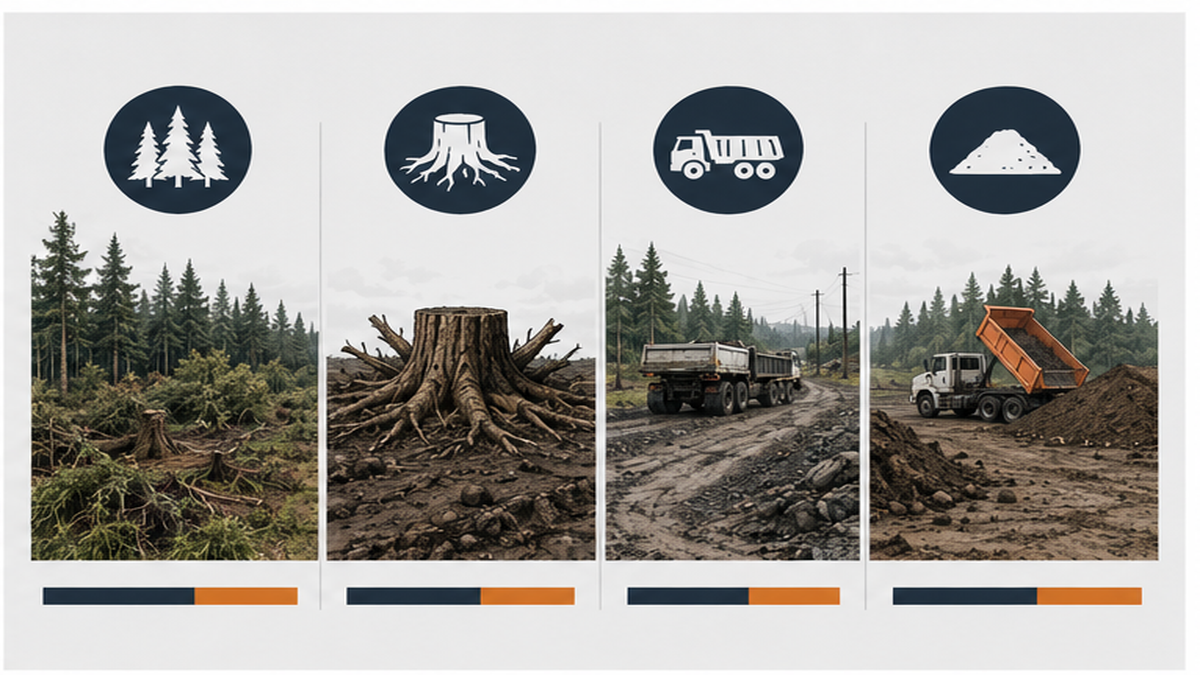
Online calculators fail because they ignore the physical logistics of heavy civil work. We calculate your number based on the following physical realities:
| Cost Factor | How It Affects the Quote |
|---|---|
| Material Type and Volume | Clean soil is easier to haul and dispose of than mixed demolition debris or concrete rubble. Higher volumes mean more truck trips and higher facility fees. |
| Site Access | Tight lots force us to use smaller machines or double-handle dirt, which slows down the dig. Open access allows larger excavators to work efficiently. |
| Soil Stability and Water | Unstable soils or high water tables require active shoring, dewatering pumps, or over-excavation. This adds equipment and crew time. |
| Disposal and Haul-Off | Hazardous or contaminated material requires permitted disposal sites, which carry higher tipping fees than standard dirt haul-off. |
Every linear foot of trenching must account for these variables. If you require a new stormwater system alongside the sewer line, combining the trenching can optimize machine time, but the volume of displaced soil still dictates the haul-off requirements.
Standard Scope for Underground Utility Work
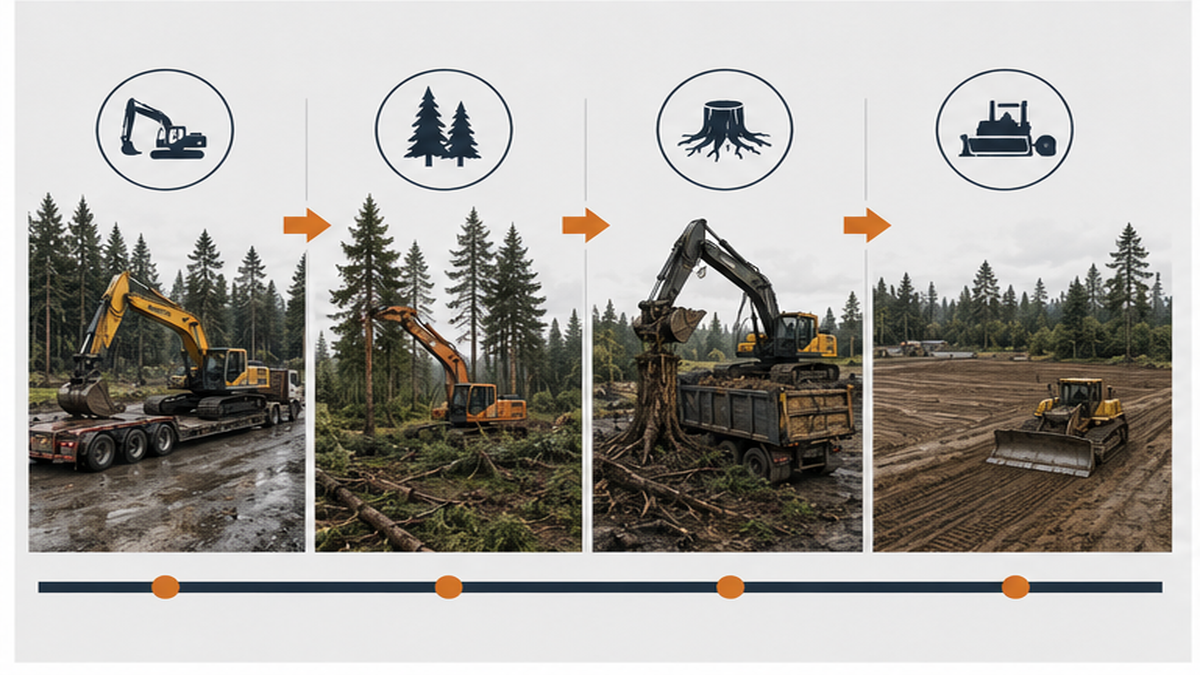
A professional earthworks package covers the entire sequence from breaking ground to final backfill. When we bid a line installation, the written estimate details the specific phases required to complete the job safely and to code.
First, the scope includes site preparation and mobilization. This covers bringing the right size excavators to the site and setting up any necessary traffic control or surface protection. Next is the actual excavation and trenching, including the removal and haul-off of displaced soil. We do not leave piles of dirt for you to manage unless specifically requested.
The installation phase covers laying the pipe, bedding material, and making the necessary connections per the engineered drawings. Finally, the scope includes backfilling the trench with approved structural fill, compacting it to the required density, and performing basic surface restoration. If the trench crosses a public right-of-way, the bid will outline the required asphalt or concrete patching. We spell out these inclusions before work begins so there is no confusion about who handles the dirt removal or the final compaction testing.
Hidden Conditions and Complexity Multipliers
The most common reason a utility budget expands is the discovery of undocumented underground obstacles. If the excavator hits an old, buried foundation, abandoned fuel tanks, or massive glacial cobbles, the crew must stop, assess, and often bring in different attachments to break up the obstruction.
Depth is another major multiplier. A shallow trench requires minimal support. Once a trench exceeds standard depths, OSHA regulations and basic physics require engineered shoring, trench boxes, or stepped benching to prevent collapse. If the geotech report indicates loose, sandy soil, that shoring requirement kicks in even sooner.
Weather also plays a role. Heavy rain turns a standard trench into a mud pit, requiring dewatering pumps and imported crushed rock to stabilize the subgrade. If we are working near existing root systems or mature trees that must be preserved, the excavation slows down to a crawl. Hand-digging or using a vacuum excavator around sensitive root zones or live gas lines drastically increases the labor hours compared to a wide-open machine dig.
Scope Tiers and Controlling Your Budget
You control the budget by defining the scope clearly before machines arrive. We categorize utility work into three practical scope tiers:
- Targeted repair or refresh: This involves digging up a specific, localized section of a failing pipe. It requires less machine time and minimal haul-off, making it the most budget-friendly approach if the rest of the line is structurally sound.
- Standard replacement or installation: This is a full line replacement from the building to the municipal connection. It involves standard trenching, complete pipe replacement, and standard backfill.
- Expanded reconfiguration: This occurs during major site development where sewer, water, and stormwater systems are installed simultaneously. While the overall number is higher, combining these utilities into a single mobilization is more efficient than digging the site three separate times.
To keep numbers predictable, provide complete, stamped drawings and a recent geotech report upfront. When we know exactly what is in the ground and what the city requires, we can plan the most efficient machine size and trucking route. Guesswork is what inflates budgets; hard data allows for tight, accurate bidding.
The Danger of Skipping Geotech and Compaction
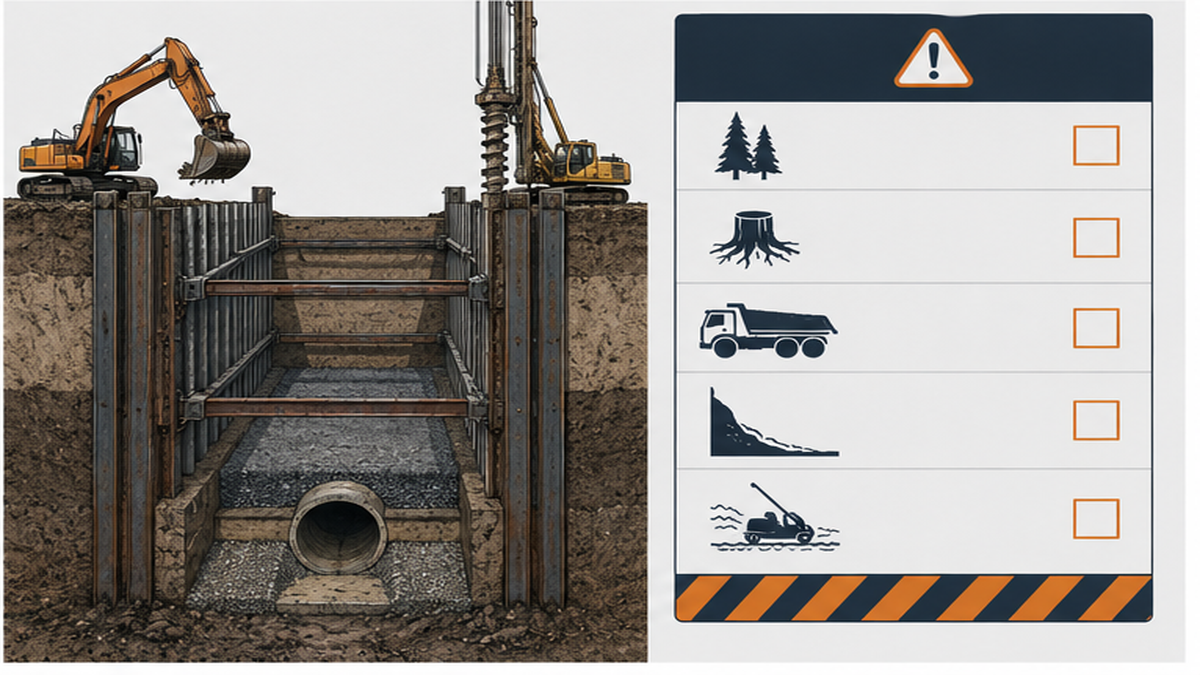
Accepting a low bid that ignores soil realities often leads to catastrophic failure down the road. Some operators will throw out a cheap number by assuming the soil is perfect and the digging will be easy. When they hit groundwater or hardpan, they immediately issue change orders, pushing the final number far above a realistic initial bid.
Another common shortcut is poor compaction. If a crew backfills a deep trench without compacting the soil in proper lifts, the ground will settle over the next year. This settlement destroys driveways, cracks foundation slabs, and shears the newly installed pipe.
A low bid might also exclude the cost of legal soil disposal. Dumping mixed demolition debris or contaminated soil illegally puts the liability back on the property owner. We provide a fixed estimate that includes proper shoring, legal haul-off, and mechanical compaction. It is better to pay for a stable trench today than to pay for emergency excavation when a settling trench snaps your utility connections next winter.
What to Prepare for a Site Assessment
We do not provide blind numbers over the phone because heavy civil work requires physical verification. If you need a line installed or replaced, you must gather specific documents before we can build a fixed estimate.
First, email us your stamped engineered drawings and the plan set. We need to see the exact routing, depth, and connection points. Second, provide the geotech report. We must understand the soil bearing capacity, water table, and any shoring requirements before we put an excavator on your property. We are the installer, not the design engineer. If you do not have stamped drawings yet, start there—we can recommend a Washington firm.
Once we review the documents, we will schedule a site visit to inspect access. We look at overhead clearance, staging areas for dump trucks, and the proximity of neighboring structures. If you are referencing local municipal drainage guidelines, include those compliance notes. After the site walk and document review, we will deliver a transparent, fixed estimate detailing the excavation, pipe installation, and backfill phases.
Common Questions About Sewer Line Installation
How much does 4 inch sewer pipe cost?
What is the most budget-friendly way to replace a sewer line?
How long does Utilities & Drainage take?
How do I get an estimate?
Schedule a Site Assessment
Project Phasing and Budget Planning
Heavy civil and utility installations are often the first major capital outlay on a development project. Because excavation and drainage work must be completed before the foundation is poured, delays in this phase cascade through the entire construction schedule. We work with developers and general contractors to sequence the earthworks efficiently.
By reviewing the plan set early, we can identify opportunities to combine mobilizations. For example, digging the trench at the same time as the stormwater retention system reduces the total number of days heavy equipment is on site. We clearly outline the payment schedule in our written estimate, tying invoices to verifiable milestones like trench completion, pipe inspection, and final backfill compaction. This transparent approach ensures you know exactly what phase of the dirt work is funded and completed.
How Schedule Pressure Impacts Earthworks
Time is a massive variable in heavy construction. If a project is behind schedule and the foundation contractors are waiting, accelerating the excavation phase requires bringing in additional excavators, running multiple trucking routes simultaneously, and working extended hours. This schedule pressure increases the overall mobilization and labor requirements.
Weather also dictates the pace. Trenching in the middle of a Washington winter means dealing with heavy rain, mud, and unstable subgrades. We often have to import crushed rock to build stable haul roads for the dump trucks, or run dewatering pumps around the clock to keep the trenches safe for the pipe layers. These environmental factors are why we rely on the geotech report and a physical site visit. A summer dig in dry, stable soil will always progress faster—and require less temporary stabilization—than a winter excavation in saturated clay.