Auger Cast Pile Installation
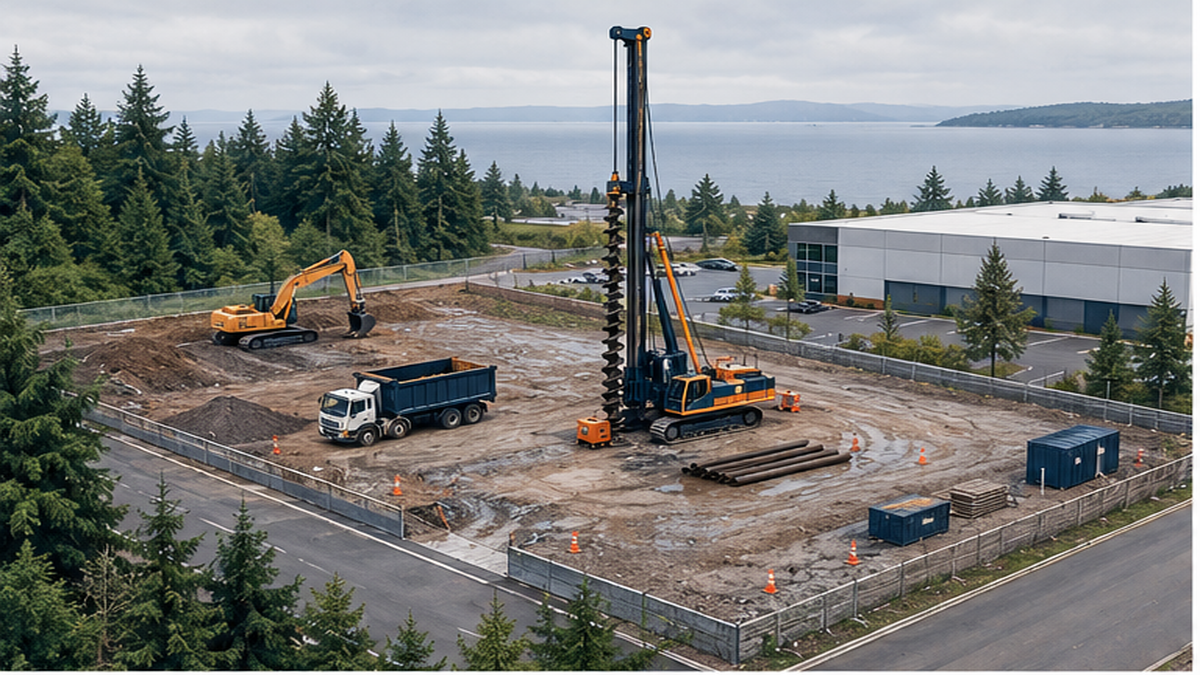
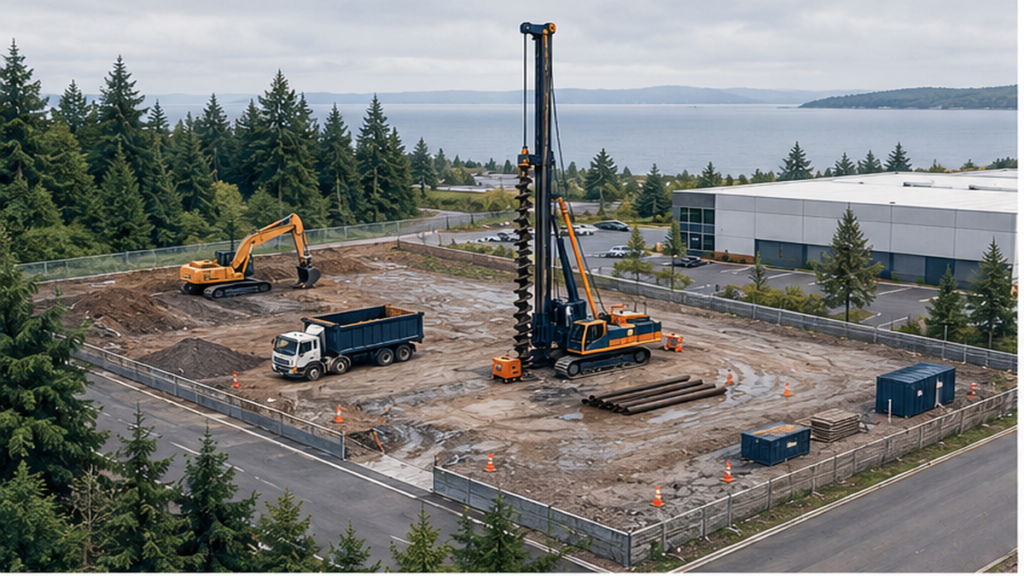
Developers and general contractors managing unstable soils or tight schedules before a foundation pour use auger cast pile installation to secure deep foundation support without the vibration of driven piles. We install auger cast piles, drilled shafts, and helical piles for commercial and residential sites across Washington and Oregon. A typical project starts when you email your plan set and geotech report to our office. We review site access and soil realities, then provide a fixed estimate before work begins. This approach keeps your earthworks phase on track so subsequent framing and foundation trades are never delayed by unexpected ground conditions.
How the Installation Process Works
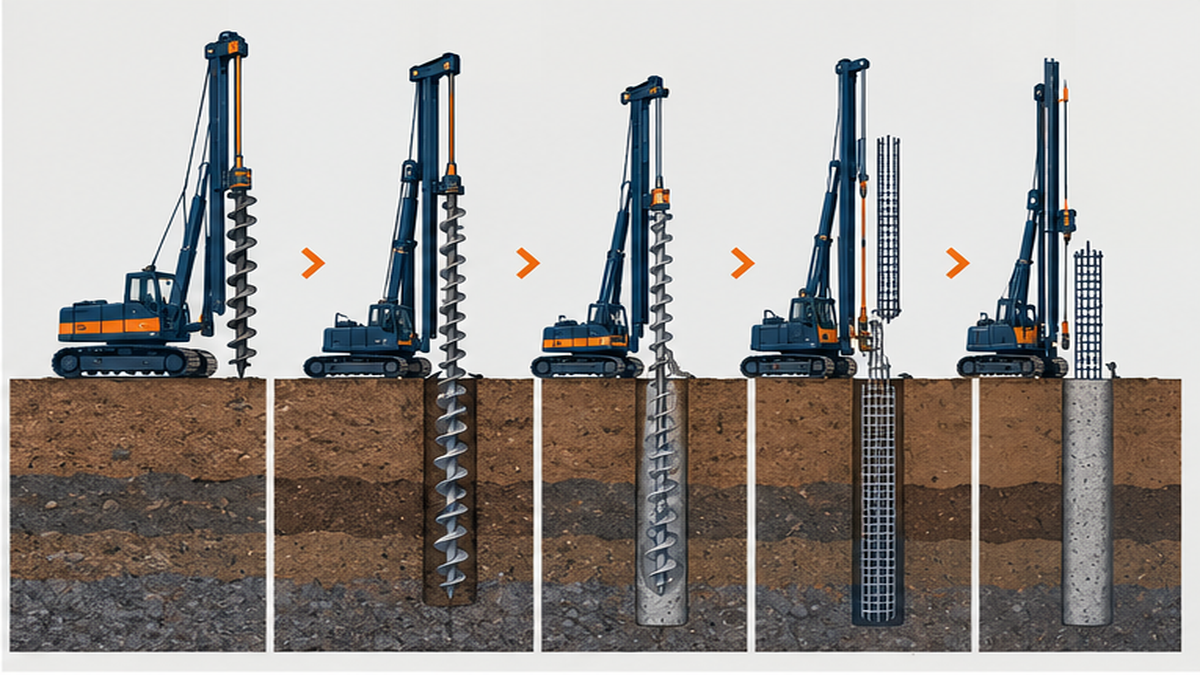
Auger cast pile installation involves drilling a hollow-stem continuous flight auger into the soil to the engineer's design depth. Once the target depth is reached, we pump high-strength grout through the hollow stem as the auger is slowly and steadily withdrawn. This specific process prevents the borehole from collapsing in poor or saturated soil conditions. Immediately after the grout is placed and while it remains fluid, we drop the steel reinforcement cage into the wet column to provide structural tension strength.
For sites in Federal Way or Bellevue dealing with high water tables, loose earth, or contaminated fill, this method offers a highly reliable shoring and ground stabilization solution. We handle the complete drilling and caging scope as part of a turnkey site package. Because we are the installer and not the structural engineer, we rely entirely on your stamped drawings to determine the exact pile diameter, depth, and spacing requirements. We manage the heavy equipment logistics, ensuring the right drill rig size matches your site access constraints. Whether your project requires drilled piles for a commercial retaining wall or specific drilled shafts for a steep slope stabilization effort, we coordinate the earthworks so your foundation contractor can step onto a fully prepared and secure site.
Key Decision Factors for Deep Foundations
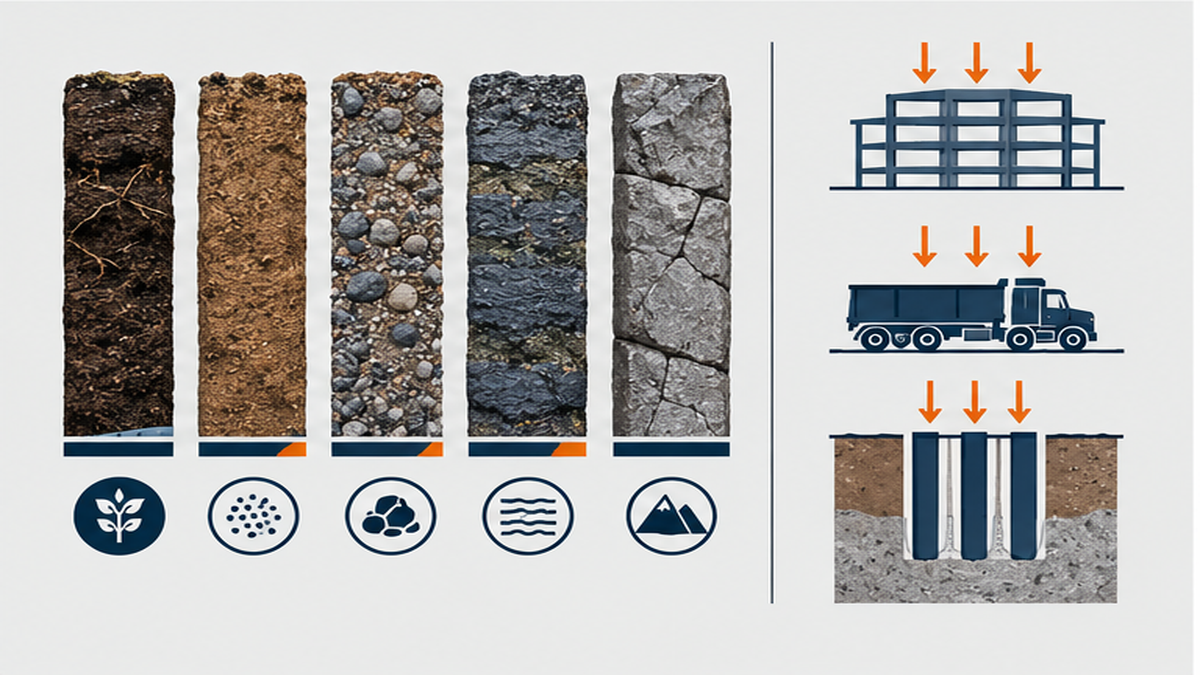
Choosing the right deep foundation method depends heavily on your site's specific geotechnical realities and the structural loads of your planned building. When reviewing your project, consider these primary decision points before requesting a scope review:
- Soil and Water Conditions: Auger cast piles excel in unstable, wet, or caving soils where a standard open hole would quickly collapse. If your geotech report indicates high groundwater or loose sand, this is often the preferred method over standard drilled shafts, which might require expensive temporary steel casing.
- Vibration and Noise Limits: Urban sites in Kirkland, Kent, or Clyde Hill often have strict vibration and noise limits imposed by local municipalities. Auger cast installation is relatively quiet and vibration-free compared to traditional driven piles, protecting neighboring structures or fragile utility lines from damage.
- Site Access and Rig Size: The drilling equipment requires adequate overhead clearance and a stable, level working pad. Tight residential lots or steep commercial grades may require preliminary benching, soil removal, or alternative shoring methods before the primary drilling rig can safely operate.
- Schedule Pressure: Because the drilling and grouting happen in one continuous operation, this method can be significantly faster than casing and pouring a traditional hole. However, the reinforcement cage must be plunged immediately while the grout is fluid, requiring tight coordination and an experienced crew on site.
Send us your geotech report, and we will conduct a thorough site assessment to determine whether your access and soil profile align with this installation method.
Common Mistakes During Site Preparation
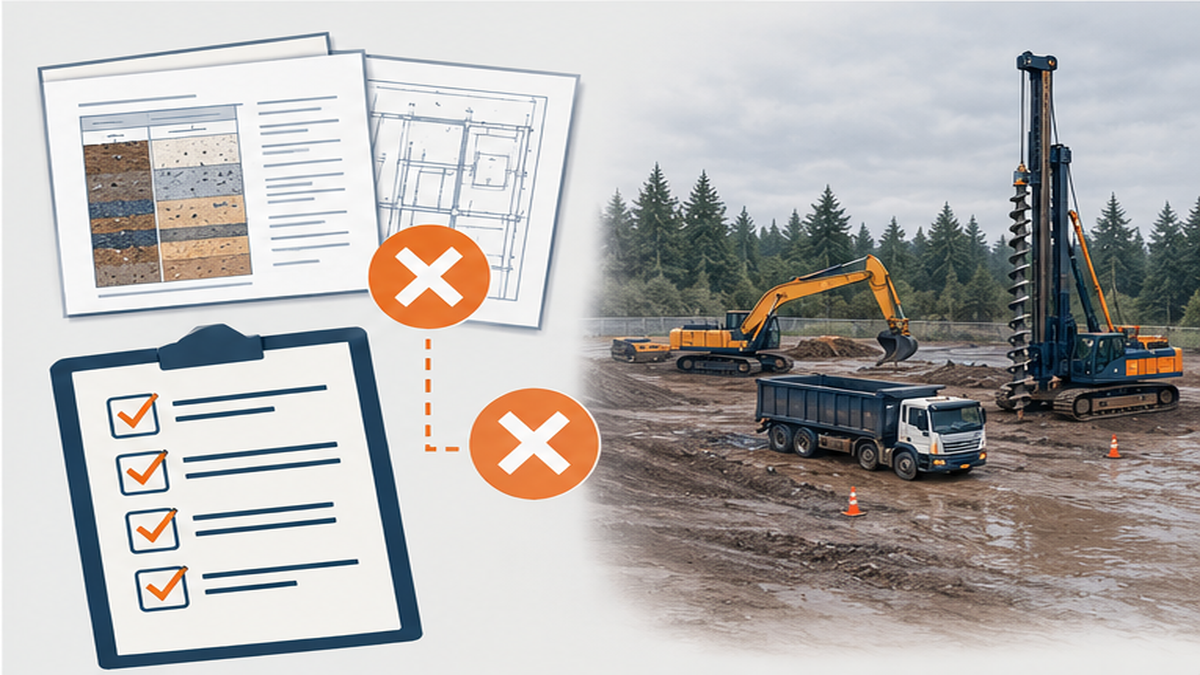
The most common mistake developers and property owners make is asking for a firm quote without providing a geotechnical report and stamped structural plans. We cannot guess what is underground. Without a geotech report, any number provided over the phone is just a guess, and hidden soil conditions or buried concrete foundations will inevitably change the scope once excavation begins.
Another frequent error is failing to plan for the massive volume of soil haul-off. Drilling displaces a significant amount of dirt, which must be managed, tested if contaminated, and hauled away to permitted facilities. If your site has tight access in Issaquah or Medina, double-handling the spoils adds considerable time and cost to the earthworks phase.
Finally, attempting to coordinate separate contractors for drilling, caging, demolition, and soil removal often leads to schedule cascades. Bundling the excavation, utilities, and drilling into one turnkey earthworks package prevents delays and keeps your project moving smoothly before the foundation pour.
When to Hire a Heavy Civil Contractor
You need a professional heavy civil contractor when your project involves deep excavations, steep slopes, or commercial retaining walls that require engineered shoring. If your structural engineer specifies drilled piles, helical piles, or auger cast piles to reach load-bearing soil, it is time to bring in a specialized installer.
We step in once you have your plan set and geotech report in hand. Do not wait until the site is already excavated or a slope begins to fail to realize you need ground stabilization. Early involvement allows us to review access routes for the heavy drill rigs and plan the logical sequence of demolition and soil removal.
If you are in the planning phase and do not yet have stamped drawings, we can recommend a licensed Washington structural engineer to get your project started correctly. Once the design is stamped, we provide the execution and heavy equipment to build it safely.
Related Earthworks Services
Ready to Review Your Plan Set?
Common Questions About Drilling & Caging
How is Drilling & Caging priced in my area?
What is the difference between auger cast piles and drilled piers?
How long does Drilling & Caging take?
How do I get an estimate?
Site Protection During Construction
While deep foundation systems like auger cast piles do not require active day-to-day maintenance from the property owner, protecting the surrounding site is critical during the construction phase. Ensure that stormwater drainage is properly managed around the excavation area to prevent surface water from undermining the working pad or saturating the soil before the foundation is poured.
Keep heavy equipment and material staging away from the immediate perimeter of newly installed piles until the grout has fully cured and reached its design strength. Once the building is complete, standard site maintenance—such as keeping gutters clear and directing downspouts away from retaining walls—helps maintain the overall integrity of the ground stabilization system. If you notice significant soil settlement around the foundation years later, consult a geotechnical engineer to assess surface water management.