
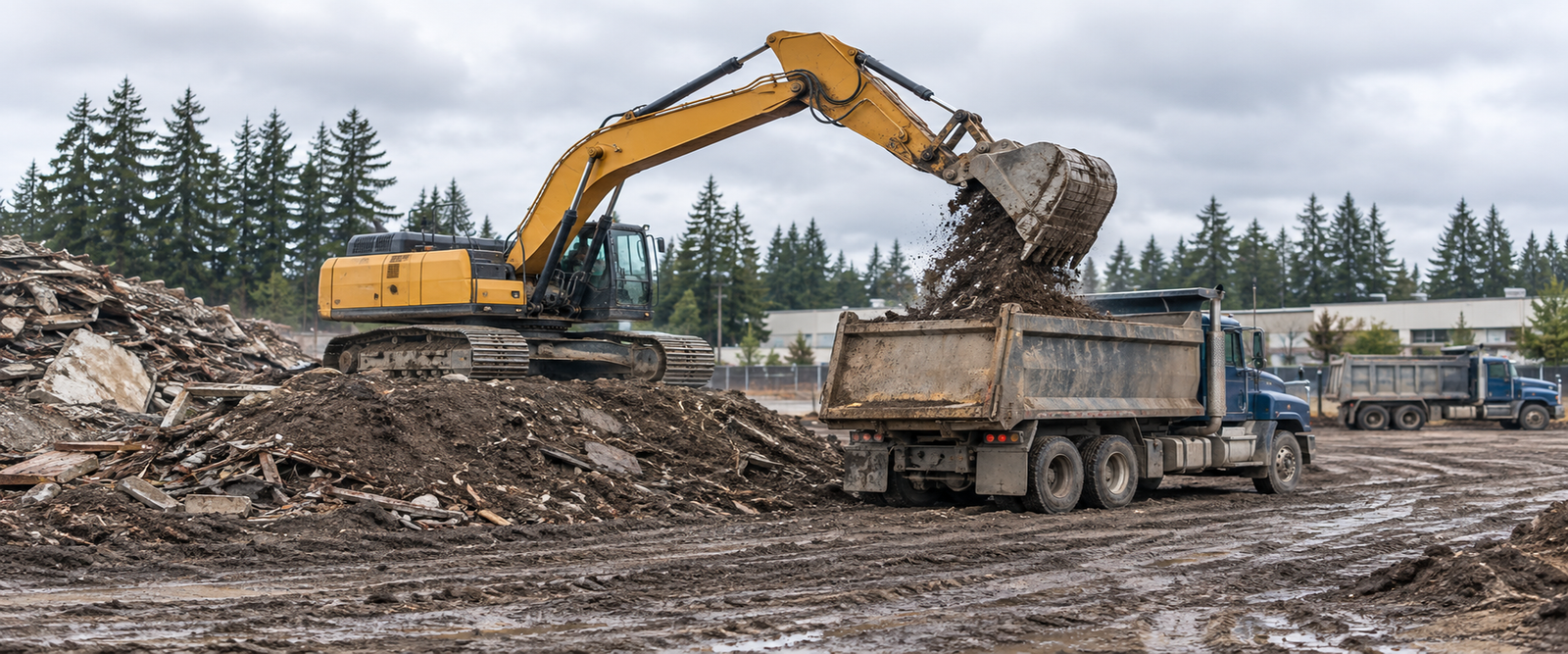
Construction Debris Removal & Site Demolition in Seattle
Turnkey site packages from demolition and soil haul-off through utilities for developers and general contractors
- Federal Way based contractor
- utilities, drainage, and road restoration after underground work
- drilling, caging, soldier pile shoring, and commercial retaining/stabilization
- turnkey site package from excavation through utilities
Clear the Site and Keep Your Build on Schedule
Unstable soils, tight schedules before foundation pours, and coordinating multiple earthworks trades can derail a project early. When construction debris and soil removal delays cascade into framing delays, costs multiply rapidly for developers and general contractors.
We handle the complete site demolition and soil haul-off scope for Seattle commercial and residential builds. Send us your plan set and geotech report by email. We review access constraints and soil realities, then provide a transparent, fixed estimate before work starts so your site preparation stays on track and your next trades can mobilize on time.
Demolition & Soil Removal Scope
- Site demolition and structure clearing for new development
- Soil haul-off, land clearing, and debris removal
- Site assessment for heavy equipment access and soil conditions
- Written estimate based on your geotech report and plan sets
- Scheduling coordinated with foundation, shoring, and utility phases
- Final walkthrough and documentation before handing off the site
Our Site Preparation Process
- Initial consultation and scope review: Send your plan set and geotech report by email so we can review site access and soil realities. We assess the demolition and soil haul-off requirements before discussing numbers or deploying equipment.
- Detailed written estimate: We provide a transparent, fixed cost estimate based on the provided documents and site conditions. A site visit is common for hard access jobs to ensure accurate pricing and logistical planning.
- Professional service delivery: Our crews execute the site demolition, land clearing, and soil removal according to the contracted timeline. We coordinate with your other trades to keep the foundation and utility schedule intact.
- Final walkthrough and project sign-off: We review the cleared site with you to confirm all debris and soil have been removed per the written scope. Quality control and documentation are finalized before we demobilize our heavy equipment.
Verified Project Experience
Seattle Suburbs Excavation
Case study on site: private residence excavation + utilities, Seattle suburbs, 2,690 sq ft — slope drainage / geotextile
Verified Lead Tracking
whatconverts:lead_export_07_23_2026 (real project calls only)
Owner-operated principal craftsman
Federal Way based contractor
Frequently Asked Questions About Demolition & Soil Removal
What should I know about Demolition & Soil Removal?
How is Demolition & Soil Removal priced in Seattle?
How long does Demolition & Soil Removal take?
Why hire a professional for Demolition & Soil Removal?
How do I get an estimate?
Planning Your Seattle Site Demolition and Haul-Off
Understanding Soil Conditions and Geotech Requirements
Before we can provide a serious number for soil removal, we need to review your geotech report. Seattle soil conditions dictate how material must be handled, transported, and disposed of safely. Unstable soils or contaminated fill require specific hauling protocols and specialized equipment. By evaluating the geotech data upfront, we ensure our written estimate covers the true cost of soil haul-off without surprises later in the project. This upfront diligence protects developers and general contractors from unexpected delays during the excavation phase.
Coordinating Demolition with Site Preparation
Site demolition is just the first step in a broader earthworks package. When clearing a lot, we plan the debris removal sequence to maintain clear access for incoming heavy equipment and subsequent trades. Proper land clearing and material selection for temporary access roads keep the site safe and operational. We work directly with developers and general contractors to ensure the transition from demolition to underground utilities and shoring is handled efficiently, keeping the overall construction schedule moving forward.