
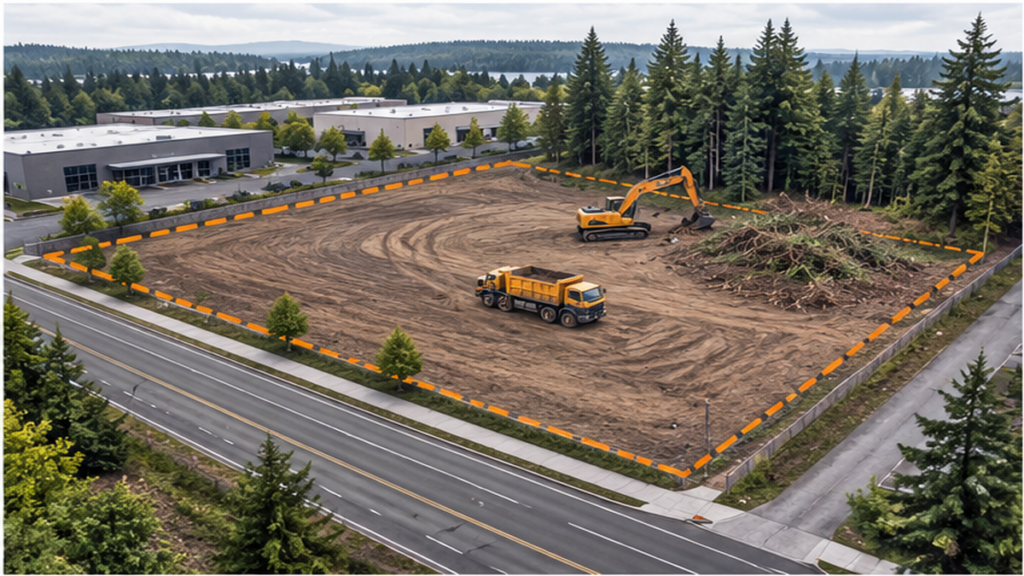
Forestry Mulching Site Preparation
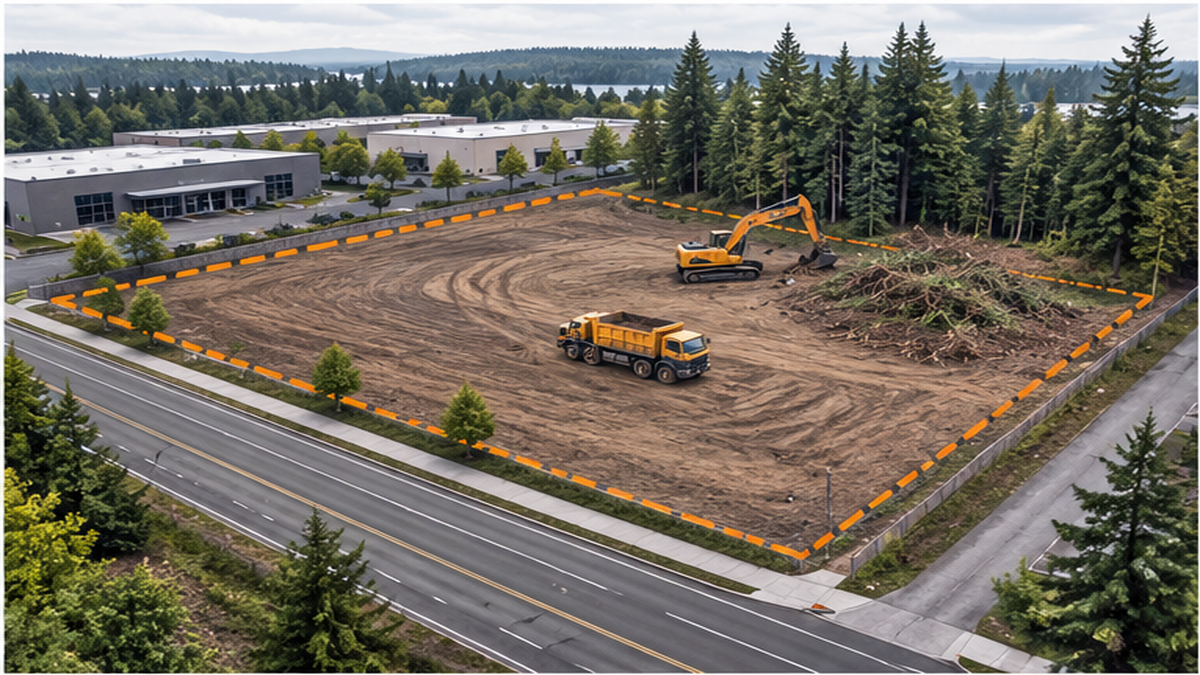
Developers and general contractors in Washington and Oregon facing overgrown lots need to decide whether to clear land using heavy excavation or forestry mulching before foundation work begins. Forestry mulching site preparation grinds trees, brush, and stumps into a protective mulch layer, eliminating the need for expensive soil haul-off and burn piles. Ruffhouse Construction LLC, based in Federal Way, WA, handles full earthworks packages—from initial clearing and site grading to deep excavation and utility installation. If your site requires clearing before we install soldier piles or retaining walls, this process stabilizes the soil and prepares the ground for the next phase of construction.
How Forestry Mulching Fits Into the Earthworks Sequence
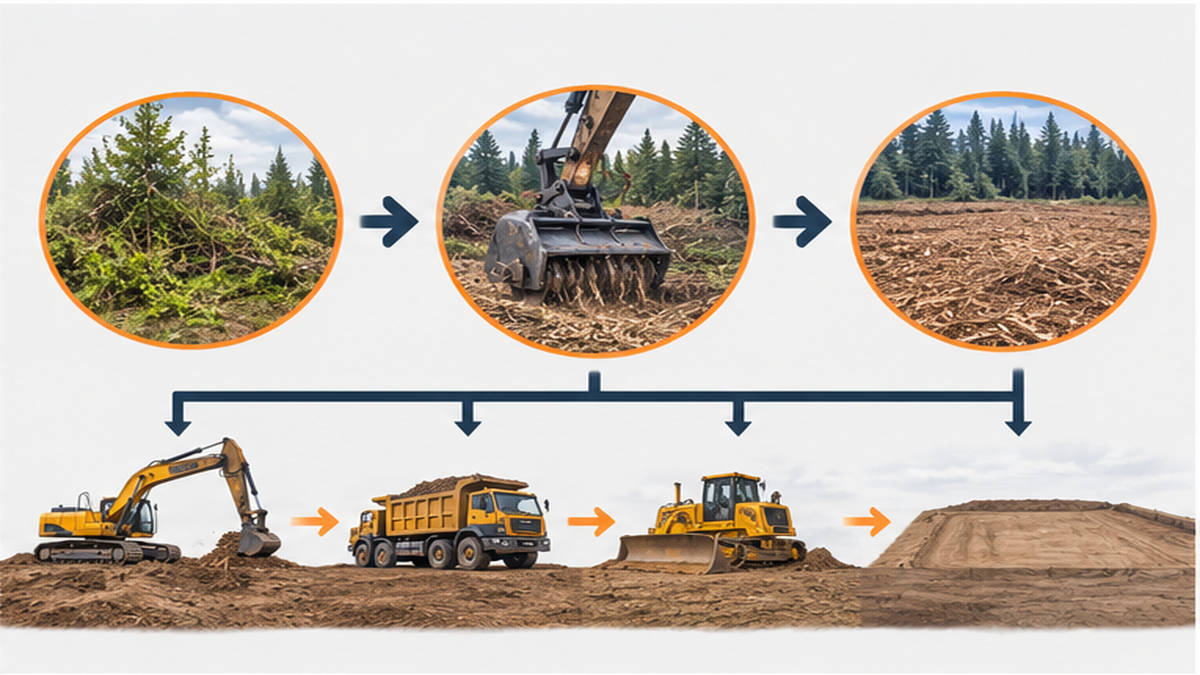
Forestry mulching uses a single machine to cut, grind, and spread vegetation, leaving a stabilized mat of organic material behind. This method keeps the root systems of retained trees intact while preventing soil erosion during heavy Pacific Northwest rains. This approach significantly reduces the heavy equipment traffic on your site, protecting the underlying soil structure from severe compaction.
Instead of coordinating separate crews for logging, stump removal, and debris hauling, mulching handles the surface layer in one pass. Once the surface is clear, we can accurately assess the ground for foundation excavation, earthworks, and Shoring & Stabilization.
| Site Prep Method | Process | Best For |
|---|---|---|
| Forestry Mulching | Grinds vegetation into surface mulch | Fast clearing, erosion control, avoiding haul-off fees |
| Traditional Clearing | Bulldozing, root raking, and hauling | Full site grading, deep foundation excavation |
| Demolition & Soil Removal | Excavating and exporting material | Sites requiring complete soil replacement or deep cuts |
When we review your plan set and geotech report, we determine if mulching is sufficient for your access roads and staging areas, or if full soil haul-off is required for the actual building footprint.
Evaluating Your Site Clearing Options
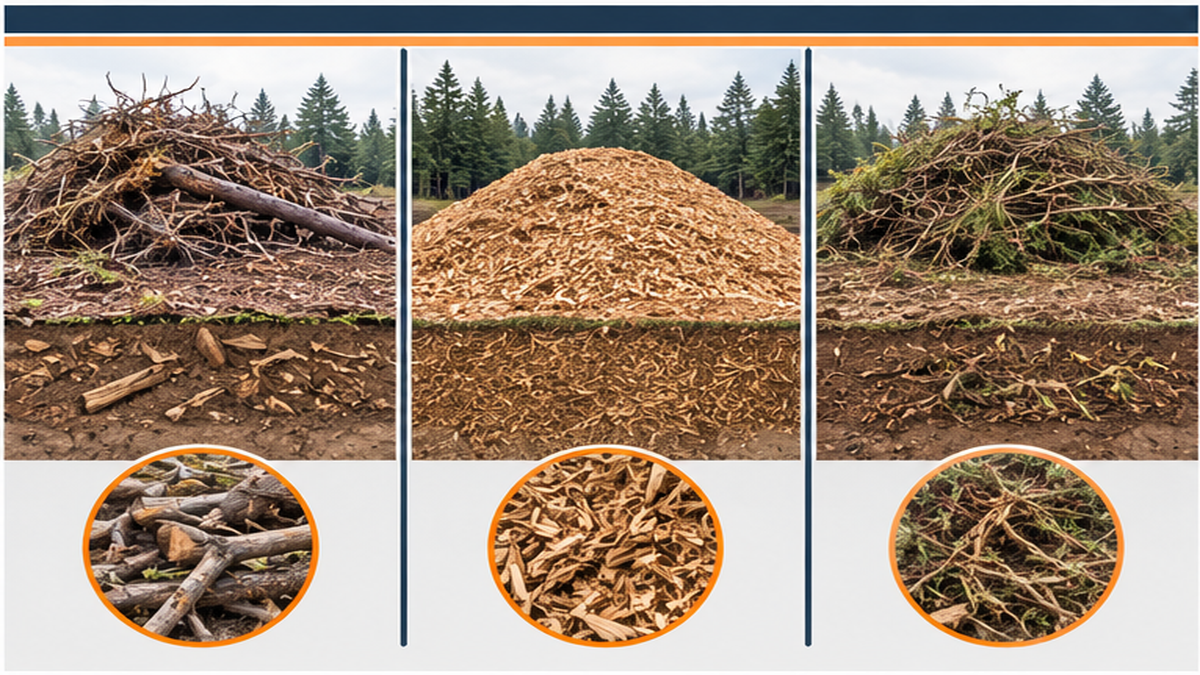
Choosing how to clear your lot impacts your project timeline and budget. Before scheduling site preparation, evaluate your final site grading requirements.
- Erosion Control: Mulch acts as a natural barrier against rain. If your site sits on a slope, leaving the mulch in place temporarily prevents runoff before we begin Drilled Shaft Excavation or retaining wall construction.
- Soil Haul-Off Costs: Traditional clearing requires loading and exporting debris, which incurs heavy disposal fees. Mulching eliminates these export costs by repurposing the material on-site.
- Future Earthworks Scope: Mulch cannot be built upon directly. If the cleared area is the future site of a building pad, the mulch and topsoil must still be stripped and graded. Mulching is highly effective for staging areas, utility easements, and perimeter clearing.
Send us your drawings and geotech report by email. We will review the access realities and determine the exact sequence of clearing, grading, and shoring required for your specific lot.
Common Site Preparation Errors to Avoid
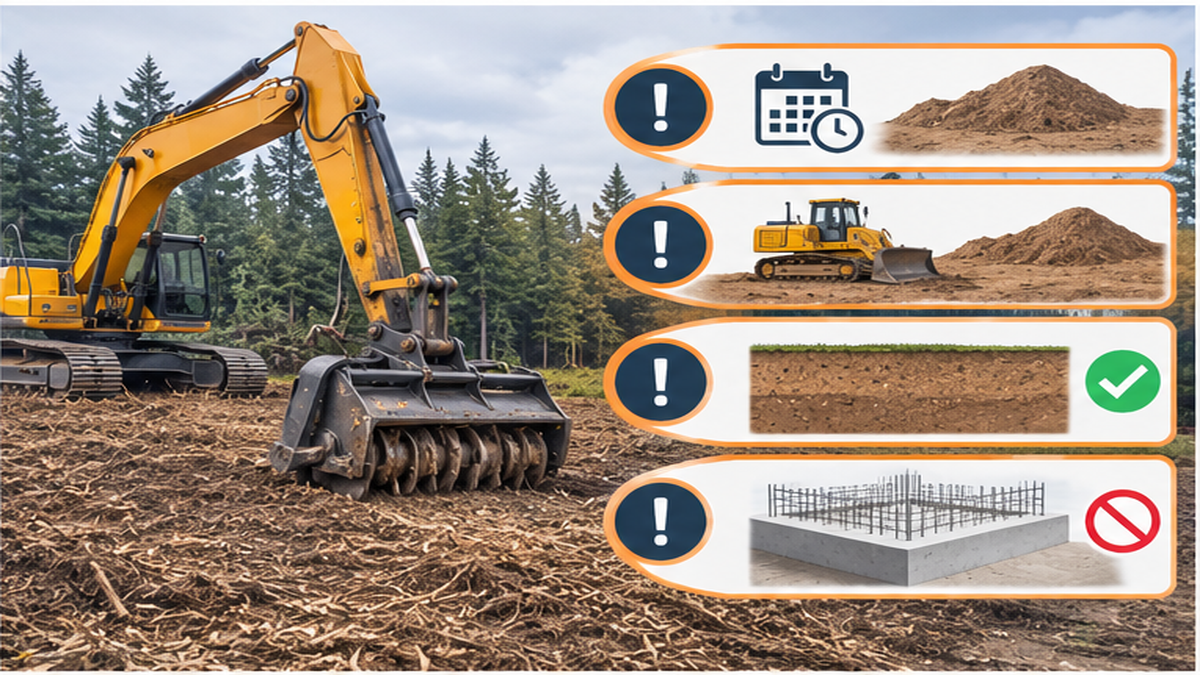
General contractors and developers often underestimate the sequence of earthworks, leading to delays before the foundation pour. A frequent error is assuming a mulched site is immediately ready for concrete. Mulch is organic material; it will decompose and settle. It must be scraped away from any structural footprint before foundation excavation begins. Building over mulch leads to unstable soils and foundation failure. Attempting to bury debris or mix mulch into structural fill is a violation of standard engineering practices and will cause the ground to fail under load.
Another mistake is failing to secure a Dpie Site Grading Certification or local equivalent before altering the landscape. Municipalities in King, Pierce, and Snohomish counties strictly regulate land clearing and stormwater runoff.
Finally, many project managers try to piece together multiple subcontractors for clearing, digging, and shoring. Coordinating separate trades cascades into schedule delays. Handing the full earthworks scope—from initial mulching and demolition to soldier pile walls—to one heavy civil installer keeps the timeline contracted and the site moving.
When to Bring in a Heavy Civil Installer
Call a heavy civil earthworks contractor when your project requires more than surface-level brush cutting. If your site involves unstable soils, steep slopes, or requires deep excavation immediately following the clearing phase, you need a licensed installer.
We step in when you have a stamped plan set and a geotech report ready for review. If you are dealing with a tight schedule before a foundation pour and need a turnkey site package—including Commercial Land Clearing, utilities, and drainage—we handle the entire sequence.
We do not offer firm quotes over the phone without seeing your engineering documents. We are the installer, not the design engineer. If you do not have stamped drawings yet, start there. We can recommend a Washington-licensed structural engineer. Once you have the plans, we will conduct a site assessment and provide a fixed written estimate before any machines arrive on your lot.
Related Earthworks and Site Prep Services
Ready for a Site Assessment?
Common Questions About Site Preparation
How is Excavation & Site Prep priced in my area?
What to do with land after forestry mulching?
How long does it take to clear an acre of land with a forestry mulcher?
How do I get an estimate?
Managing Your Cleared Site Before Construction
Managing a cleared site properly prevents costly rework before the foundation pour. If you leave a mulched area exposed to heavy Pacific Northwest weather for extended periods, monitor the perimeter for runoff. While mulch provides excellent temporary erosion control, steep slopes may still require additional silt fencing or drainage trenches to stay compliant with municipal regulations.
Keep heavy machinery off the future building footprint if the soil is saturated, as this causes deep compaction and complicates foundation excavation. If you are planning Excavation & Site Prep in phases, coordinate your earthworks schedule so that the final site grading happens immediately before your concrete contractors arrive.