
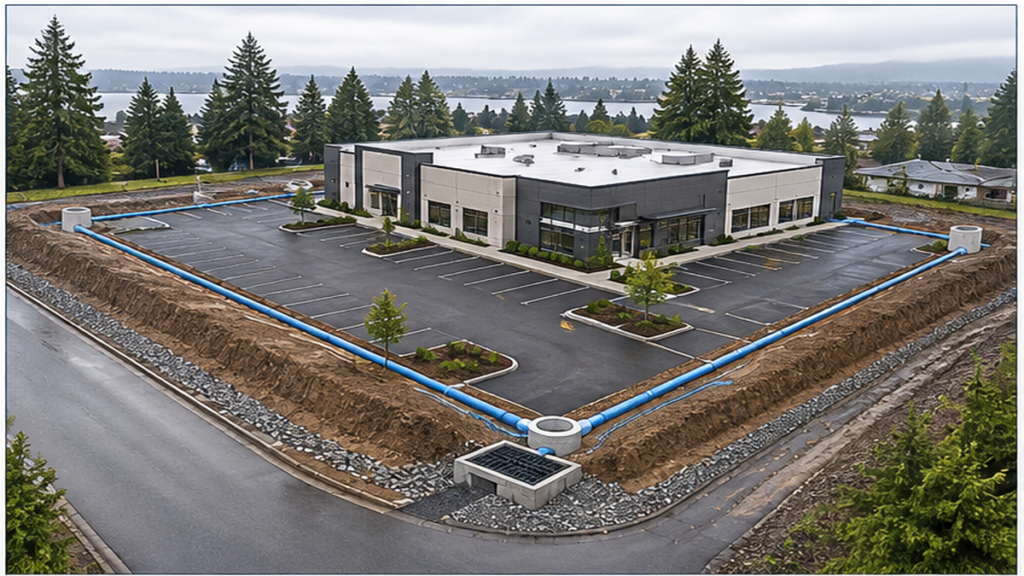
Managing Site Water: Stormwater Drainage Installation
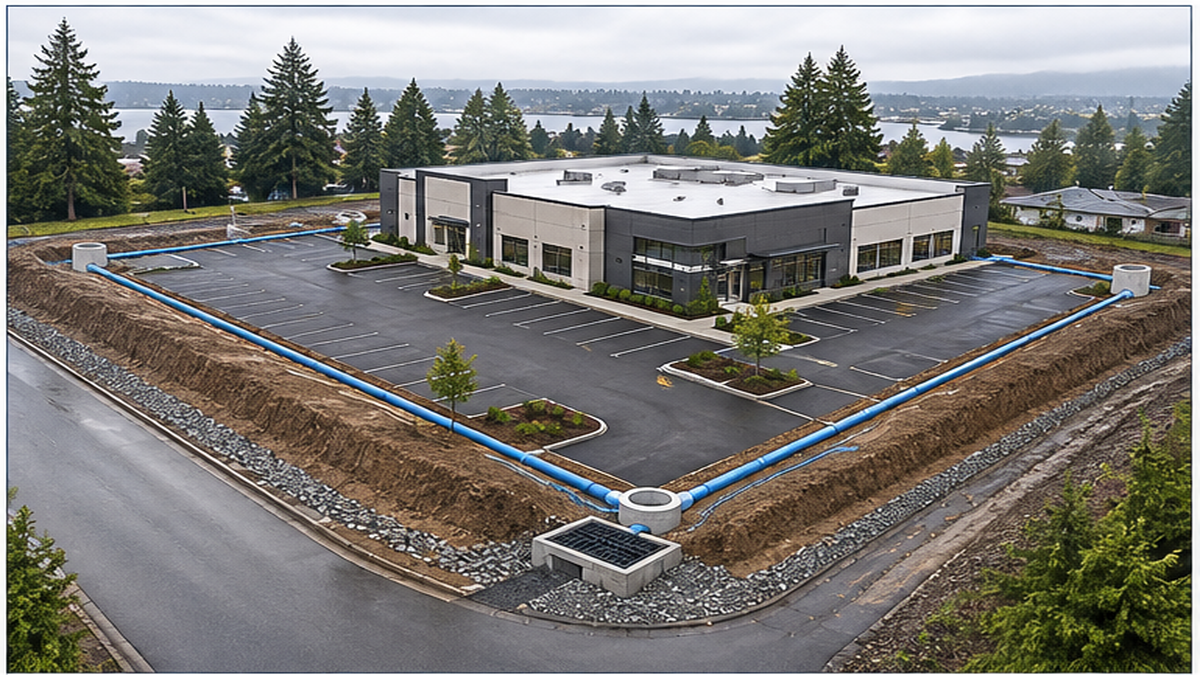
Managing unstable soils and slope runoff requires a commercial stormwater drainage installation before your foundation pour in Washington. Developers and general contractors facing tight schedules need a turnkey earthworks package that handles excavation, grading, and underground utilities without cascading delays. We install complete drainage systems across Federal Way, King County, and the surrounding Washington and Oregon areas. As heavy civil installers, we review your plan set and geotech report to determine site access, material volume, and disposal needs. Once we complete a thorough site assessment, we provide a fixed written estimate for the entire dirt work and utility scope so your project stays on track and meets contracted timelines.
The Installation Process for Commercial Drainage
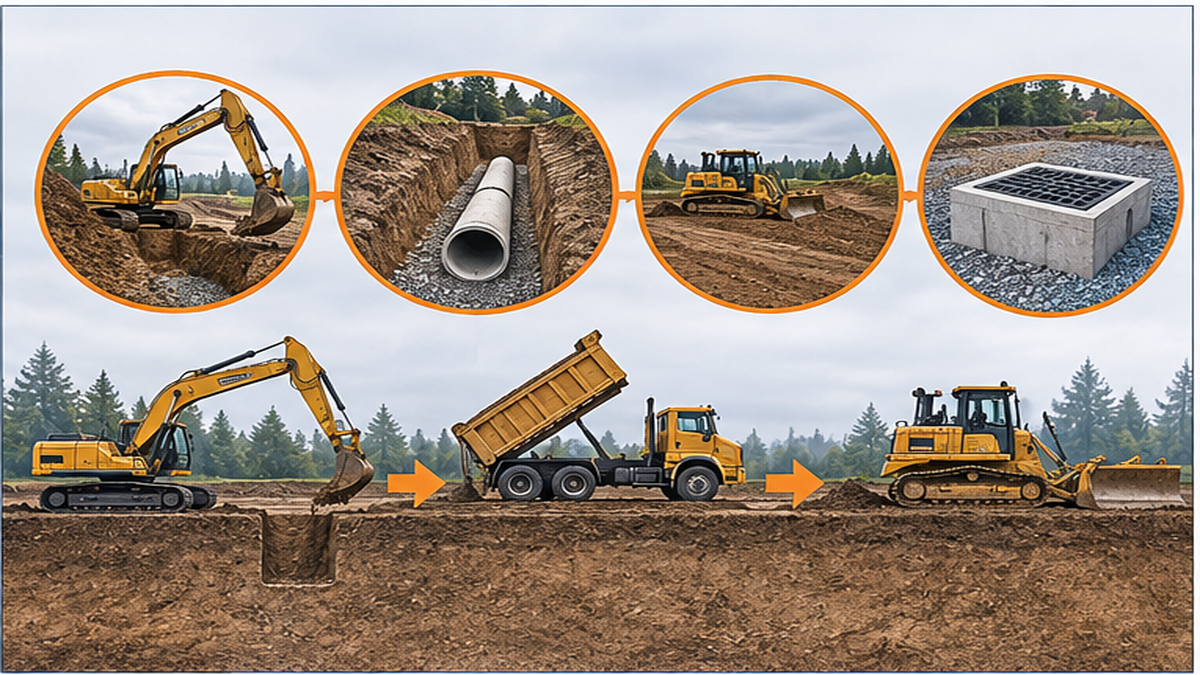
Installing a stormwater drainage system involves coordinating heavy equipment, managing soil haul-off, and placing underground utilities precisely to plan. The process starts with a thorough scope review of your stamped drawings. We are the installer, not the design engineer, so we rely on your geotech report to understand the soil realities before we dig.
| Installation Phase | Contractor Action |
|---|---|
| Site Preparation | Clear the footprint, manage access for heavy machinery, and handle initial demolition and soil removal. |
| Excavation & Trenching | Cut trenches to the specified slope, managing unstable soils or buried concrete rubble discovered on site. |
| Utility Placement | Install the stormwater drainage pipe, catch basins, and connect to municipal sewer systems. |
| Backfill & Compaction | Return clean soil or imported fill, compacting it to prevent future settling around the new lines. |
Proper execution prevents water from undermining retaining walls or soldier piles later in the build. If you are comparing Utilities & Drainage options, bundling excavation, demolition, and drainage installation into one contract reduces the risk of schedule conflicts. We handle the full earthworks scope, from the first cut to the final road restore, ensuring the site is ready for the next phase of construction.
Key Decisions for Developers and Project Managers
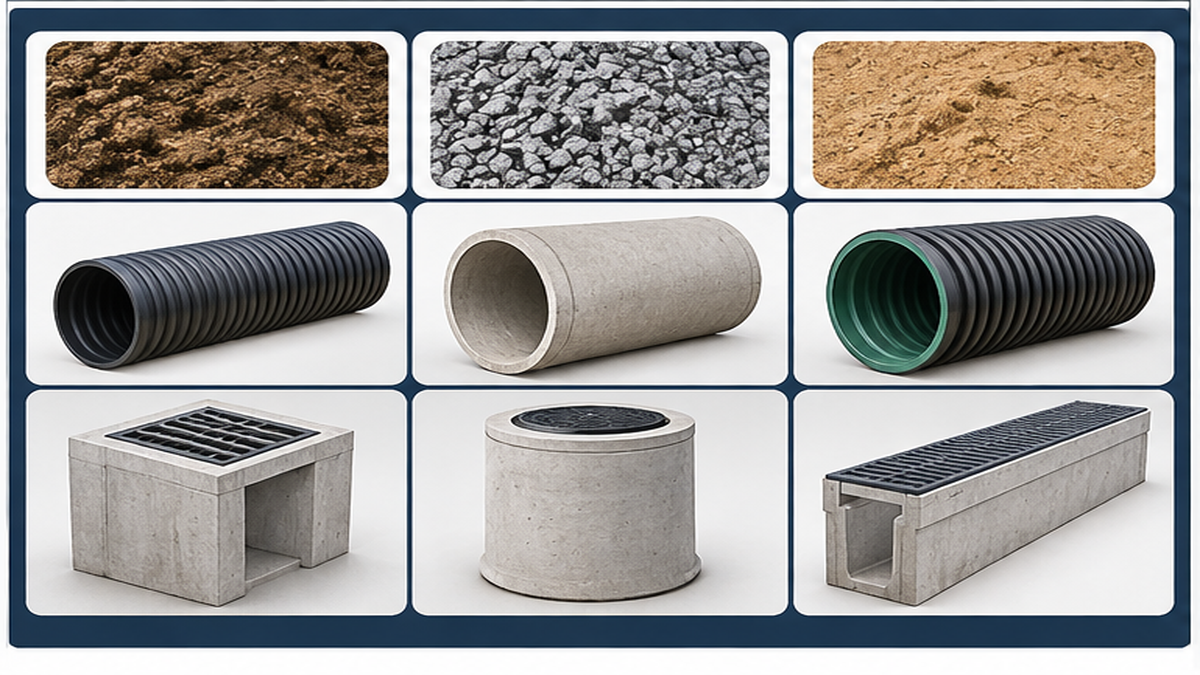
Before scheduling your stormwater drainage installation, project managers and developers must finalize several site-specific variables. Your choices directly impact the equipment required and the final cost of the dirt work package.
- Site Access: Tight lots in cities like Bellevue or Kirkland require smaller machines and double-handling of materials, which extends the timeline and changes the equipment strategy.
- Material Volume and Weight: Removing clean soil costs differently than hauling off mixed demolition debris or concrete rubble. Disposal fees vary based on what we pull out of the trench.
- Schedule Pressure: If you are racing against a foundation pour, we may need to deploy extra crews or machines to meet the deadline, which affects the overall estimate.
- Design Readiness: We need a completed plan set and geotech report to provide a fixed estimate. If you do not have an engineer yet, we can recommend a licensed Washington firm to design the system.
Clarifying these factors during our initial site assessment ensures the written estimate covers the full scope, preventing surprises once excavation begins. We respond to quote requests within 24 hours to keep your planning phase moving.
Avoiding Earthworks and Drainage Delays
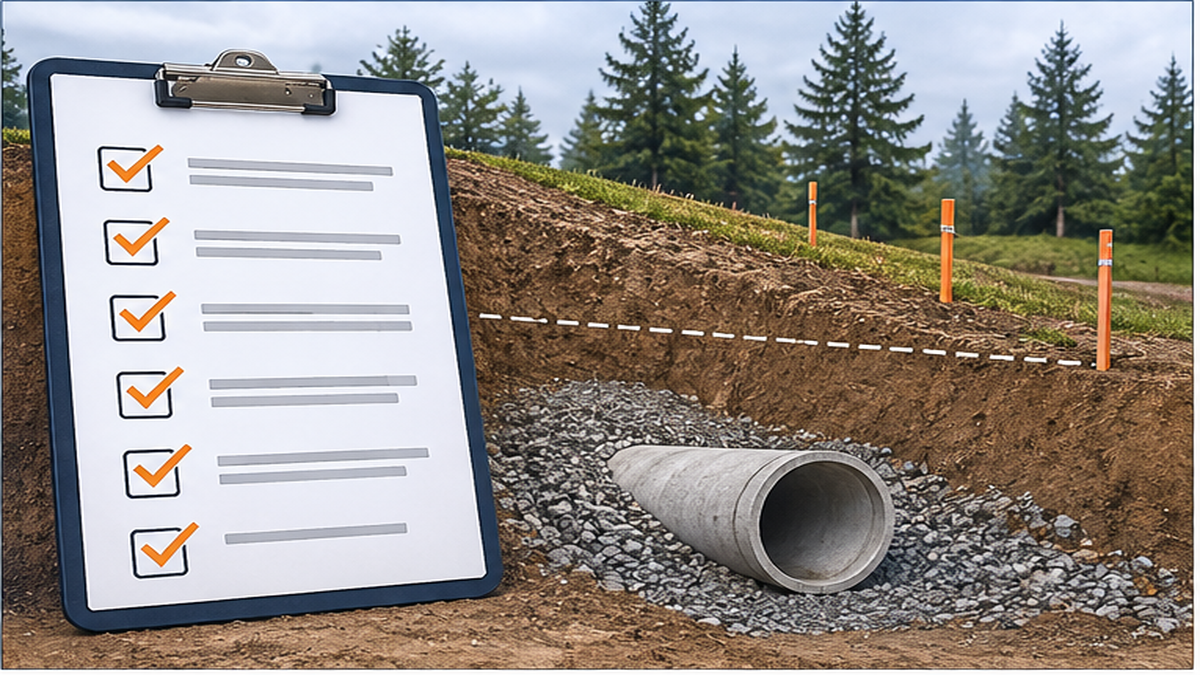
The most frequent cause of delay in commercial earthworks is proceeding without a complete understanding of the subsurface conditions. Attempting to price or start a stormwater drainage project without a geotech report often leads to discovered hazards like buried foundations or contaminated soil. We require these documents upfront because blind numbers mislead general contractors and disrupt budgets.
Another common error is failing to coordinate trades. When one contractor handles demolition, another does the excavation, and a third installs the underground utilities, miscommunication cascades into foundation and framing delays. Hiring a single contractor for the full earthworks scope keeps the site moving efficiently. Finally, do not assume an installer will design your system. We build to the specifications provided; skipping the formal engineering phase to save time will halt your project when municipal inspectors review the site. Always reference local municipal guidelines, similar to the City Of Columbus Stormwater Drainage manual, to ensure your plans meet code. For specific landscaping conflicts, such as Planting Near Underground Utilities, consult the approved plans before placing trees near new drainage lines.
When to Bring in a Heavy Civil Contractor
You need a heavy civil contractor when your project requires deep excavation, shoring, or large-scale utility placement that standard residential landscapers cannot handle. If your site involves steep slopes requiring soldier pile walls, unstable soils, or complex tiebacks, it is time to bring in a specialized crew to manage the earthworks.
Contact us once you have your stamped drawings and geotech report in hand. If you are dealing with a failing retaining wall or severe water pooling but have no formal plans, your first call should be to a structural engineer to assess the load ratings and design a solution. Once the design is approved, send the plan set to us by email. We will conduct a scope review, verify site access, and provide a detailed cost estimate for the physical installation. We focus on executing the plan safely and strictly to spec.
Related Services and Guides
Ready to Review Your Site Plans?
Common Questions About Drainage Installation
How is Utilities & Drainage priced in my area?
how need stormwater drainage installation in washington state?
How long does Utilities & Drainage take?
How do I get an estimate?
Site Management During and After Installation
Maintaining your site during and immediately after a stormwater drainage installation is critical to keeping your project on schedule. While the trenches are open and underground utilities are being placed, ensure that heavy machinery does not drive over unprotected pipe sections. Keep the surrounding soil graded away from the excavation footprint to prevent sudden washouts during heavy Washington rains.
Once the catch basins and pipes are backfilled, clearly mark the utility lines so subsequent trades do not accidentally damage the new infrastructure. Regular inspections of the surface grading will help you verify that water is flowing toward the newly installed drains rather than pooling near your fresh foundation pour. We provide quality control and documentation on all completed work so your site managers have a clear record of the underground layout before the final road restore.