
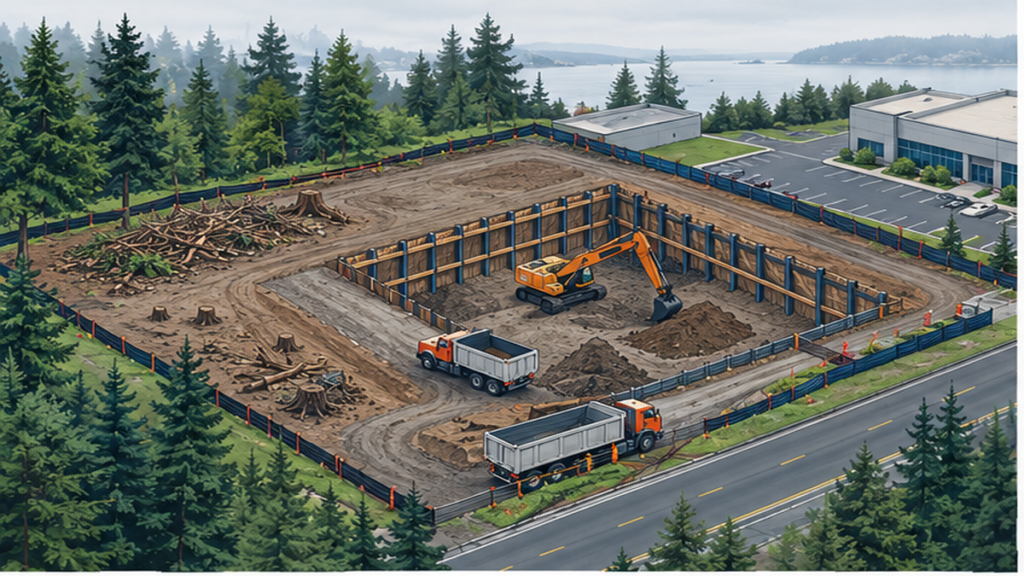
Unstable Excavation Walls Cost Per Square Foot Guide
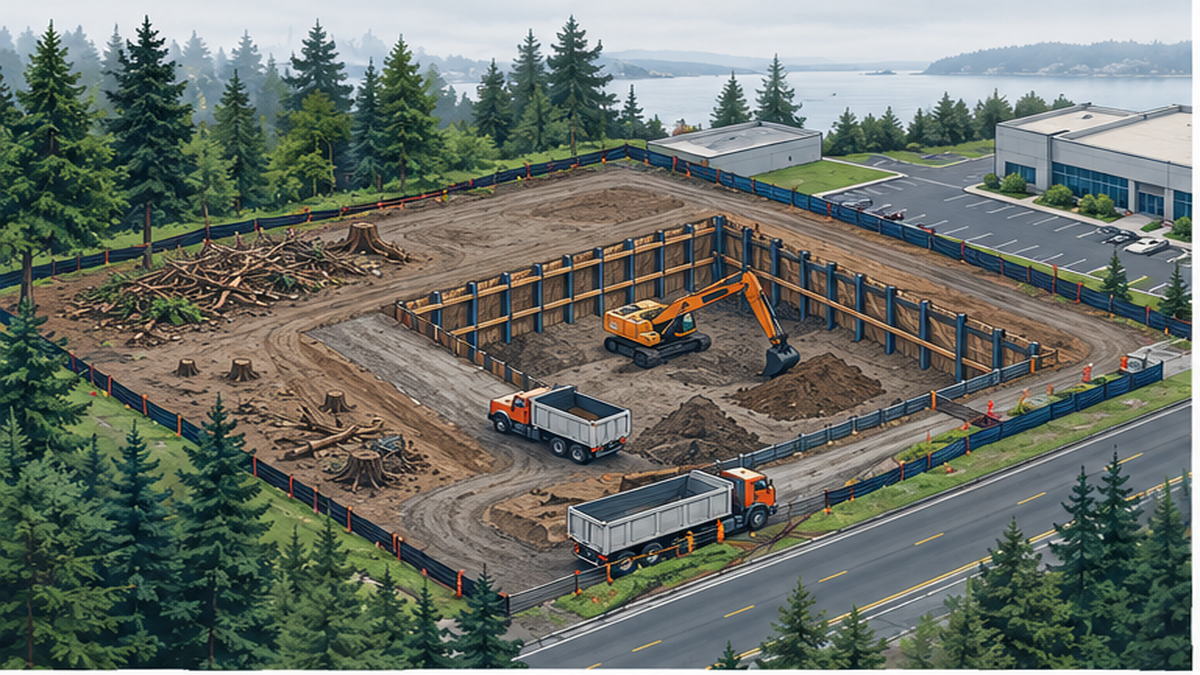
Developers and general contractors dealing with unstable soils often need a firm number to keep foundation schedules on track, but calculating unstable excavation walls cost per square foot requires more than a blind online calculator. In Washington and Oregon, pricing depends heavily on your geotech report, site access, and the engineering plan set. We do not publish a flat rate because every site presents different soil realities, water management challenges, and disposal requirements.
Before we can give you a reliable figure for shoring or soldier piles, we need to see your stamped drawings and assess the dirt. This guide breaks down the variables that shape your final number and explains exactly what documents you need to prepare before requesting a site visit.
Why Shoring and Earthworks Bids Fluctuate
Two commercial retaining projects with identical square footage can result in vastly different bids. The difference comes down to site realities and the specific scope tiers required to stabilize the ground.
- Targeted repair or refresh: Minor slope adjustments or benching where access is wide open and the soil profile is highly predictable.
- Standard replacement or installation: Traditional soldier pile walls with straightforward drilling, caging, and standard soil haul-off requirements.
- Expanded reconfiguration: High-ticket shoring for deep foundations, dealing with buried concrete rubble, or managing active landslide conditions.
Your final number shifts based on what we find beneath the surface. Weather conditions, buried foundations, and unstable soils discovered during the dig require immediate adjustments. If your site has tight access that forces us to use smaller machines or double-handle material, the labor hours increase. We base our numbers on the physical realities of your lot, which is why a thorough site assessment and a review of your geotech report are mandatory before we lock in a contract.
Core Variables That Shape Your Excavation Number
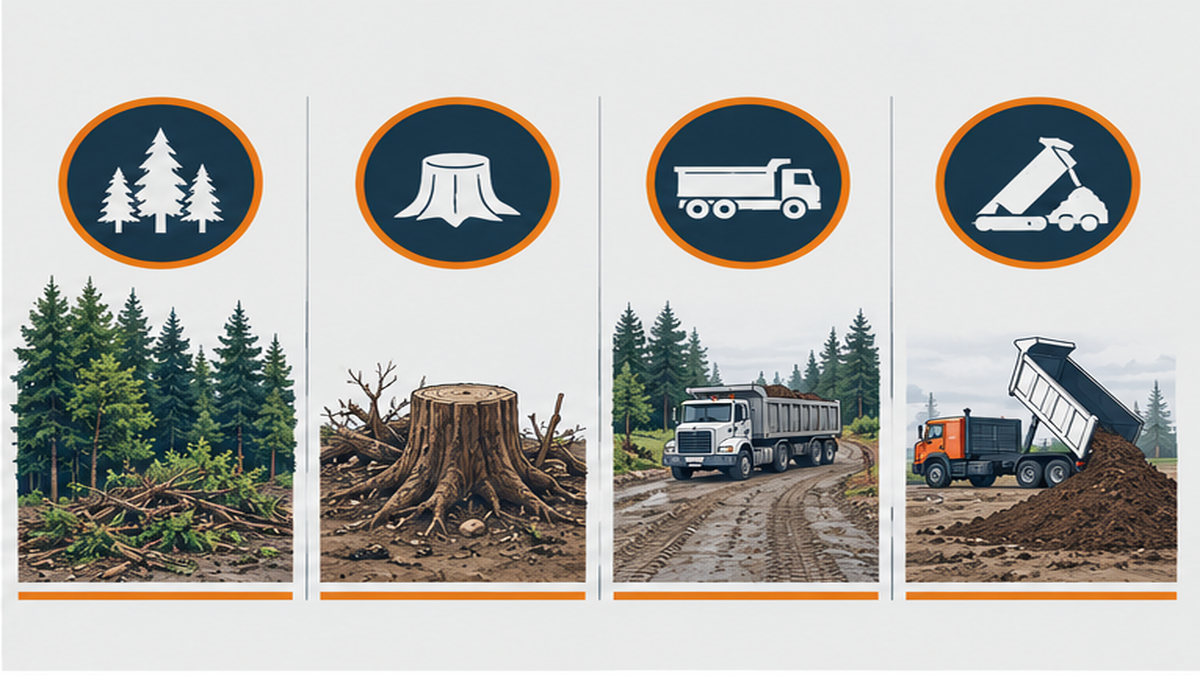
To understand where your budget goes, you need to look at the logistics of moving dirt and stabilizing slopes. Here are the primary drivers that influence your bottom line.
| Cost Factor | How It Affects Your Quote | Typical Impact |
|---|---|---|
| Material Type | Clean soil is straightforward to move, while mixed demolition debris or concrete rubble requires sorting and specialized disposal. | Moderate to Higher |
| Volume and Weight | Tipping fees at the disposal facility are based on the sheer tonnage of the soil haul-off. | Often the largest line item |
| Site Access | Tight lots that restrict standard dump trucks force us to double-handle material with smaller machines. | Higher |
| Hazardous Materials | Contaminated soil must be transported to specific, permitted disposal sites with strict handling protocols. | Higher |
| Weather and Soil Stability | Heavy rain or discovering undocumented unstable soils requires immediate water management and extra shoring. | Varies widely |
| Schedule Pressure | Accelerated timelines before a foundation pour require extra crews and larger equipment rentals. | Higher |
Each of these variables must be evaluated against your engineering plan set. A site with wide-open access and clean dirt will always require a smaller investment than a tight urban lot filled with buried concrete.
What a Turnkey Site Package Covers
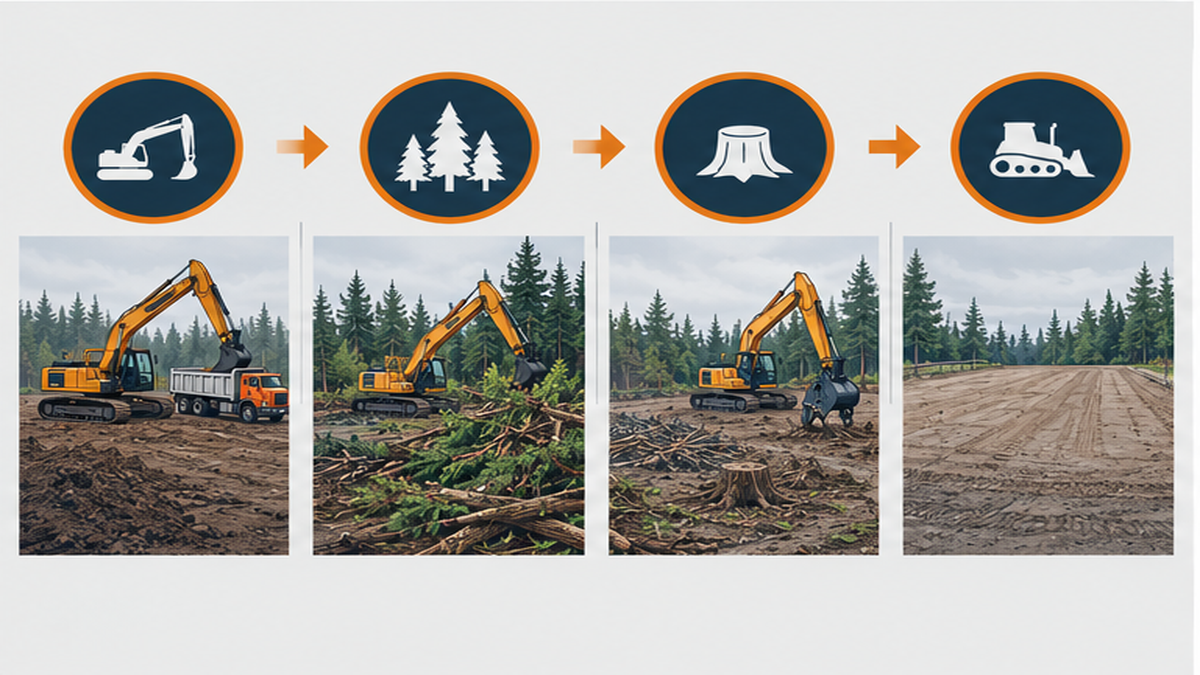
A professional earthworks package should leave your site ready for the next phase of construction without leaving you to coordinate multiple sub-trades. When we bid a full scope for developers or municipalities, the number typically covers the heavy lifting from start to finish.
This includes initial site grading, foundation excavation, and the installation of utilities and drainage systems. If the project requires ground stabilization, the bid incorporates drilling, caging, and setting soldier piles. Soil haul-off is a major component; we handle the logistics of loading and transporting dirt to permitted disposal facilities. We also manage the demolition of existing surface structures and the removal of concrete rubble. Everything is outlined in a detailed written estimate, so you know exactly what labor, equipment, and trucking are accounted for before the first excavator arrives.
Conditions That Push Your Budget Higher
Unpredictable ground conditions are the fastest way to inflate a site preparation budget. If we hit buried foundations, massive boulders, or undocumented utilities, the dig slows down. Contaminated or hazardous material handling drastically changes the equation because those materials must be transported to specific, permitted disposal sites, which carry higher tipping fees.
Tight access is another major multiplier. If a lot is too narrow for standard dump trucks, we have to double-handle the dirt—moving it with a smaller machine to a staging area before loading it for transport. This adds significant labor and equipment hours. Finally, schedule pressure before a foundation pour can force the need for extra crews or larger machines to hit a tight deadline. Rushing the timeline always requires more resources, which directly impacts the final tally.
How to Keep Your Earthworks Budget in Check
The most effective way to control your site preparation expenses is through thorough upfront engineering. Having a complete, stamped plan set and a recent geotech report allows us to bid the job accurately. When we know exactly what soil type we are dealing with, we can plan the right equipment and trucking routes from day one, eliminating guesswork.
You can also manage expenses by clearing the site of surface debris before our heavy equipment arrives. If your project involves clearing trees and brush first, handling commercial land clearing independently or as a phased step can streamline the heavy excavation phase. If demolition debris is already sorted from clean soil, we spend less time separating materials and more time digging. Flexibility in your schedule also helps; if you allow a realistic window for the work rather than forcing an accelerated timeline, we can deploy a standard crew size without the premium of overtime or expedited equipment rentals.
The Danger of Underbidding Unstable Soils
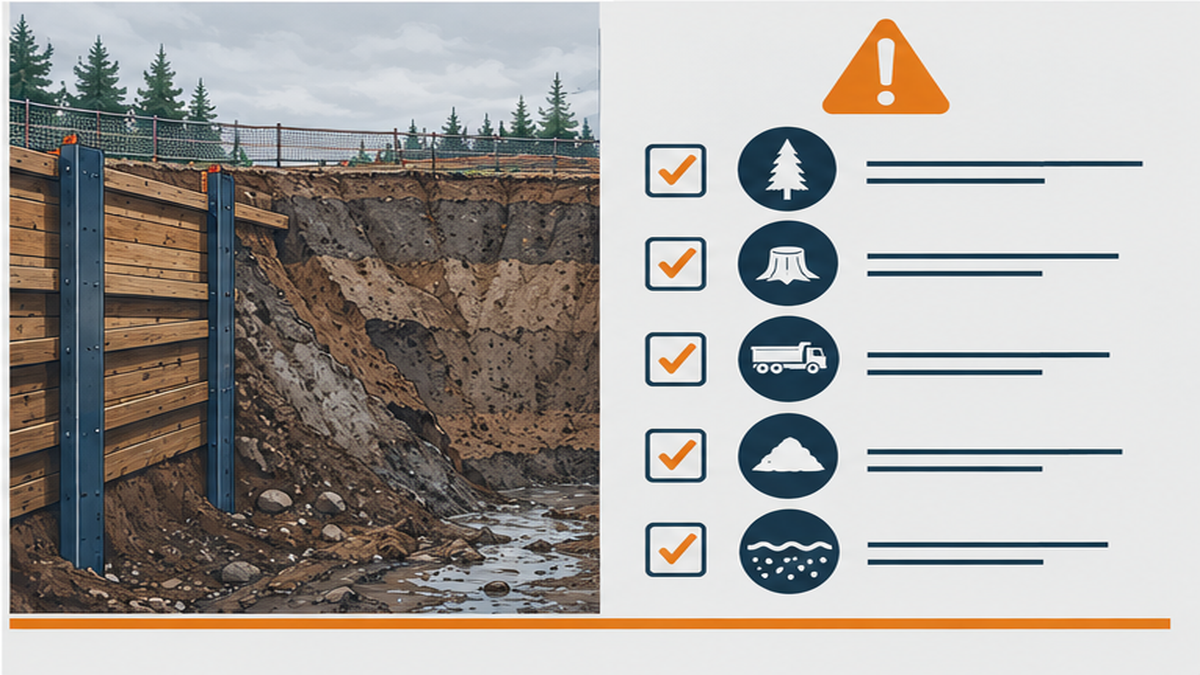
Accepting a lowball figure for ground stabilization is a massive risk for any general contractor. Cheap bids often omit critical logistical details like disposal fees, trucking time, or the specific requirements of your geotech report. When a contractor underbids the volume and weight of the soil haul-off, you will inevitably face change orders once the trucks start hitting the scales.
Worse, an inexperienced crew might ignore water management or slope stability during the dig. If an excavation wall fails because the contractor cut corners on shoring, the delay cascades into your foundation and framing schedules. We provide transparent fixed pricing before work begins, based on a realistic assessment of the engineering requirements. A realistic upfront number protects your project timeline and prevents mid-project budget blowouts.
Preparing for a Project-Specific Assessment
We are the installer, not the design engineer. If you do not have stamped drawings yet, you need to start there—we can recommend a licensed Washington firm if necessary. Once you have your documents, the next step is a project-specific assessment.
To get a reliable number, email us your plan set, geotech report, and any approved permits. We will review the scope to understand the soil realities and access constraints. For complex retaining walls or tight commercial lots, we will schedule a site visit to verify the logistics. After reviewing the engineering and the physical site, we provide a detailed written estimate. You can learn more about this service by reviewing our grading and stabilization process. This ensures that when we mobilize our equipment, the scope is clear, the timeline is contracted, and the pricing is locked in.
Common Questions About Excavation and Shoring
How is Excavation & Site Prep priced in my area?
What should I know about Excavation & Site Prep?
How long does Excavation & Site Prep take?
How do I get an estimate?
Ready for a Firm Earthworks Number?
Payment Structures for Heavy Civil Projects
Large-scale earthworks and shoring projects require clear financial expectations before the first machine mobilizes. Because drilling, caging, and soil haul-off involve significant upfront equipment and trucking costs, payment schedules are typically tied to project milestones. We outline these phases clearly in your detailed written estimate.
For developers and general contractors, this usually means an initial mobilization deposit, followed by progress payments as specific phases—such as site grading, drilled shaft excavation, or utility installation—are completed. We do not offer in-house consumer financing; our terms are structured for commercial and heavy residential construction realities. By locking in a fixed price after reviewing your geotech and plan set, we ensure that your accounting team can accurately forecast the cash flow required to get the site ready for the foundation pour.
How Your Schedule Impacts the Bottom Line
In the excavation industry, time and money are permanently linked. If your project requires an accelerated timeline to beat incoming weather or to hit a strict foundation pour date, the logistics change. Hitting a compressed schedule often means deploying multiple crews, renting additional heavy equipment, and running more dump trucks simultaneously to handle the soil haul-off. These extra resources increase the overall investment.
Conversely, allowing a standard, flexible window for site preparation keeps expenses predictable. It allows us to manage trucking routes efficiently and avoid the premium costs associated with overtime or rush equipment rentals. When you email your plan set, let us know your ideal timeline. We will build a realistic, contracted schedule that balances your deadline with the most efficient approach to moving the dirt.