
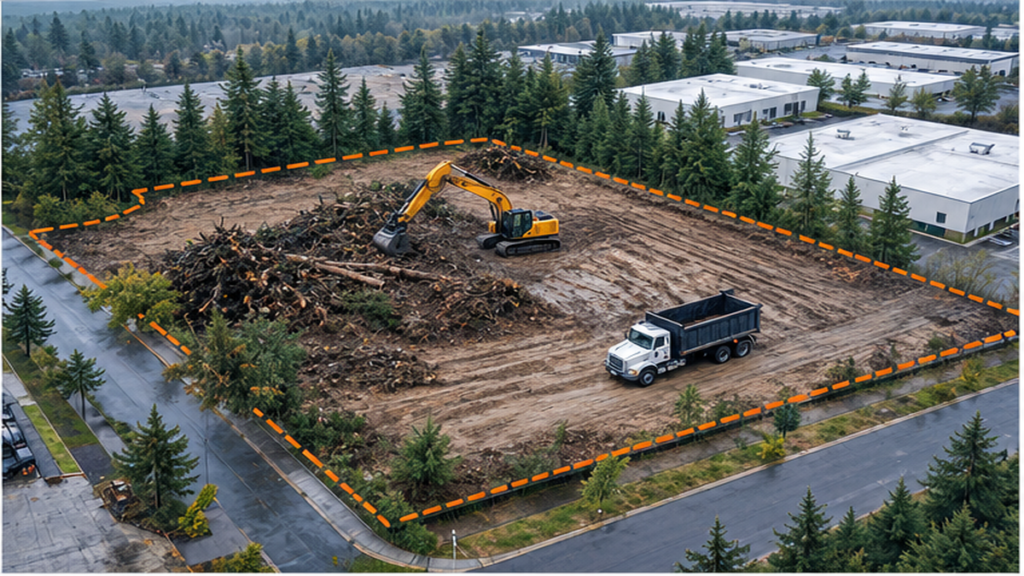
Commercial Land Clearing Costs Guide
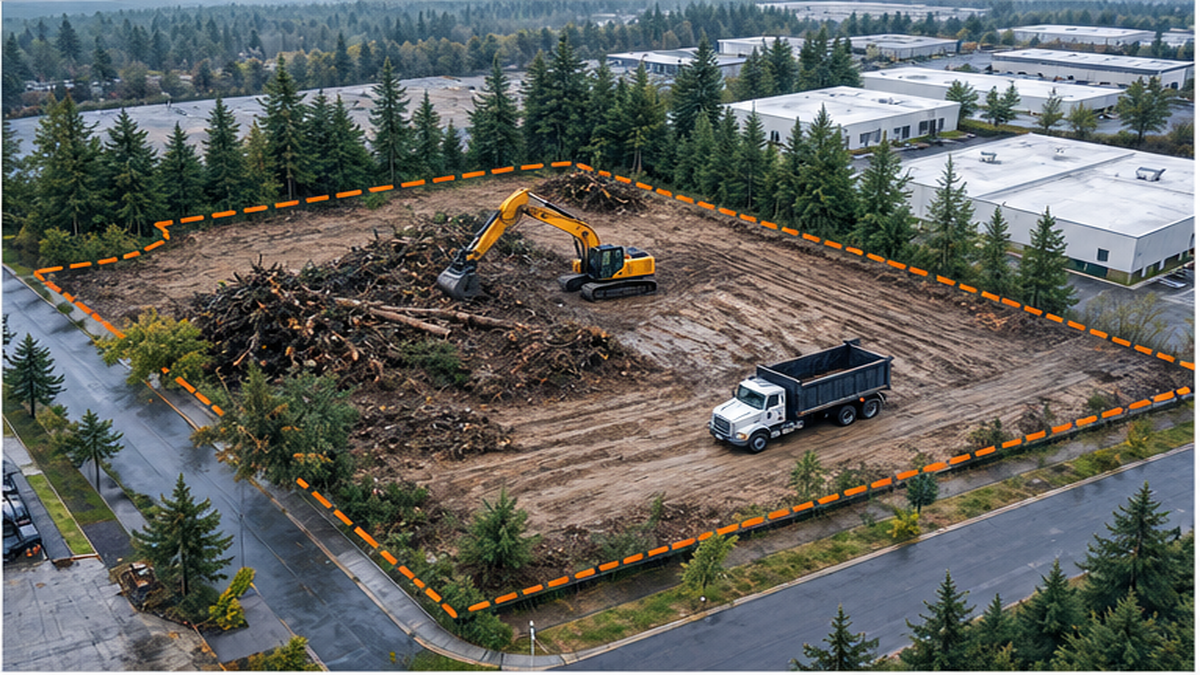
Developers facing tight schedules before a foundation pour need to know exactly what commercial land clearing costs before breaking ground. There is no single online price list for this work, because quotes depend heavily on soil conditions, disposal volume, and site access. At Ruffhouse Construction LLC, we provide fixed written estimates for Washington and Oregon sites only after reviewing your plan set and geotech report. This ensures you are not hit with surprise change orders for buried foundations or unstable soils later. Read on to understand the specific variables that drive your earthworks quote and how to prepare your project documents for a firm number.
Why Commercial Clearing Quotes Vary
Two commercial sites with the exact same acreage can yield drastically different clearing quotes. The primary reason price varies is the condition of the material being removed. Clean soil haul-off requires a completely different disposal approach than mixed demolition debris or concrete rubble. Additionally, hidden site conditions—such as buried foundations, unstable soils, or unexpected groundwater—often dictate the heavy equipment required.
Site access also plays a massive role. If a lot is tight and requires double-handling of materials or restricts truck size, labor hours increase. Weather delays and schedule pressure before a foundation pour can also force the need for extra crews. Because these variables change from one Washington property to the next, a blind online quote is never accurate. A true cost assessment requires an on-site engineer assessment or a thorough review of your geotech reports to lock in a fixed cost estimate before work begins.
Main Cost Factors for Heavy Civil Earthworks
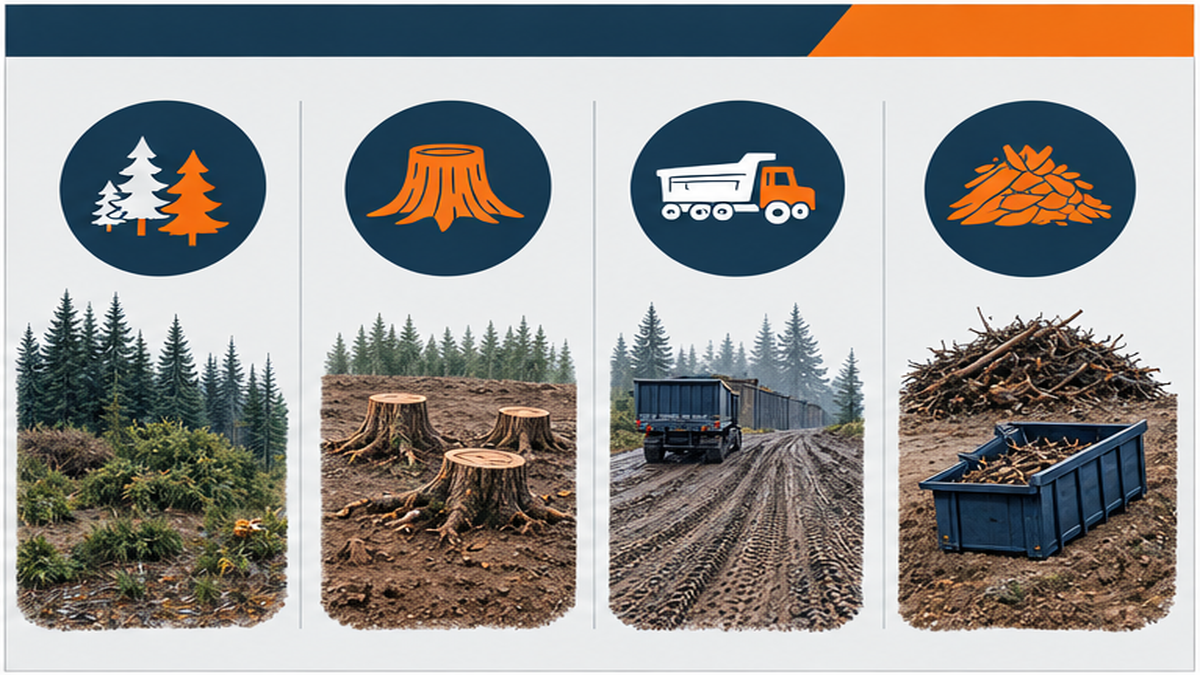
To understand your commercial land clearing costs, you must look at the specific line items that dictate heavy civil earthworks. Here are the main cost factors that impact your quote:
- Material type: Removing clean soil is straightforward, but handling mixed demolition debris requires permitted disposal sites and higher tipping fees.
- Volume and weight: The sheer tonnage of material hauled to the disposal facility is often the largest line item on an earthworks quote.
- Site access constraints: Tight urban lots that restrict truck size mean we must double-handle materials, increasing labor time.
- Material readiness: If debris is already staged for loading, costs are lower compared to sites requiring active demolition first.
- Hidden site conditions: Discovering buried foundations or unstable soils during site grading requires immediate scope adjustments.
- Schedule pressure: Deploying extra crews to meet a tight deadline will increase the overall project cost.
What a Professional Quote Typically Includes
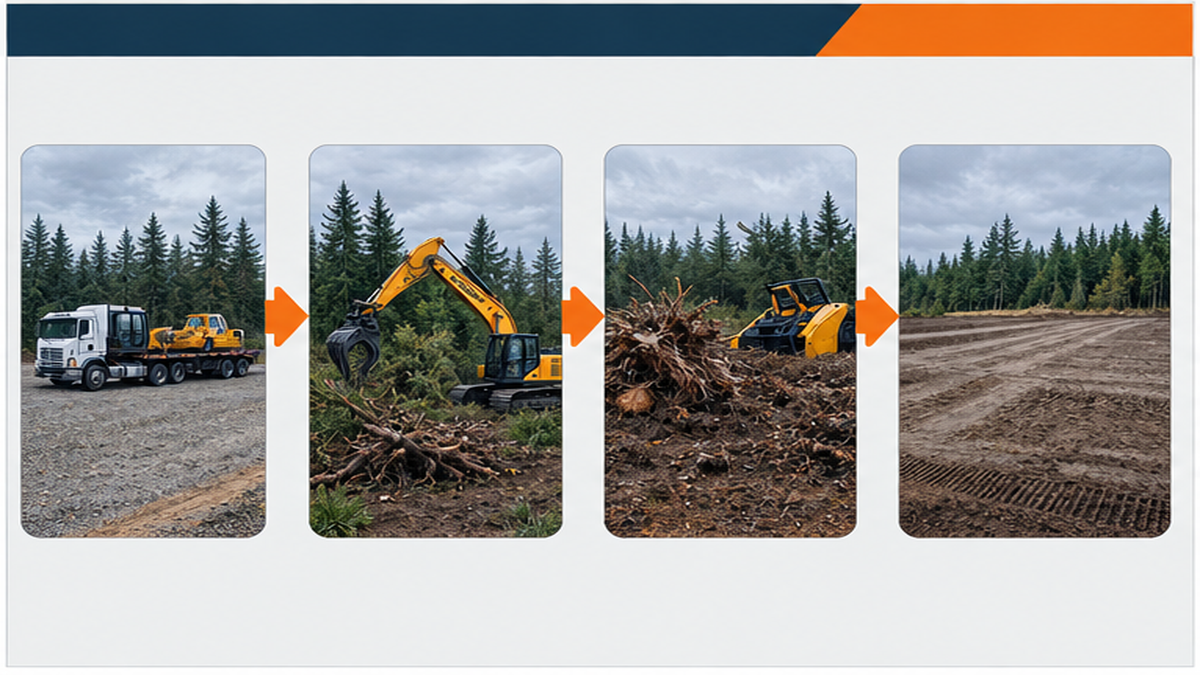
A comprehensive commercial land clearing quote from a professional heavy civil installer should leave no ambiguity about the scope of work. When we bid a project, the estimate covers the full earthworks package required to get your site ready for construction. This includes initial site grading, foundation excavation, and the complete demolition and soil removal process.
Your fixed estimate will also detail the logistics of soil haul-off, including trucking and disposal fees for your specific material volume. If the project requires high-ticket specialty work, such as Drilled Shaft Excavation or soldier pile installation, those elements are explicitly itemized. We also include quality control, necessary documentation, and road restoration if heavy equipment impacts local access routes. We are the installer, not the design engineer, so our quotes focus purely on executing the approved plan set.
Site Conditions That Increase Your Quote
Even with a solid plan set, certain site realities can push commercial land clearing costs higher. The most common cost escalator is the discovery of hazardous or contaminated materials that require specialized handling and transport to permitted disposal sites. If a previous structure left behind buried concrete foundations or undocumented utilities, the excavation process must slow down for safe removal.
Unstable soils are another major factor. If the geotech report reveals poor load-bearing capacity, the site may require extensive over-excavation and import of structural fill before foundation work can begin. Weather also plays a critical role; heavy rain can turn a standard dirt work package into a complex mud-management operation. Finally, if you need to compress the timeline to accommodate a delayed foundation pour, the overtime labor required to meet that accelerated schedule will increase the final quote.
Practical Ways to Control Earthworks Costs
While you cannot change the soil composition of your lot, there are practical ways to control your earthworks budget. The most effective method is providing complete, stamped engineering drawings and a thorough geotech report upfront. When we have exact data on soil realities and load requirements, we can engineer a precise execution plan without padding the quote for unknowns.
Another way to control costs is by separating clean soil from mixed demolition debris before our crews arrive, if your timeline allows. When material is ready for loading rather than requiring active sorting on site, labor hours drop significantly. Flexibility in your schedule also helps; allowing standard working hours rather than demanding compressed timelines keeps labor rates standard. Bundling the full earthworks scope—combining Commercial Land Clearing, utilities, and drainage systems—often yields better mobilization efficiency than hiring separate contractors.
The Hidden Risks of the Lowest Bid
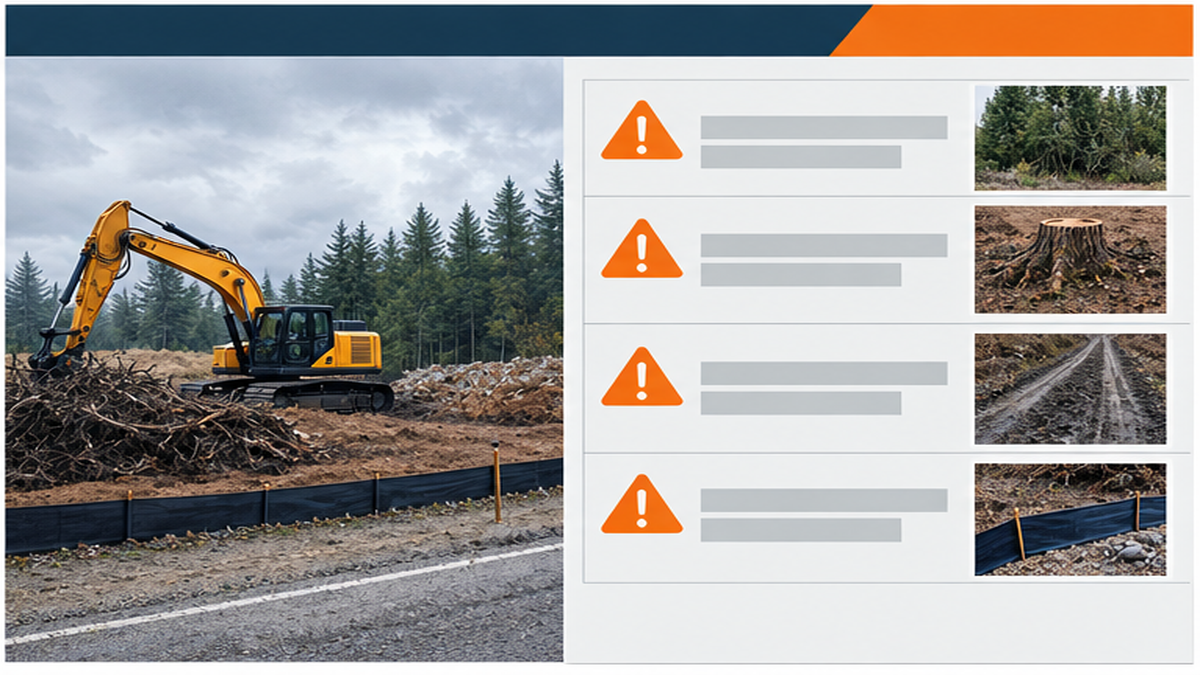
Accepting the lowest bid for commercial site preparation often leads to cascading delays that impact your entire build schedule. Cut-rate contractors frequently omit critical line items like disposal fees, assuming the soil is clean, only to hit you with massive change orders when the local facility charges for mixed debris. They may also under-calculate the volume and weight of the haul-off, leaving you responsible for the excess tonnage.
A low bid might also indicate a lack of proper equipment for the specific site access constraints, resulting in a job that takes weeks instead of days. If a contractor promises a firm price without first reviewing your plan set or geotech report, they are likely guessing. Working with a proven heavy civil installer ensures you get a transparent, fixed cost estimate before work begins, protecting your foundation timelines from unexpected earthworks delays.
How to Prepare for a Fixed Estimate
Because every Washington and Oregon site has unique soil and access constraints, a custom quote is mandatory for commercial land clearing. We do not provide blind online pricing. Instead, our estimate process is highly structured to give you a reliable, fixed number.
- What to prepare before contacting us: Gather your stamped engineering drawings, plan set, and the complete geotech report. We need to see the exact soil realities and access limitations. If you do not have an engineer yet, we can recommend a licensed Washington firm.
- When a site inspection is required: Once you email us your documents, we review the scope. If the lot has tight access or potential buried hazards, we will schedule an on-site engineer assessment.
- What happens next: After assessing the plans and the physical site, we provide a detailed, fixed written estimate outlining the exact scope.
Common Questions About Land Clearing Costs
How is Excavation & Site Prep priced in my area?
How much should you charge for land clearing?
How long does it take to clear 100 acres of land?
How do you quote land clearing?
Ready for a Fixed Earthworks Estimate?
Payment Structures for Commercial Earthworks
Commercial land clearing and heavy civil earthworks are significant capital investments that require clear payment terms. At Ruffhouse Construction LLC, we prioritize transparent financial agreements alongside our fixed cost estimates. Because we work primarily with developers, municipalities, industrial facilities, and general contractors, our payment schedules are typically structured around specific project milestones.
Once we review your plan set and provide a fixed quote, the contract will outline the exact draw schedule. This often includes an initial mobilization fee to secure the heavy machinery and cover early disposal facility deposits, followed by progress payments tied to completed phases like demolition, rough site grading, and final soil haul-off. If you need to Learn more about this service and how our billing aligns with your project phases, we can discuss the financial logistics during your initial scope review.
How Your Schedule Impacts the Final Quote
The relationship between your project timeline and your final earthworks cost is direct and undeniable. When developers face tight schedules before a foundation pour, accelerating the site preparation phase requires deploying additional crews, running multiple heavy machines simultaneously, and sometimes paying premium overtime rates. If you need a site cleared in half the standard time, the cost of that speed will be reflected in the labor and mobilization line items.
Conversely, allowing a standard, contracted timeline gives us the flexibility to sequence demolition, sorting, and soil haul-off efficiently. Proper sequencing means we can maximize truck loads and minimize double-handling of materials on tight lots, which keeps your disposal and labor costs under control. By providing your geotech report and plan set early, we can engineer a realistic schedule that balances your deadline requirements with cost-effective execution.