Ground Stabilization Matting Overview
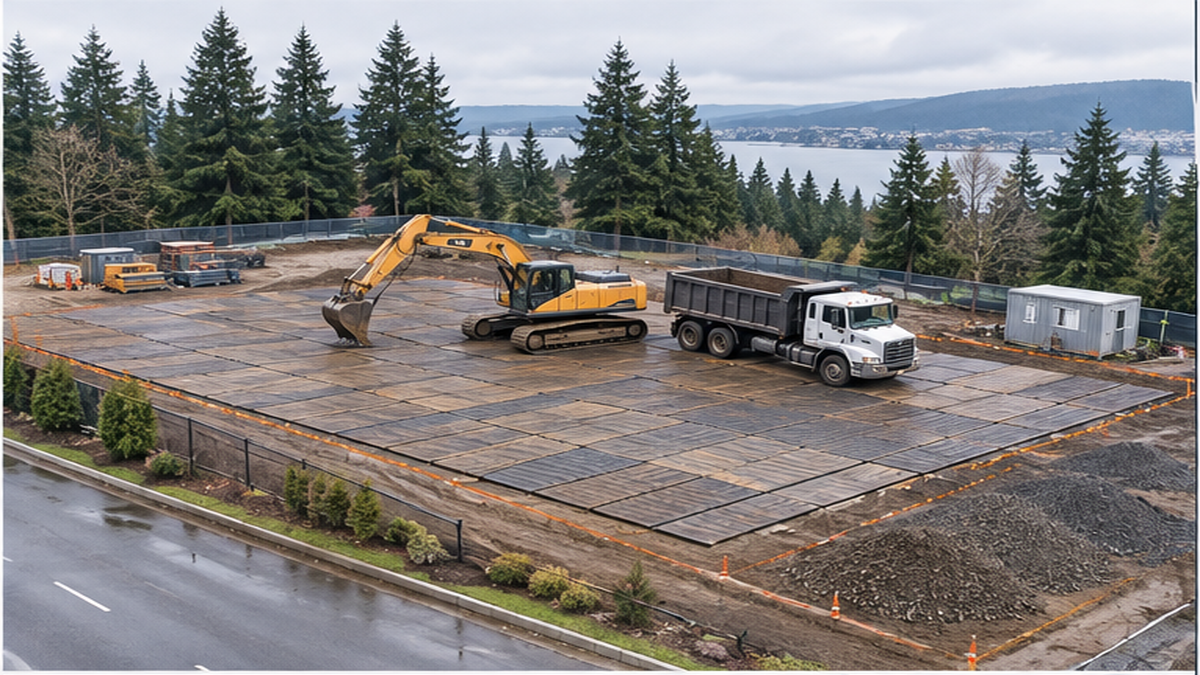
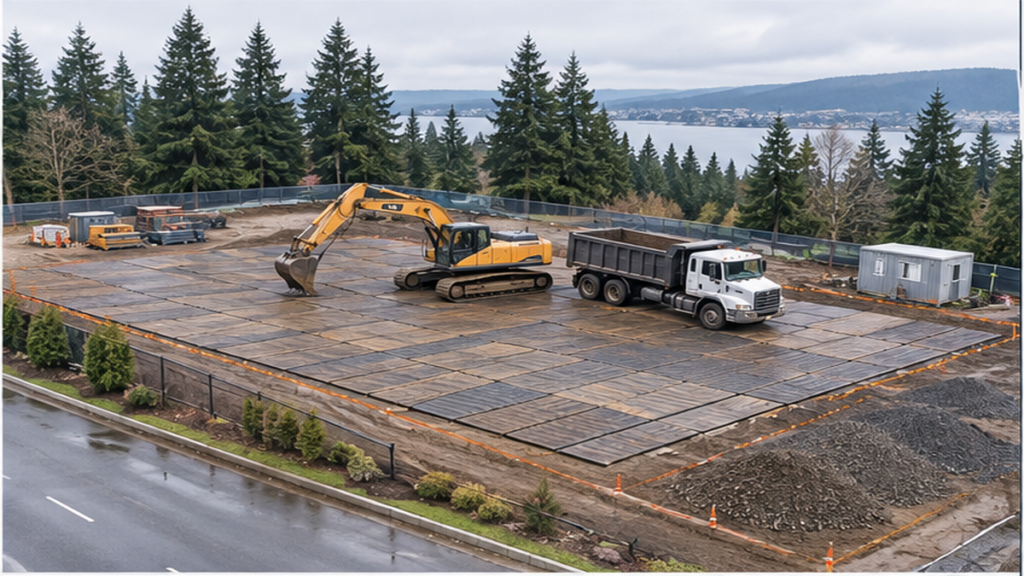
Ground stabilization matting creates a temporary load-bearing surface over soft, wet, or unstable soils so heavy equipment can access a jobsite without rutting or sinking. For developers, general contractors, and property owners across Federal Way, Seattle, Bellevue, and wider Washington and Oregon, Ruffhouse Construction LLC pairs site access planning with full shoring and ground stabilization scopes. Understanding where matting solves a surface traction problem versus when a cut requires structural earth retention keeps excavation schedules moving.
How Ground Stabilization Matting Works on Active Sites
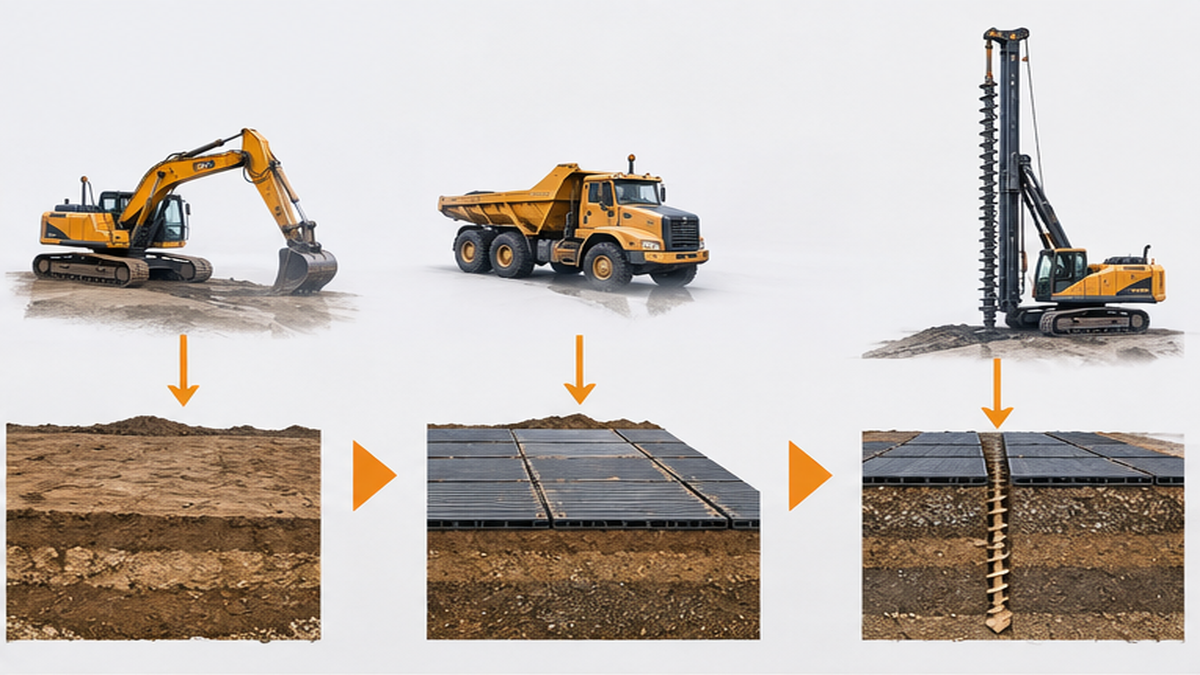
Interlocking timber, composite, or heavy-duty rig mats distribute the point loads of excavators, drill rigs, and dump trucks across a wider surface footprint. Instead of bogging down in saturated clay or loose fill, tracked and wheeled machines travel over a bridged path that protects underlying subgrade soil from shear failure.
- Access corridors: Mats establish temporary haul roads from the street edge to the excavation footprint, reducing mud tracking and keeping city right-of-way cleanup manageable.
- Equipment staging pads: Drill rigs and cranes require level, non-yielding platforms before boring shafts for soldier piles or installing tiebacks.
- Subgrade protection: Keeping heavy axle loads off exposed building pads prevents deep wheel ruts that would otherwise force extra over-excavation and imported structural fill.
Matting addresses surface bearing capacity and traction, not lateral earth pressure. When an excavation cut drops vertically next to a property line, street, or existing structure, surface mats alone cannot hold back the bank. Those cuts require engineered vertical retention—such as a soldier pile wall with lagging or driven sheet piles—installed per stamped geotechnical and structural drawings.
Choosing Between Matting, Subgrade Prep, and Structural Shoring
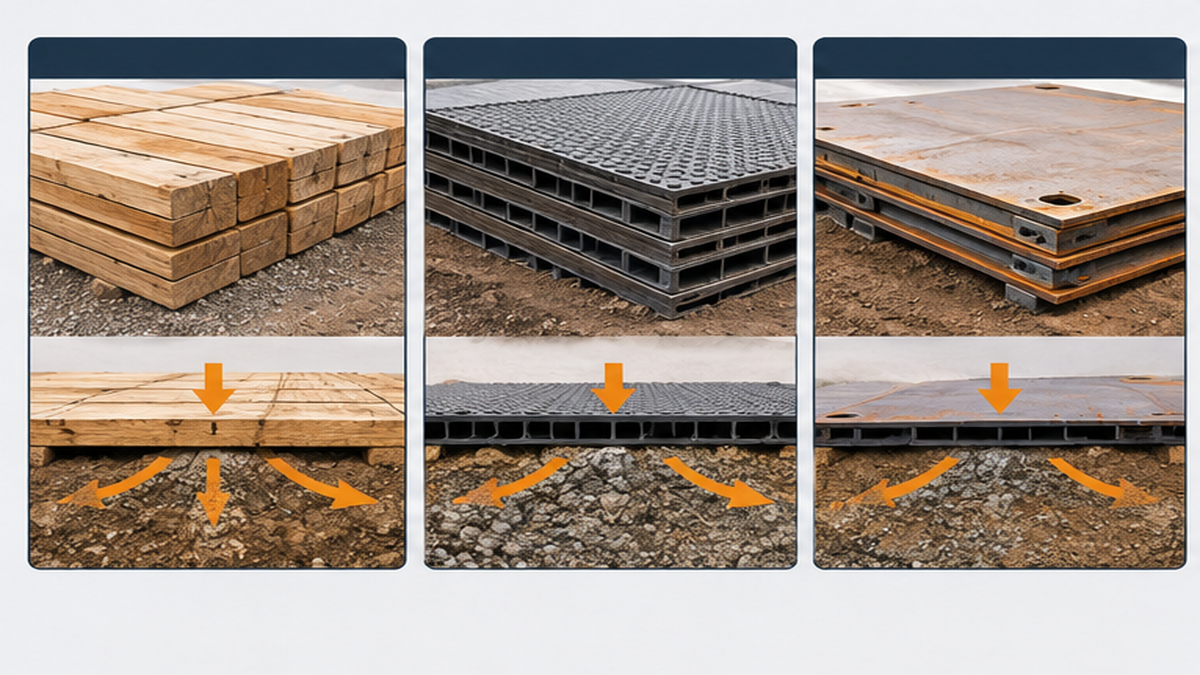
Selecting the right stabilization method depends on soil moisture, slope geometry, and what happens after the equipment leaves. If you only need temporary access across a soft residential lot or utility corridor in Kent, Kirkland, or Tacoma, ground stabilization matting lets crews work without permanently altering the soil profile.
By contrast, if the site needs a permanent roadbed, driveway base, or building pad, stripping organic topsoil and compacting crushed structural aggregate is usually more practical than renting mats long-term. On sloped lots where grade changes create lateral soil loads, a permanent retaining wall installation or temporary shoring system becomes necessary alongside excavation. Our crew reviews your site layout, access constraints, and soil report to determine whether temporary matting, aggregate stabilization, or structural piling fits the build sequence.
Common Mistakes With Site Stabilization Planning
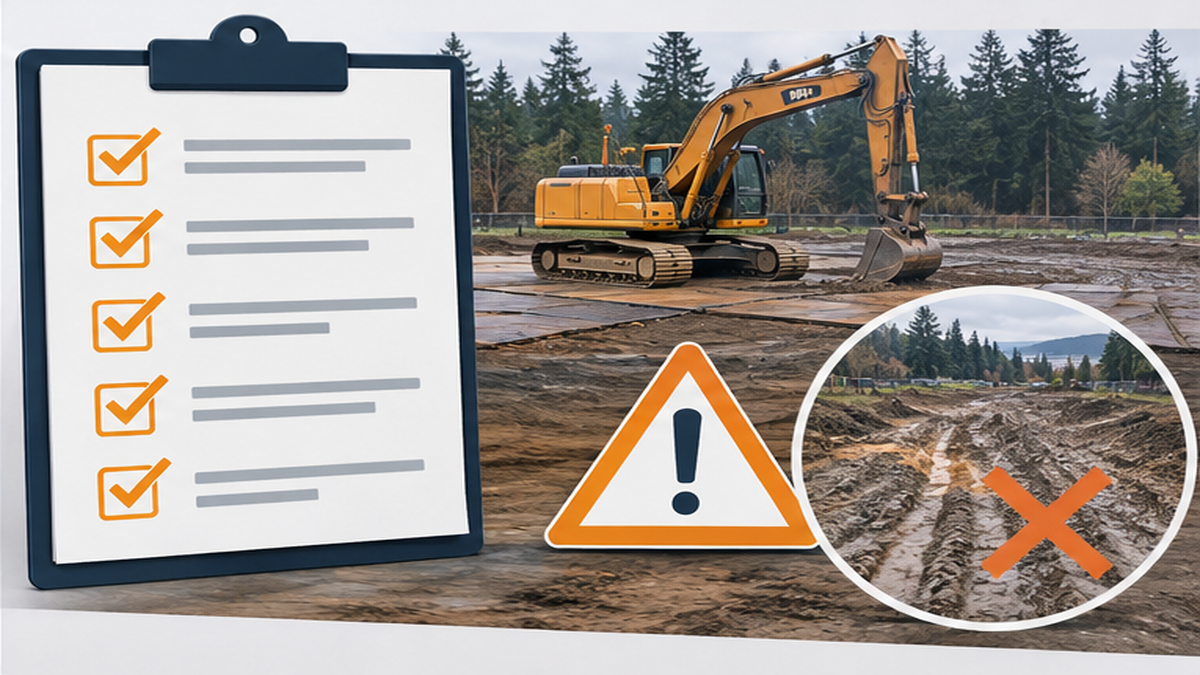
Treating every muddy or sloped lot the same way often leads to rework before foundation forms ever go in. Avoiding a few frequent planning missteps protects both your schedule and your subgrade:
- Using mats to compensate for unretained cuts: Placing heavy mats near the top edge of an unbraced excavation surcharge-loads the soil bank and increases slide risk.
- Skipping geotechnical review on sloped sites: Guessing at soil bearing capacity without a geotech report leads to undersized access prep or unexpected wall redesigns mid-dig.
- Waiting until machines arrive to plan staging: Tight residential streets in Seattle, Mercer Island, or Issaquah limit delivery truck turning radii; staging zones and mat layouts need to be mapped before mobilization.
- Overlooking drainage during wet weather: Surface mats do not stop runoff from saturating a cut; temporary ditching, sumps, or slope cover must direct water away from open trenches.
When to Bring In an Earthworks and Shoring Contractor
Contact an earthworks and shoring contractor as soon as your project involves deep foundation cuts, steep grades, saturated soils, or heavy equipment operating near neighboring structures. Early coordination lets us verify whether standard excavation and matting will hold the site or if your build requires drilled soldier piles, tiebacks, or driven sheet piling using specialized equipment like an ABI sheet pile driver.
Ruffhouse Construction LLC operates as the field installer, not the structural engineer who stamps design drawings. If you already have a plan set and geotechnical report, email them over so we can review access realities, confirm material lead times, and walk the site. If you are still in early planning without stamped drawings, we can point you toward a licensed Washington engineering firm so your stabilization scope is designed properly before bidding.
Related Earthworks and Stabilization Guides
Review Your Site Access and Stabilization Scope
Frequently Asked Questions About Shoring & Stabilization
How is Shoring & Stabilization priced in my area?
What should I know about Shoring & Stabilization?
How long does Shoring & Stabilization take?
How do I get an estimate?
Site Care During and After Stabilization Work
Keeping a stabilized site functional through wet Pacific Northwest weather comes down to controlling surface water and respecting load limits. During active construction, inspect mat joints and haul paths after heavy rain to clear pooled water and prevent silt from pumping up between panels.
Once permanent retaining walls, compacted pads, or exterior improvements—such as above ground pool deck construction—are completed, keep perimeter drains and weep holes free of leaves and soil wash. Avoid parking heavy delivery trucks or stockpiling bulk materials directly behind newly backfilled retaining structures unless the wall was engineered for that surcharge load.