
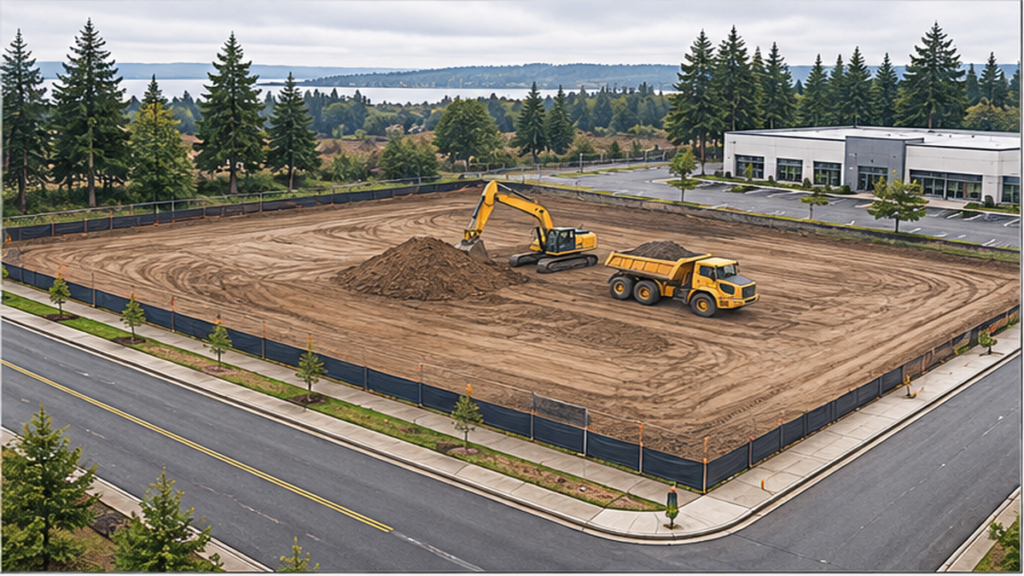
Mechanical Site Preparation for Washington Construction Projects
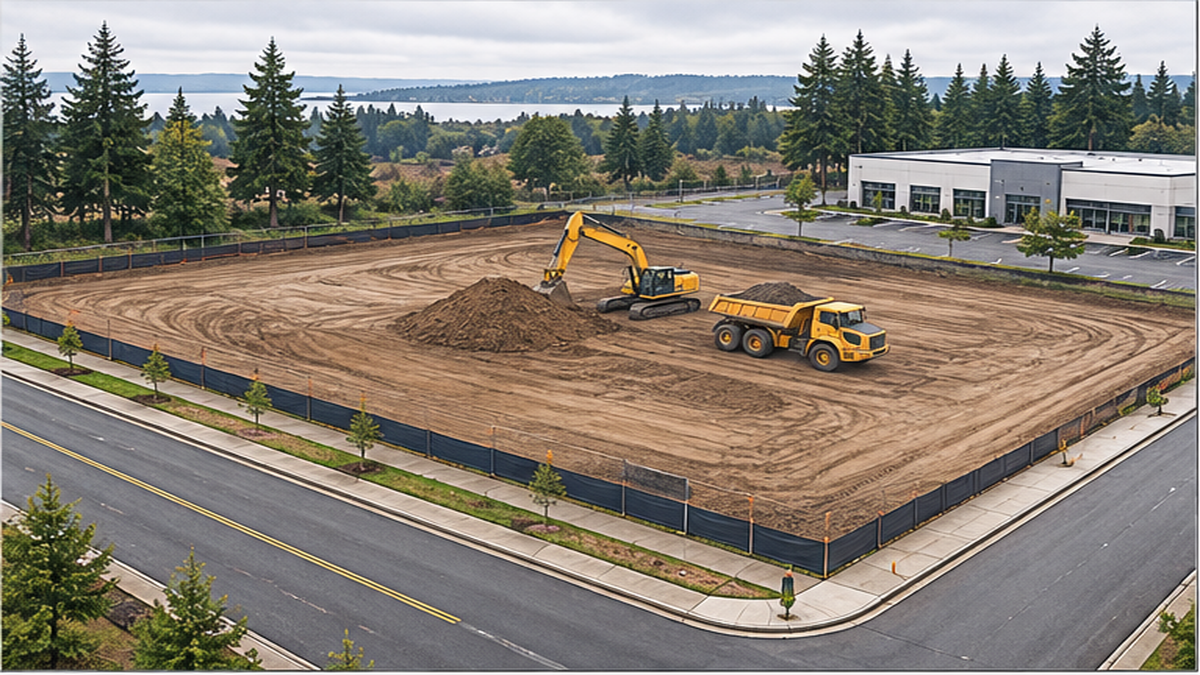
Unstable soils, steep slopes, and tight foundation pour schedules turn mechanical site preparation into the most critical phase before vertical construction begins. Mechanical site preparation uses heavy earthmoving machinery—such as excavators, bulldozers, and graders—to clear vegetation, strip topsoil, balance cut-and-fill grades, and compact building pads to engineering specifications. For developers, general contractors, and property owners across Federal Way, Seattle, Bellevue, and throughout Washington and Oregon, starting with a thorough site assessment and plan review prevents costly foundation delays and unexpected soil haul-off charges once digging starts.
What Mechanical Site Preparation Covers on an Active Jobsite
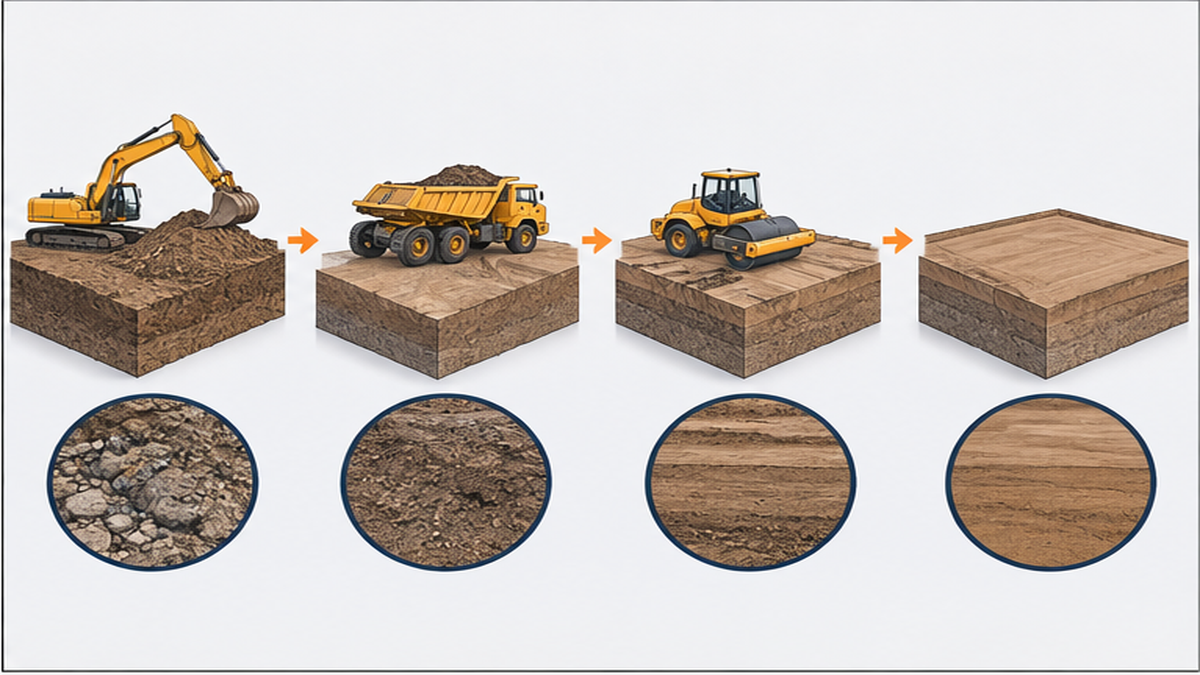
Mechanical site preparation transforms raw, sloped, or previously developed land into a stable, build-ready footprint. Rather than relying on manual labor, heavy equipment executes bulk earthworks systematically so concrete crews and utility installers can work safely on schedule.
- Clearing and demolition: Removing brush, stumps, existing concrete slabs, and buried debris so organic or unstable material never remains beneath structural loads.
- Rough and finish site grading: Cutting high elevations and filling low spots to establish positive drainage away from future structures and meet civil plan elevations.
- Foundation excavation: Digging structural footings, crawlspaces, basements, and retaining wall trenches to exact depths dictated by your stamped plan set.
- Soil haul-off and import: Exporting unsuitable wet clays or excess spoils while bringing in structural pit-run gravel or crushed rock for compaction.
- Utilities and drainage prep: Trenching for water, sewer, storm drainage, and conduit lines prior to final sub-base compaction.
Because pricing depends on soil classification, disposal volume, and equipment access rather than a flat rate, there is no public price list or instant online calculator for earthworks. Send your civil drawings and geotechnical report first—we review site access and soil realities, conduct an on-site assessment when needed, and deliver a fixed written estimate before machinery mobilizes.
Key Scope and Budget Decisions Before Mobilizing Equipment
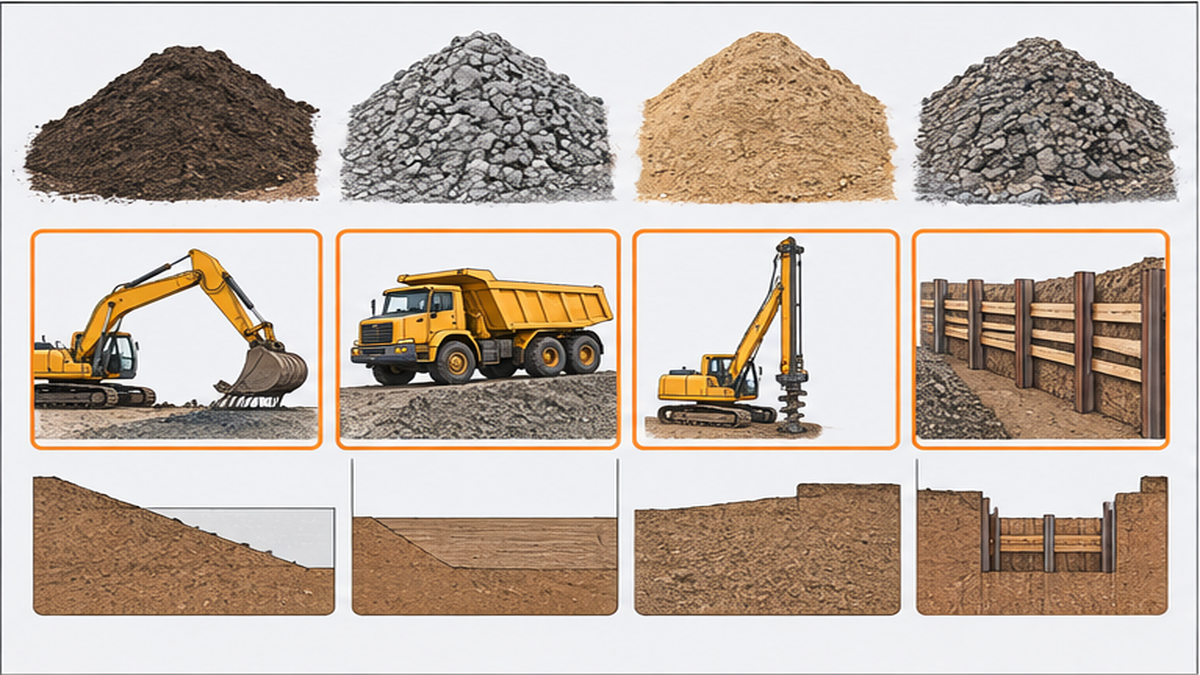
Before soliciting bids for earthworks in King County, Pierce County, or surrounding Puget Sound cities, property owners and general contractors must lock down four practical variables that directly control machine hours and disposal costs.
| Decision Factor | Simpler Site Conditions | Complex Site Conditions |
|---|---|---|
| Soil Composition | Granular, well-draining native soils suitable for on-site reuse and compaction. | Wet clay, high organic topsoil, or unstable fill requiring full soil haul-off and structural import. |
| Lot Access & Staging | Open street frontage allowing full-size excavators and dump trucks to turn easily. | Tight infill lots in Seattle or Mercer Island requiring smaller machines or double-handling spoils. |
| Slope & Earth Retention | Gentle grades that allow safe open-cut benching during foundation excavation. | Steep drops or adjacent structures needing engineered retention walls or ground stabilization. |
| Subsurface Obstacles | Clean undeveloped ground with marked, shallow public utilities. | Buried foundations, old septic tanks, or high groundwater requiring dewatering and sorting. |
If your project includes heavy tree removal or brush stripping before digging, review our Commercial Land Clearing scope to see how surface clearing transitions into bulk grading. When comparing bids, confirm whether export trucking, dump fees, and structural gravel import are itemized inside a fixed written estimate or billed as open-ended allowances.
Common Site Preparation Mistakes That Delay Foundation Pours
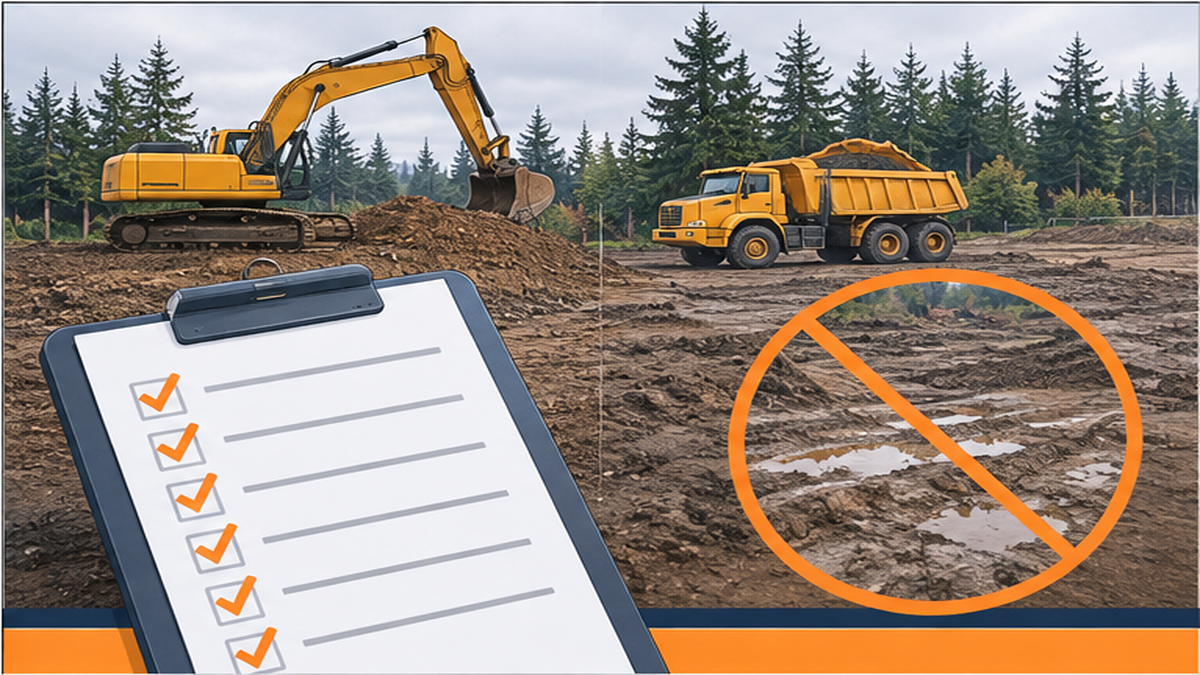
Rushing earthworks to save a few days early in a build often creates expensive rework once building inspectors or concrete crews arrive. Avoid these frequent missteps on residential infill lots and commercial pads:
- Digging without a geotechnical report: Guessing soil bearing capacity leads to unexpected over-excavation when soft pockets appear under footing lines.
- Leaving organic topsoil under slabs or driveways: Roots and organic matter decompose and settle over time, cracking concrete slabs and pavement.
- Ignoring temporary surface water control: Failing to crown the pad or cut temporary diversion swales turns open excavations into mud pits during Puget Sound rain events.
- Splitting earthworks across disconnected trades: Hiring separate operators for clearing, digging, and utility trenching creates scheduling gaps and finger-pointing over grade tolerances.
- Underestimating export volume: Soil expands (fluffs) once excavated from the ground, meaning a modest basement cut generates significantly more dump-truck loads than raw bank cubic yards suggest.
Addressing soil export logistics early prevents stalled trucks and blown budgets—our Need Soil Haul Off Cost breakdown explains how material type, weight, and facility fees drive hauling expenses in Federal Way.
When to Bring In a Heavy Civil Earthworks Contractor
Small landscaping projects can often be handled with compact rental equipment, but structural building pads, deep utility trenches, and sloped lots require experienced heavy civil operators. Bring in an earthworks contractor as soon as you have preliminary civil drawings or a geotechnical report—and before locking in concrete pour dates.
Ruffhouse Construction LLC acts as the earthworks installer, not the structural or geotechnical engineer who stamps your design. If you do not have stamped plans or a soil report yet, start with a licensed engineer; we can recommend a Washington firm when you are in the early planning stage. Once you have drawings, our team reviews access, verifies utility locates, and evaluates whether open-cut grading works or if specialized support—such as Drilled Shaft Excavation or engineered retaining systems—is required to protect neighboring properties.
Before scheduling a site walk, gather your site plan, topography survey, geotechnical recommendations, and any municipal permit conditions. Sharing these documents upfront lets us confirm equipment access, identify Dpie Site Grading Certification or local inspection checkpoints, and provide a transparent fixed price with contracted deadlines.
Related Site Preparation and Earthworks Guides
Ready to Review Your Site Plans and Earthworks Scope?
Frequently Asked Questions About Site Preparation
How is Excavation & Site Prep priced in my area?
What are the 5 P's in construction?
How long does Excavation & Site Prep take?
How do I get an estimate?
Protecting Your Graded Pad Between Excavation and Foundation Pour
Once mechanical site preparation finishes and passes the final walkthrough, keeping the compacted subgrade intact until concrete crews form footings prevents expensive re-compaction. Follow these practical jobsite steps between earthworks completion and vertical framing:
- Maintain positive surface drainage: Keep perimeter swales and silt fences clear of debris so stormwater sheds away from open footing trenches rather than pooling on the pad.
- Restrict heavy traffic on wet subgrades: Avoid driving loaded delivery trucks across exposed structural gravel or clay pads after heavy rain, which causes rutting and pumping.
- Cover exposed slopes during wet weather: Use plastic sheeting anchored with sandbags on steep cut banks to prevent erosion and sloughing before retaining walls or foundations go in.
- Coordinate utility handoffs promptly: Schedule plumbing and electrical underslab rough-ins immediately after pad compaction so trenches are backfilled and re-compacted cleanly before vapor barriers are laid.
For a closer look at how early site budgets are structured across clearing, grading, and disposal phases, explore our Excavation & Site Prep cost planning resource before finalizing your construction schedule.