
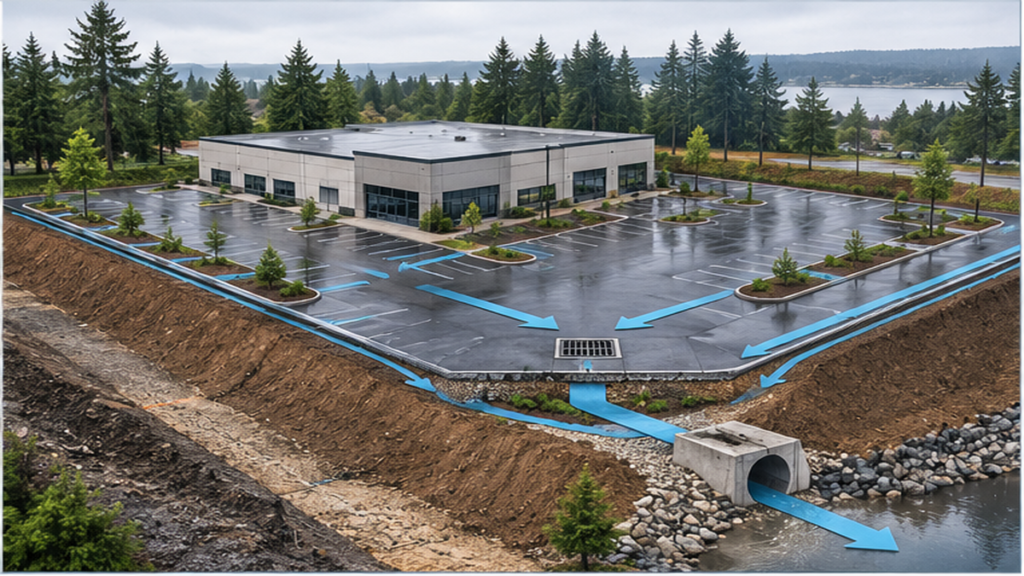
Drainage And Stormwater
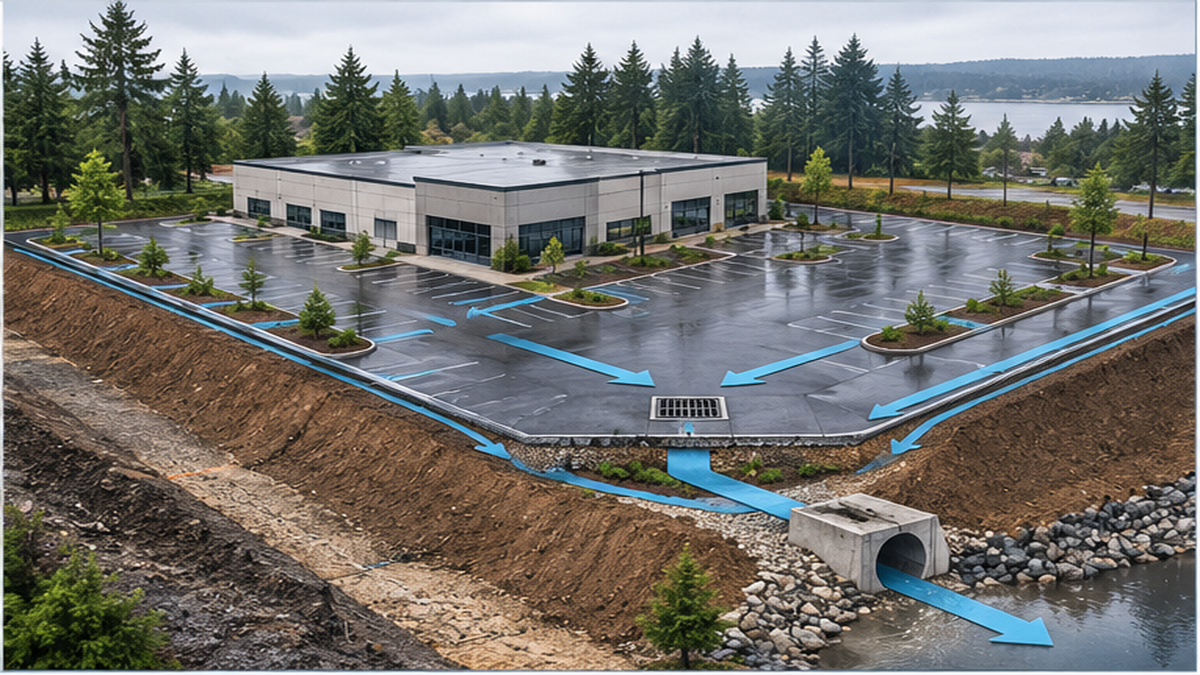
Drainage and stormwater management moves surface runoff and groundwater away from structures, foundations, and paved surfaces through graded channels, collection basins, and buried pipe networks. Ruffhouse Construction LLC installs stormwater drainage, sewer lines, gas utility trenches, and underground utility systems for developers, general contractors, municipalities, and private landowners across Washington and Oregon from our base in Federal Way, WA. Choosing the right piping, bedding aggregate, and catch basins before trenching starts prevents standing water, slope erosion, and rework before concrete pours or paving begin.
Water pooling against a building pad or washing across an access road can stall framing and utility inspections. On active residential and commercial sites in King County, Pierce County, and Snohomish County, we evaluate existing soil conditions, elevation changes, and plan sets before quoting a fixed cost estimate. Our crew works from stamped civil drawings and geotechnical findings to install the specified underground systems on a contracted schedule.
Material Overview
Stormwater drainage and underground utility systems rely on specific pipe profiles, geotextile fabrics, and washed aggregates matched to soil load and water volume. Selecting materials starts with reviewing the civil plan set and identifying whether the line carries roof runoff, subsurface groundwater, or municipal tie-in flows. Ruffhouse Construction LLC installs the piping and drainage assemblies specified on your project drawings across Seattle, Bellevue, Tacoma, Federal Way, and surrounding Puget Sound jurisdictions in Washington and Oregon.
[IMAGE_PROMPT_1] Cross-section diagram of a stormwater drainage trench showing perforated pipe, washed drain rock bedding, geotextile filter fabric, and compacted backfill layers.
- Corrugated High-Density Polyethylene (HDPE) Pipe: Used for high-volume stormwater conveyance, culverts, and detention runs where flexibility and joint integrity under soil load are required.
- Schedule 40 and SDR-35 PVC Pipe: Standard for tight-line roof leader connections, sewer installation, and sloped gravity drainage runs requiring smooth interior walls and solvent-welded or gasketed joints.
- Perforated Subsurface Drain Pipe: Installed inside aggregate-filled trenches wrapped in non-woven geotextile fabric to intercept groundwater behind walls or beneath building pads.
- Washed Drain Rock and Bedding Aggregate: Clean angular stone placed around perforated pipe and beneath rigid conduit to support pipe walls, maintain void space for water flow, and prevent point loading.
- Non-Woven Geotextile Separation Fabric: Lines drainage trenches to keep native silts and clays from migrating into the drain rock and clogging the system over time.
- Precast Concrete Catch Basins and Area Drains: Collect surface runoff from driveways, parking lots, and graded swales while trapping sediment before water enters the main storm line.
Scope boundaries matter when coordinating underground work. Our utilities and drainage scope covers stormwater drainage, sewer installation, gas utility install, and underground utility trenching and backfill. We are an installation contractor rather than the civil or structural design engineer—if a site lacks stamped drainage plans or a geotechnical report, you will need an engineer to establish pipe sizing, invert elevations, and discharge approvals before we build.
Options And Tradeoffs
Different site layouts and soil profiles call for distinct drainage assemblies. A tight-line conveyance pipe moves collected water quickly to an approved discharge point, while a French drain or curtain drain intercepts slow-moving subsurface water across a wet slope. Reviewing these tradeoffs during the scope review helps developers and property owners confirm that the specified materials align with site access, traffic loads, and long-term maintenance.
- Tight-Line Solid Pipe vs. Perforated Subsurface Trench: Solid PVC or HDPE carries concentrated roof and catch-basin water past sensitive soils without saturating the trench. Perforated pipe wrapped in fabric and washed stone lowers groundwater tables, though it requires cleanout access to flush fine silt over decades of service.
- Smooth-Wall PVC vs. Dual-Wall Corrugated HDPE: PVC offers rigid alignment and straightforward grade control on shallow residential or commercial runs. Dual-wall HDPE handles deeper burial depths and heavy equipment crossings with fewer joints over long runs, though it requires careful haunch compaction during backfill.
- Open Surface Swales vs. Buried Catch Basin Networks: Grassed or rock-lined swales cost less to excavate on open acreage but consume usable yard or parking footprint. Buried catch basins and piped storm lines preserve flat, drivable surfaces on tight urban lots in Bellevue, Kirkland, and Seattle while requiring periodic grate and sump cleaning.
- Standard Gravity Outfall vs. On-Site Detention Systems: Where municipal storm mains allow direct connection, gravity lines keep mechanical maintenance low. When local jurisdiction rules restrict peak runoff rates, underground detention chambers or oversized pipes store stormwater temporarily and release it at a metered rate.
Evaluating Utilities & Drainage cost drivers early prevents mid-project change orders. Trench depth, native soil stability, groundwater dewatering needs, haul-off of unsuitable spoils, and surface restoration (such as asphalt patching or concrete flatwork) affect project pricing far more than pipe material alone. We provide a transparent, fixed cost estimate before work begins once the drawings and site conditions are reviewed.
Installation Considerations
Proper installation determines whether a drainage system flows freely or settles and holds water. Before digging starts on any project in Washington or Oregon, utility locates must be called in and existing underground lines marked. When projects involve Planting Near Underground Utilities or working near existing water, sewer, power, and gas mains, crews hand-dig or pothole critical crossings to confirm exact elevations before running production trenching equipment.
[IMAGE_PROMPT_2] Construction site workflow showing underground utility trench grading, laser level slope verification, and bedding rock placement prior to pipe installation.
- Plan Set and Geotech Verification: We review civil drawings, invert elevations, connection points, and geotechnical soil reports to verify trench depths, shoring or benching safety needs, and bedding specifications.
- Layout, Utility Potholing, and Trenching: Field crews stake alignment, verify existing utility depths, and excavate trenches to the specified subgrade elevation while maintaining positive slope toward the outfall.
- Bedding, Pipe Laying, and Laser Grade Checks: Washed bedding aggregate is placed and leveled, pipe is joined with watertight seals or gaskets, and slope is verified with a laser level before cover stone goes down.
- Filter Fabric Wrap and Lift Compaction: For subsurface drains, geotextile fabric is lapped over the drain rock envelope. Native or imported structural backfill is then placed in controlled lifts and compacted to prevent surface settlement.
- Cleanouts, Catch Basins, and Final Walkthrough: Surface grates, rim elevations, and cleanout risers are set to finish grade, followed by a flow check and final walkthrough with the general contractor or property owner.
Scheduling depends on trench length, depth, soil moisture, inspection windows, and material lead times for specialty precast structures. If your site does not yet have civil engineering drawings or a geotechnical evaluation, let us know during your initial inquiry—we can recommend a licensed Washington engineering firm to prepare the stamped plans needed for permitting and accurate bidding.
Estimate Cta
Preparing clear site documentation before requesting a quote helps us turn around an accurate, fixed-price proposal without guesswork. Ruffhouse Construction LLC responds to quote requests within 24 hours and conducts an on-site engineer assessment to verify access, spoils haul-off routes, and tie-in elevations across Federal Way, Tacoma, Seattle, Redmond, Mercer Island, and neighboring Washington and Oregon communities.
- Civil Drawings or Site Sketch: Send PDF plan sets showing pipe routes, catch basin locations, and invert elevations by email.
- Geotechnical Report and Permits: Include soil logs, groundwater notes, and any municipal right-of-way or side-sewer permit conditions.
- Site Access Photos and Constraints: Share photos of overhead wires, narrow side yards, steep slopes, or paved surfaces that require saw-cutting and restoration.
- Target Construction Schedule: Note when foundation forms, utility inspections, or paving crews are scheduled so we can align our contracted timeline.
Common Questions
What should I know about Utilities & Drainage?
Options for utilities & drainage depend on condition, materials or vehicle details, and what the written scope can support. Ruffhouse Construction LLC handles stormwater drainage, sewer installation, gas utility install, and underground utility trenching across Washington and Oregon from our Federal Way, WA headquarters. Because we operate as the installation contractor rather than the design engineer, stamped civil plans and a clear scope review ensure the right pipe, bedding aggregate, and catch basins are installed from the start.
How is Utilities & Drainage priced in my area?
Pricing for utilities & drainage in Federal Way, WA depends on scope, materials or condition, prep needs, and site details — not a single flat rate. Trench depth, rock or wet-soil excavation, spoils haul-off, municipal tie-in requirements, and surface restoration all shape the final number. After a free on-site engineer assessment and plan review, we provide a detailed, fixed cost estimate before work begins.
How long does Utilities & Drainage take?
Timeline for utilities & drainage depends on prep work, access, material lead times, and how complex the job is on site. Short residential tight-line runs or single utility trenches move faster than deep commercial storm mains with multiple precast catch basins and municipal inspections. We establish clear deadlines in your written contract after reviewing the drawings and site conditions.
Why hire a professional for Utilities & Drainage?
Look for a qualified contractor with clear written scope, verified process, and experience with utilities & drainage. Underground pipe must hold exact laser-verified slope, proper bedding compaction, and watertight joints to pass municipal inspections and prevent sinkholes or water backup. Our crew brings full earthworks capability, quality control documentation, and contracted scheduling for developers, GCs, and property owners in Washington and Oregon.
How do I get an estimate?
We review your situation, confirm scope for utilities & drainage, and provide a written estimate for work in Federal Way, WA. Email your site plan set, geotechnical report, and project photos so we can evaluate access and schedule an on-site engineer assessment, with a response within 24 hours on quote requests.
Ready to review plans and site conditions for your drainage or underground utility project in Washington or Oregon? Request an estimate or Schedule a consultation with Ruffhouse Construction LLC.