
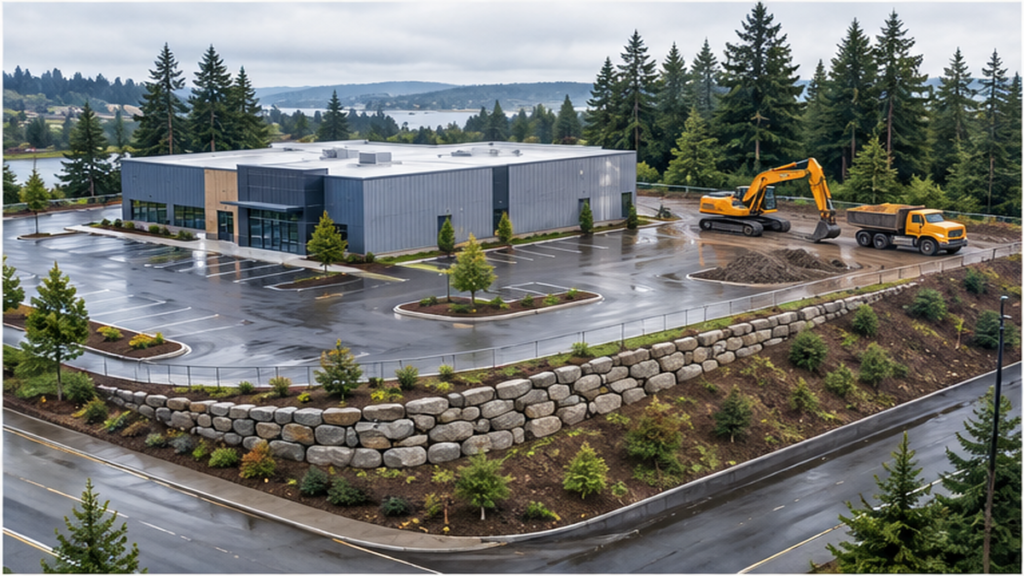
What Is a Natural Stone Retaining Wall?
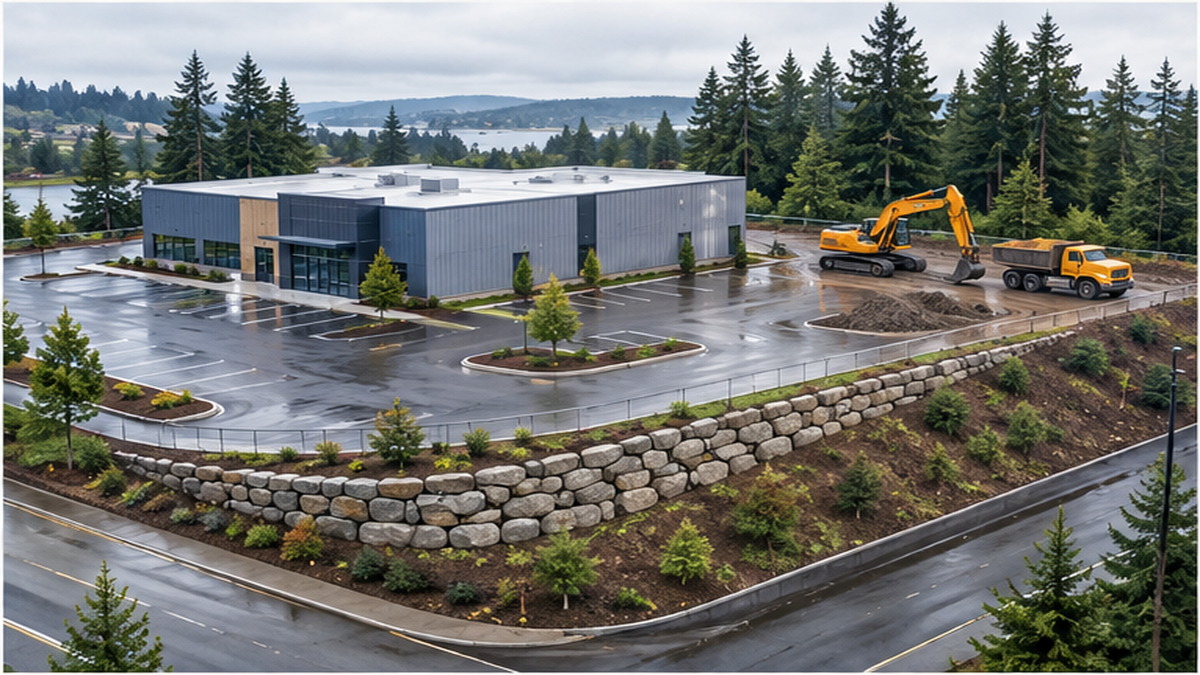
A natural stone retaining wall is a heavy civil structure built to hold back unstable soils and manage slope drainage, often requiring professional excavation and engineering on steep Washington lots. For developers and homeowners in Federal Way, Seattle, and throughout King and Pierce counties, these walls provide serious ground stabilization. Building one involves site assessment, soil haul-off, and proper drainage installation. We handle the heavy earthworks and installation once you have a plan set and geotech report ready. Our crews manage the entire scope, from the first day of demolition to the final grading, ensuring your site is secure and ready for the next phase of construction.
Understanding the Installation Process and Scope
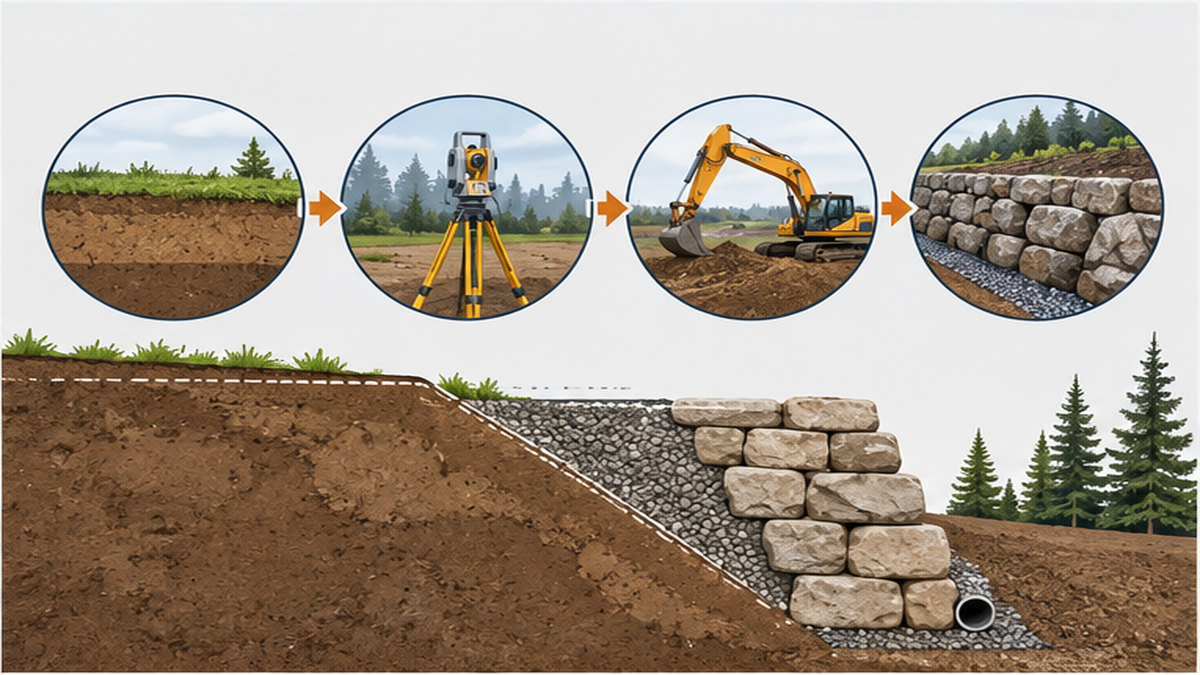
Before moving dirt for a natural stone retaining wall, you need to understand the soil realities of your site. In Washington and Oregon, wet weather and fatty clays mean that retaining walls are rarely just a landscaping task—they are structural earthworks. The process starts with a geotechnical report and stamped engineering drawings. Once those are in hand, our crews handle the site preparation. This includes heavy excavation, demolition of any failing structures, and soil removal.
We then install the necessary utilities and drainage systems behind the wall to prevent hydrostatic pressure buildup. The stone itself acts as both the structural face and the aesthetic finish, but the stability comes from what happens behind it. For steep slopes or tight access lots, we might also need to integrate temporary shoring or soldier piles to protect the site during construction. We are the installer, not the design engineer, so we build exactly to the specifications required to keep your property secure. Proper compaction and backfill are critical steps we document throughout the build.
Key Decisions for Ground Stabilization
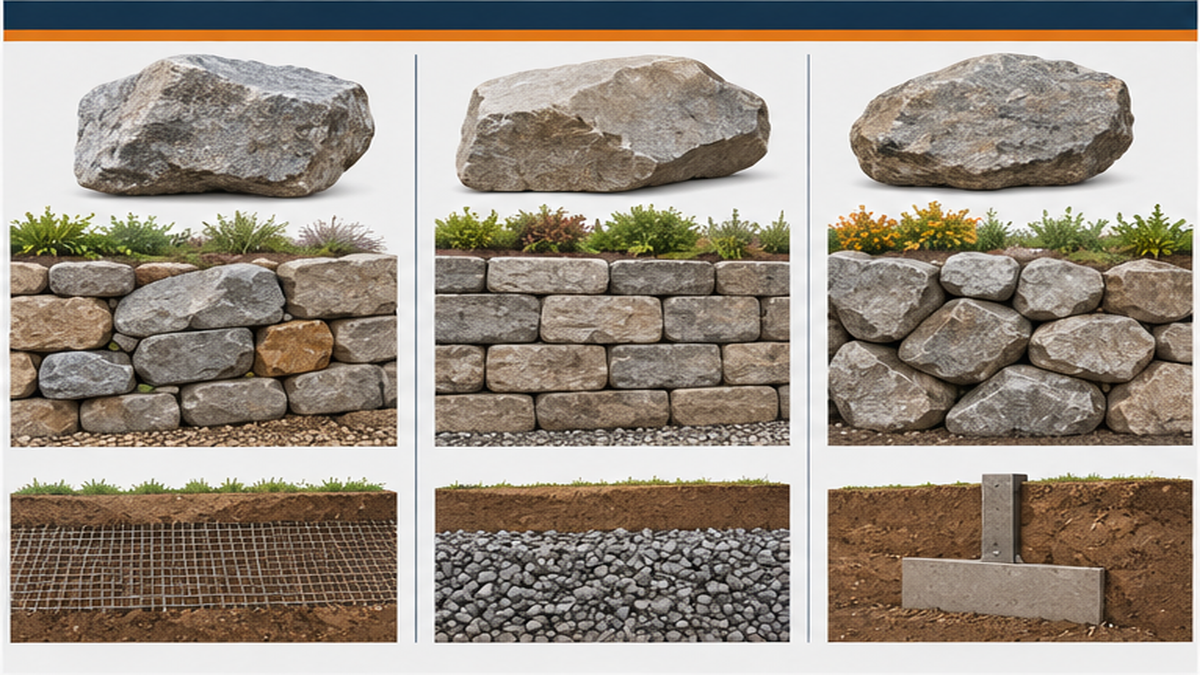
When planning ground stabilization, you have to decide between different retaining methods based on your site's access and soil conditions. If you are exploring backyard retaining wall ideas, the main tradeoff is space versus cost. Natural stone requires a wider footprint at the base to hold back the earth using gravity. If your property line is tight, a soldier pile and lagging system or a sheet pile wall might be the only approved method.
| Wall Type | Best For | Site Requirement |
|---|---|---|
| Natural Stone Rockery | Gravity-based retention on moderate slopes | Requires wider footprint for large boulders |
| Soldier Pile Wall | Deep excavations and tight property lines | Requires drilling access and steel beams |
| Sheet Pile Wall | Waterfronts or temporary trench shoring | Requires vibratory driving equipment |
Timing is another major factor. You need to schedule the excavation and wall installation before the foundation pour if this is for a new build. If you need to calculate your soil haul off cost for the excavated dirt, that depends heavily on the material type and disposal facility fees. We review all these variables during our site assessment.
Common Mistakes When Planning Retaining Walls
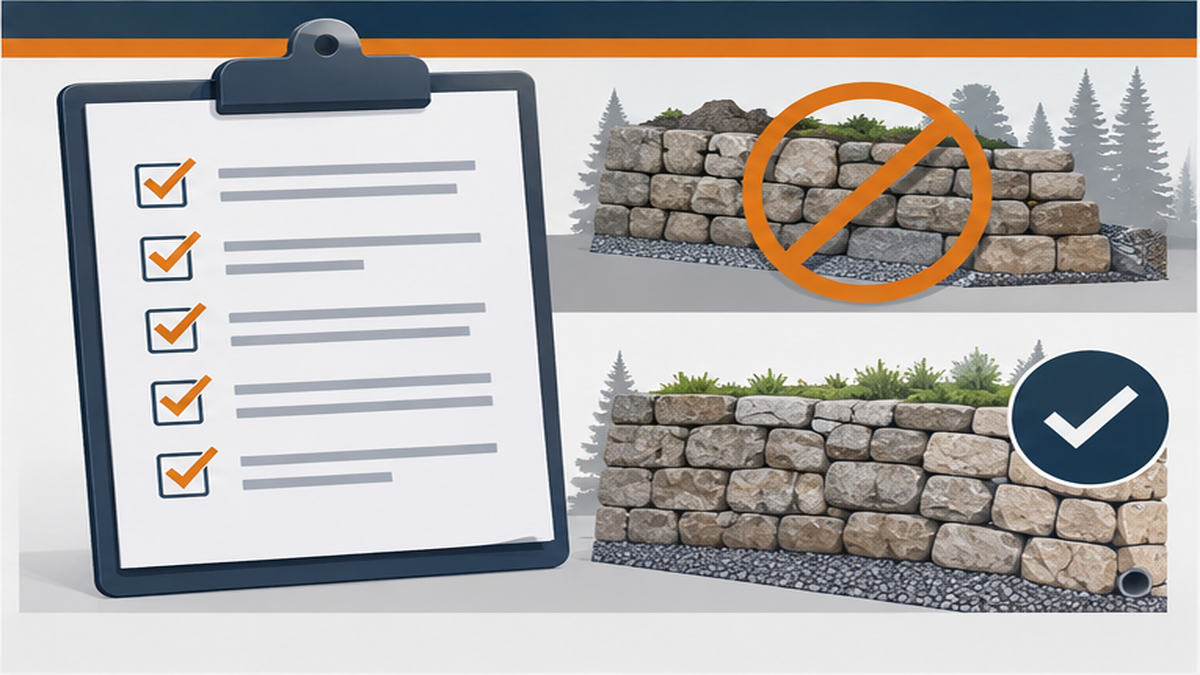
The most common mistake developers and homeowners make is asking for a firm price before securing a geotechnical report or engineering plans. We cannot give a reliable quote based on a phone description of a leaning wall. Another frequent error is ignoring the water. Failing to install proper stormwater drainage behind the stone will cause the wall to fail, regardless of how massive the boulders are.
Finally, many people underestimate the logistics of site access. Moving massive stones and hauling away cubic yards of wet clay requires heavy machinery. If the site is too tight for an excavator, the project timeline and costs will increase due to double-handling materials. Hazardous or contaminated material handling can also delay a project if not identified early. Always secure your plan set first, then schedule a site visit so we can evaluate access and soil conditions accurately.
When to Call an Earthworks Contractor
You need a professional earthworks contractor when your slope shows signs of active movement, or when your project requires cutting into a hillside to expand a buildable area. If an existing backyard retaining wall is leaning, cracking, or bulging, do not attempt to patch it. That indicates a structural failure or severe drainage issue.
Call us when you have your stamped drawings and geotech report ready for a new build or major repair. We handle the heavy civil scope—from the initial demolition and excavation to the final stone placement and road restoration. If you are still in the early stages and do not have an engineer yet, reach out anyway. We can recommend a licensed Washington structural engineer to get your plan set started before we step in to handle the installation.
Related Earthworks and Shoring Guides
Ready to Discuss Your Site?
Common Questions About Shoring and Ground Stabilization
How is Shoring & Stabilization priced in my area?
What should I know about Shoring & Stabilization?
How long does Shoring & Stabilization take?
How do I get an estimate?
Maintaining Your Retaining Wall
Maintaining a natural stone retaining wall primarily involves monitoring the drainage systems. The stone itself is incredibly durable, but hydrostatic pressure is the main threat to any ground stabilization structure. Check the weep holes and drain pipes regularly to ensure they are clear of mud, leaves, and debris, especially during heavy Washington rainstorms.
Inspect the slope above the wall for signs of erosion or pooling water, which indicates that surface runoff is not being directed away from the structure properly. Keep deep-rooted trees and large shrubs away from the immediate backfill zone, as their roots can disrupt the drainage rock and put unnecessary pressure on the stones. If you notice significant settling or new bulging in the wall face, contact a structural engineer to assess the site before the soil shifts further.