
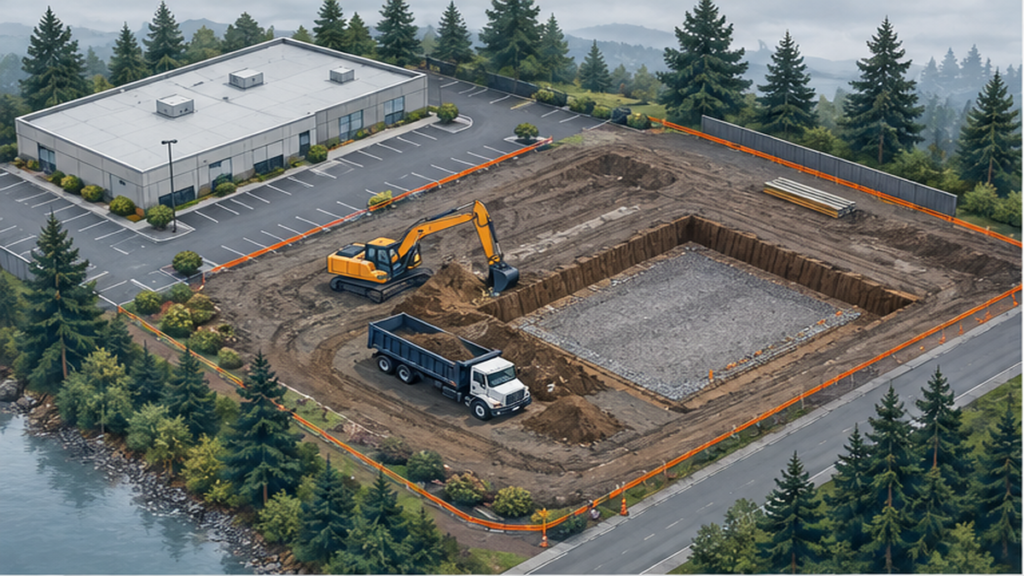
Understanding Foundation Earthworks and Site Prep
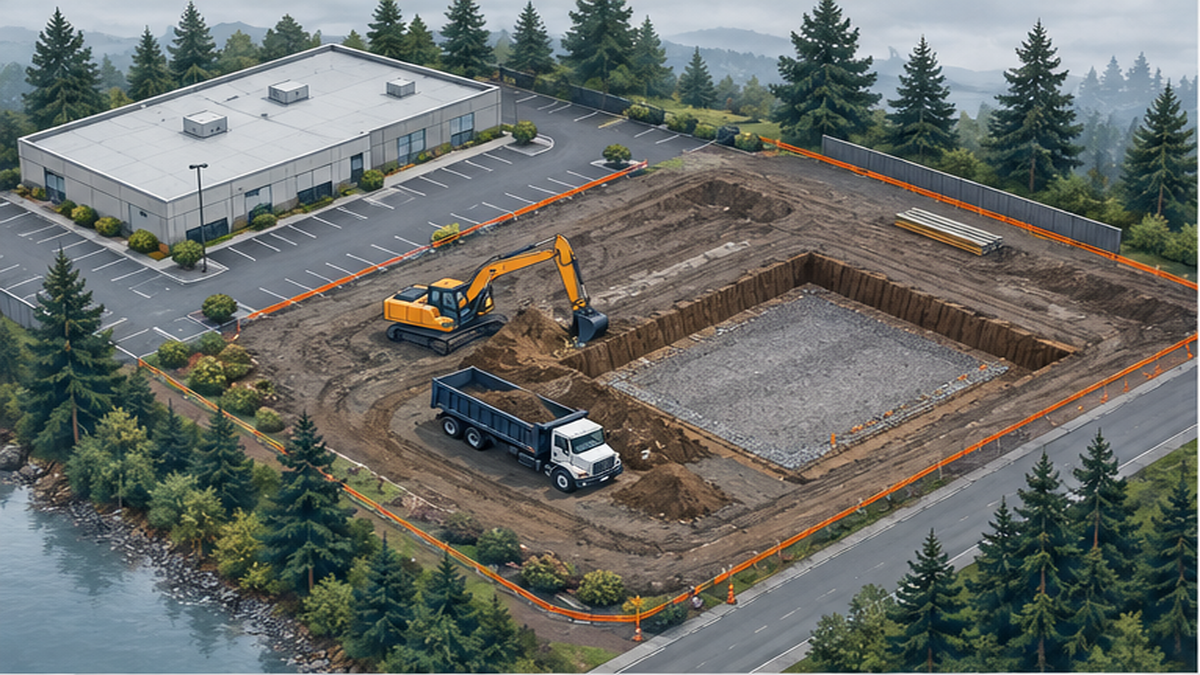
Unstable soils and tight schedules before a foundation pour can derail a construction project before it even starts. The final bill for foundation earthworks depends heavily on site access, soil volume, and whether the crew hits buried debris or water. There is no standard per-square-foot rate for heavy civil dirt work in Washington. A realistic number requires a stamped plan set and a geotechnical report.
Once an installer reviews the drawings and checks the property for access constraints, they provide a fixed scope of work. We handle the digging, shoring, and soil haul-off so your concrete crew can start on time without unexpected delays.
Why Similar Lots Have Different Site Prep Requirements
Two identical building footprints can have vastly different site preparation requirements. The primary variable is what lies beneath the surface. If one lot consists of clean, easily removed dirt while the other hides buried concrete rubble or contaminated fill, the disposal fees and machine hours change drastically. Access also dictates the timeline and the equipment used.
A wide-open commercial lot allows for large excavators and direct dump truck loading. A tight residential lot might require double-handling materials with smaller machines, which adds labor days to the schedule. Weather and seasonal water tables introduce another major variable. Digging a basement in the dry summer requires less water management than winter earthworks, where mud and runoff control slow down the digging phase and require additional stabilization efforts.
Primary Variables That Impact Your Proposal
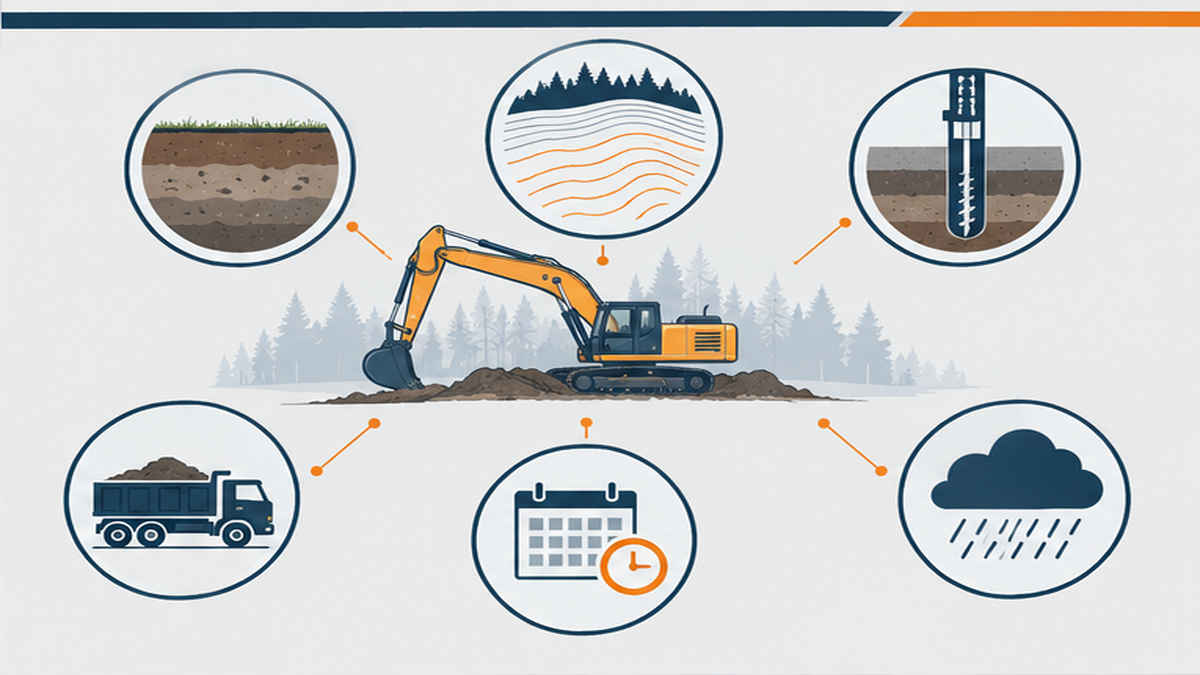
Several distinct variables dictate the resources needed to prepare a site for a foundation pour. A professional Excavation Contractor evaluates these elements to build a realistic timeline and budget.
| Site Variable | Impact on the Project |
|---|---|
| Material Type and Readiness | Mixed demolition debris or concrete rubble incurs higher tipping fees at the disposal facility compared to clean soil. If debris requires active sorting before loading, machine hours increase. |
| Volume and Weight | Haul-off is billed by the truckload and tonnage. Heavier, saturated dirt increases disposal expenses and requires more trucking cycles. |
| Site Access Constraints | Narrow driveways or steep grades force operators to use smaller equipment, increasing the time it takes to move the same amount of earth. |
| Hazardous Materials | Contaminated soils require permitted disposal sites and specialized handling protocols, which adds significant logistical steps. |
| Schedule Pressure | Needing the hole dug faster to meet a strict concrete pour deadline might require mobilizing multiple crews or running overtime. |
What a Professional Earthworks Package Covers
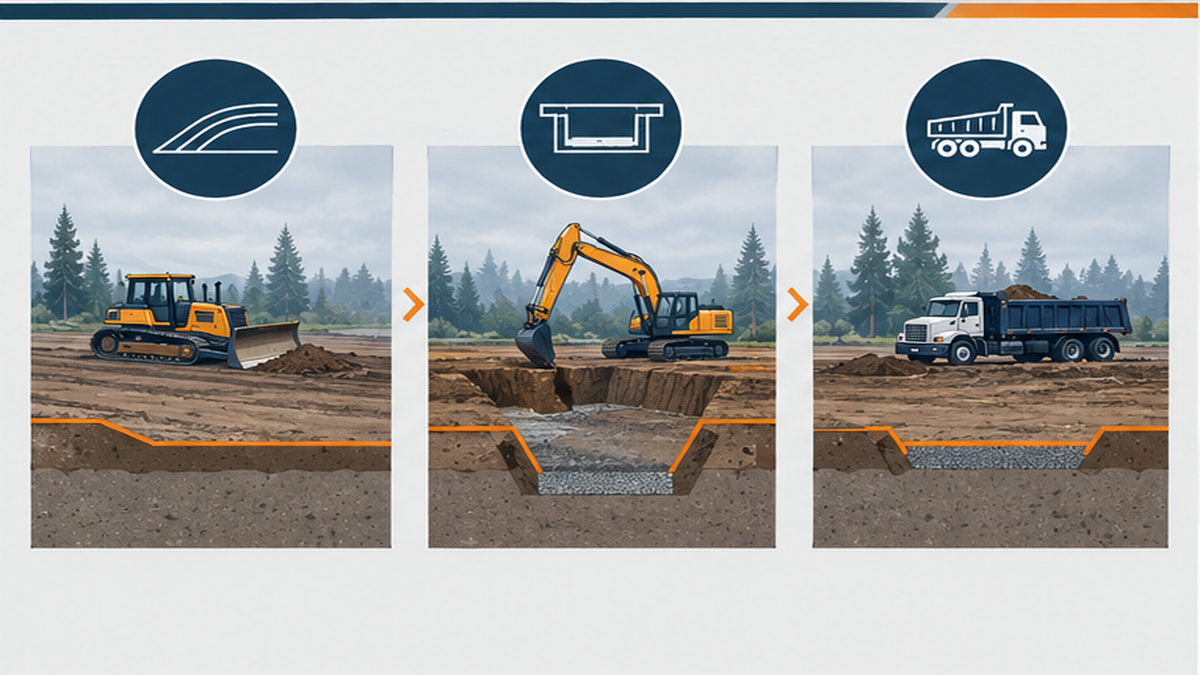
A comprehensive earthworks package covers more than just digging a hole. The scope usually includes initial site grading, the actual foundation digging, and the logistics of soil haul-off. It should also account for the equipment mobilization and the operators needed to run the heavy machinery safely.
For complex sites, the package might integrate temporary shoring or soldier pile installation to stabilize the trench walls before the foundation goes in. A reliable Excavation Contractor Near Me will clearly list these phases in writing so you know exactly who is handling the dirt removal, who manages the trucking, and who is responsible for the final grading before the concrete forms are placed.
Conditions That Expand the Scope of Work
Hitting unexpected underground conditions is the most common reason a project scope expands. Buried foundations, abandoned utility lines, or large boulders require immediate changes to the digging strategy. Unstable soils discovered during the dig might force the addition of tiebacks or retaining structures to keep the walls from collapsing.
Poor weather also plays a significant role; heavy rain turns a straightforward dig into a mud management operation, requiring pumps and extra stabilization materials. Finally, restricted access that forces operators to shuttle dirt from the backyard to the street using skid steers will significantly increase machine hours compared to loading dump trucks directly from the trench.
Practical Ways to Keep the Project on Track
The most effective way to control your site prep budget is to finalize your structural plans before breaking ground. Mid-project design changes force operators to re-dig or backfill areas, wasting machine time. Providing a comprehensive geotechnical report upfront allows the installer to anticipate soil behavior, reducing the need for emergency shoring.
If your property has enough space, keeping excavated dirt on-site for later grading eliminates expensive haul-off and disposal fees. Before the heavy machinery arrives, clear the work area of surface debris, vehicles, and temporary structures so the crew can start digging immediately without spending the first day moving obstacles.
The Reality of Incomplete Bids
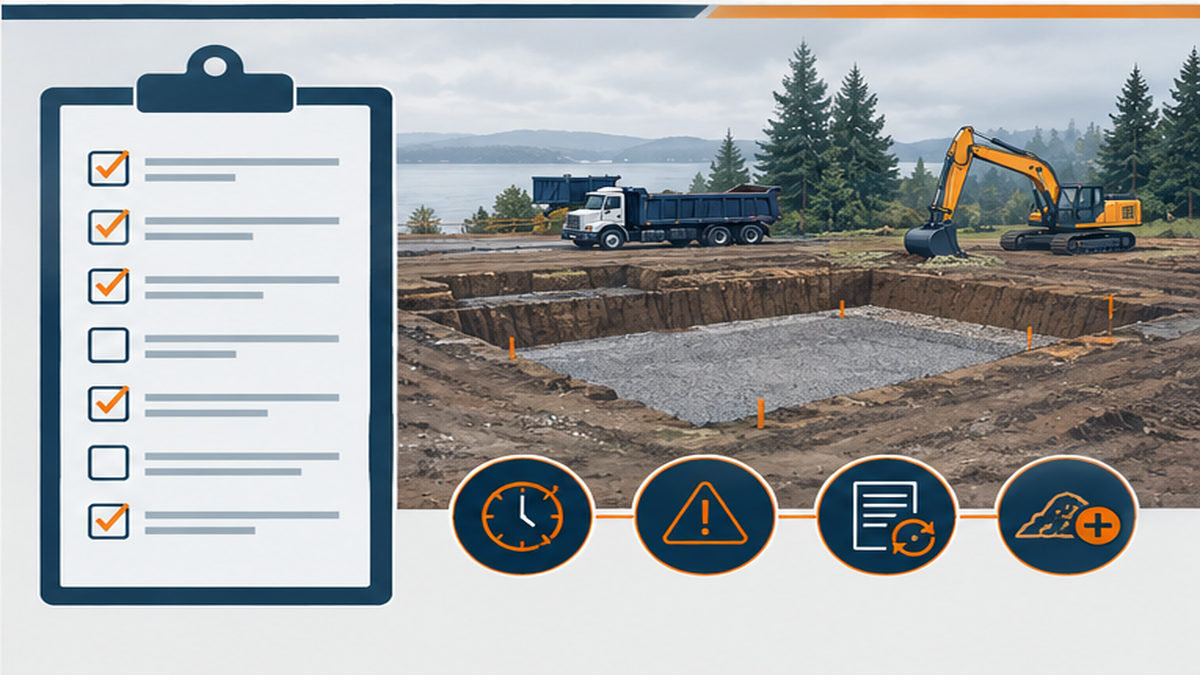
Accepting a surprisingly low bid often leads to schedule delays and hidden change orders. Budget-tier operators frequently omit the logistics of soil disposal, leaving the general contractor or developer responsible for the trucking fees once the dirt is piled up on the street. They might also lack the specialized equipment needed for deep trenches or tight lots, resulting in a slower pace that delays the concrete framing crew.
Furthermore, inexperienced operators may over-excavate, forcing you to purchase expensive engineered fill to bring the grade back up to the required elevation. A proper proposal includes all mobilization, digging, and haul-off phases upfront so the timeline remains intact.
How to Prepare for a Site-Specific Proposal
Online calculators cannot assess soil stability or tight lot access. You need a custom, site-specific evaluation. Before requesting a number, gather your stamped plan set and your geotechnical report. We are the heavy civil installer, not the structural engineer. If you do not have stamped drawings yet, you must start there—we can recommend a licensed Washington firm if needed.
Once you email the drawings and geotech data, we review the access constraints and soil realities. If the lot has tricky access or complex retaining needs, we schedule a site visit. After reviewing the physical property and the engineering documents, we provide a fixed written scope of work. This ensures you have a firm timeline for the digging and shoring phases before your foundation crew arrives.
Common Questions About Foundation Earthworks
How much does a 2000 sq ft concrete foundation cost?
How do you calculate foundation excavation?
How long does Excavation & Site Prep take?
How do I get an estimate?
Ready to Schedule Your Site Prep?
Funding Large-Scale Earthworks
Large-scale earthworks and shoring phases require structured funding, especially for commercial developments or major residential builds. Most developers and general contractors integrate the digging, grading, and utility installation phases into their primary construction loan draws.
We provide clear, itemized proposals based on your engineering documents so you can submit accurate figures to your lender. Having a fixed scope of work upfront prevents funding shortfalls when unexpected soil conditions arise, keeping the project financially on track before the foundation is poured.
How the Digging Schedule Impacts the Budget
Pushing for an accelerated digging schedule directly impacts the final budget. If a foundation pour is looming and the site prep must be finished in half the normal time, the project requires mobilizing extra excavators and running additional dump trucks to handle the soil haul-off. This increases daily labor and equipment rates.
Conversely, a flexible timeline allows for a more efficient trucking cycle, reducing standby time for operators waiting on disposal runs. Weather also dictates the pace; scheduling earthworks during Washington's dry season minimizes the need for expensive water management and mud mitigation, keeping the heavy machinery moving efficiently.