
Construction Debris Removal Cost Guide
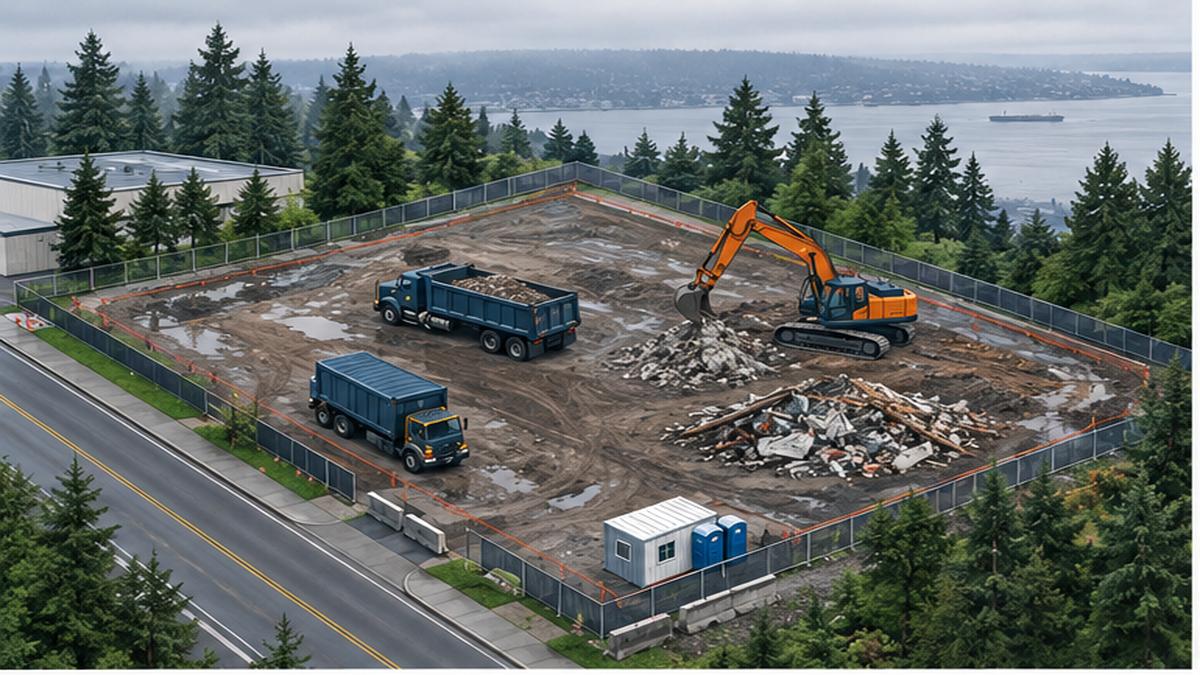
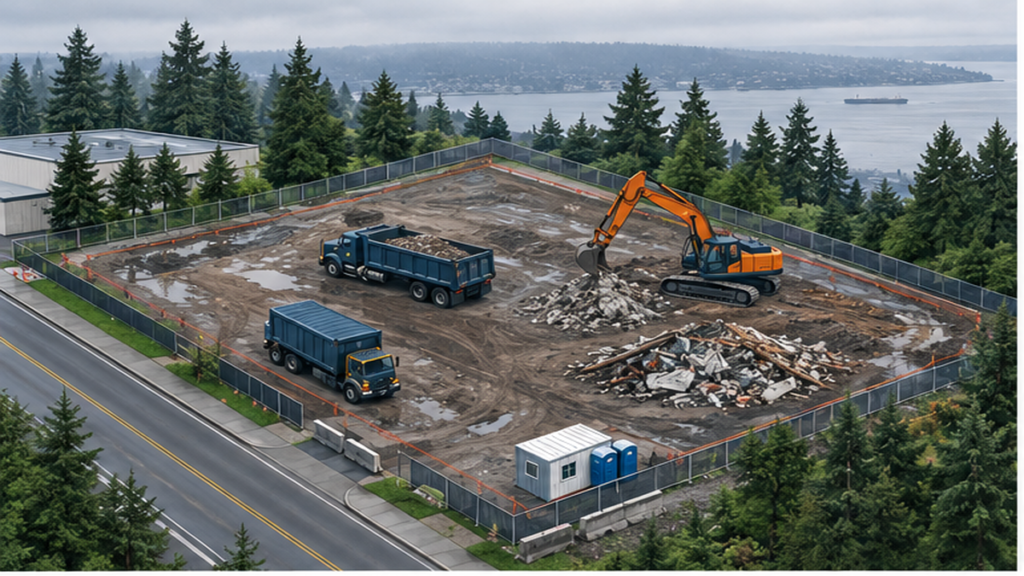
Construction debris removal cost in Washington depends heavily on the volume of material, site access, and whether hazardous soil or mixed demolition waste is involved. We do not provide a flat price list because every site requires an engineer assessment or a detailed scope review before a firm number can be established. When developers and general contractors clear a site for new construction, the removal quote is driven by machinery requirements, haul-off weight, and local disposal fees. We handle heavy civil site preparation, including site demolition and soil haul-off, for projects across Washington and Oregon. Our process ensures you receive a fixed cost estimate before work begins, based on actual site realities rather than rough guesses.
Why Debris Removal Quotes Vary
Two adjacent lots in King County can receive vastly different quotes for construction debris removal. The primary reason is the condition of the material and the logistics of getting it out. If one site has clean soil and easy access for heavy dump trucks, the haul-off is straightforward. If the neighboring site contains mixed demolition debris, buried concrete foundation remnants, or restricted access requiring smaller equipment, the labor and disposal fees increase significantly. We base our fixed cost estimate before work begins on a thorough site assessment. Without seeing the site or reviewing the plan set, any online calculator is just guessing. Geotech reports and clear drawings allow us to understand exactly what we are digging into and hauling away.
Main Cost Factors for Site Clearance
| Cost Factor | How it affects your quote |
|---|---|
| Material Type | Clean soil haul-off has different disposal fees compared to mixed construction debris or concrete rubble. Sorting mixed loads adds labor time. |
| Volume and Weight | Disposal facilities charge by weight or volume. Heavier materials like concrete foundation chunks increase the final tipping fee. |
| Site Access | Tight urban lots may require smaller machines and more trips, increasing labor hours compared to open commercial sites where large excavators can operate freely. |
| Preparation Requirements | If debris is already piled and ready for loading, it costs less than if our crew needs to perform heavy site demolition and sorting first. |
| Hazardous Materials | Contaminated soil or hazardous demolition debris requires specialized handling, permits, and specific disposal sites, raising the baseline quote. |
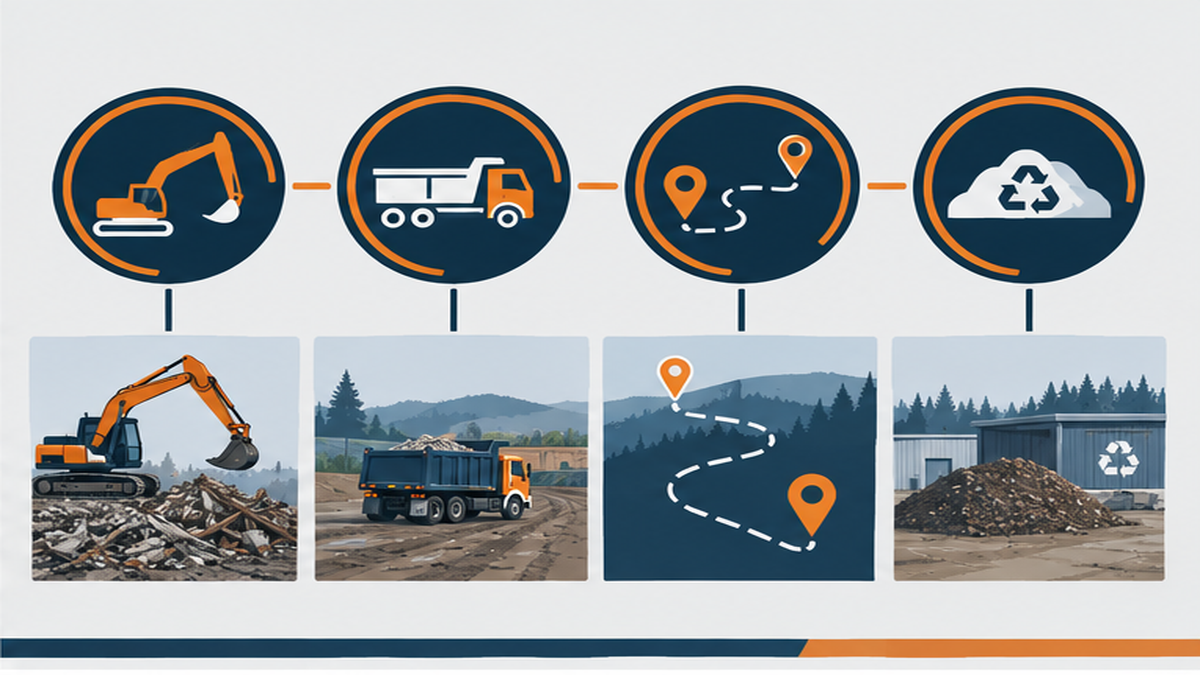
Each of these variables must be evaluated during a site visit. We look at the logistics of loading, the travel distance to the appropriate disposal facility, and the heavy machinery required to complete the land clearing efficiently.
What a Professional Quote Includes
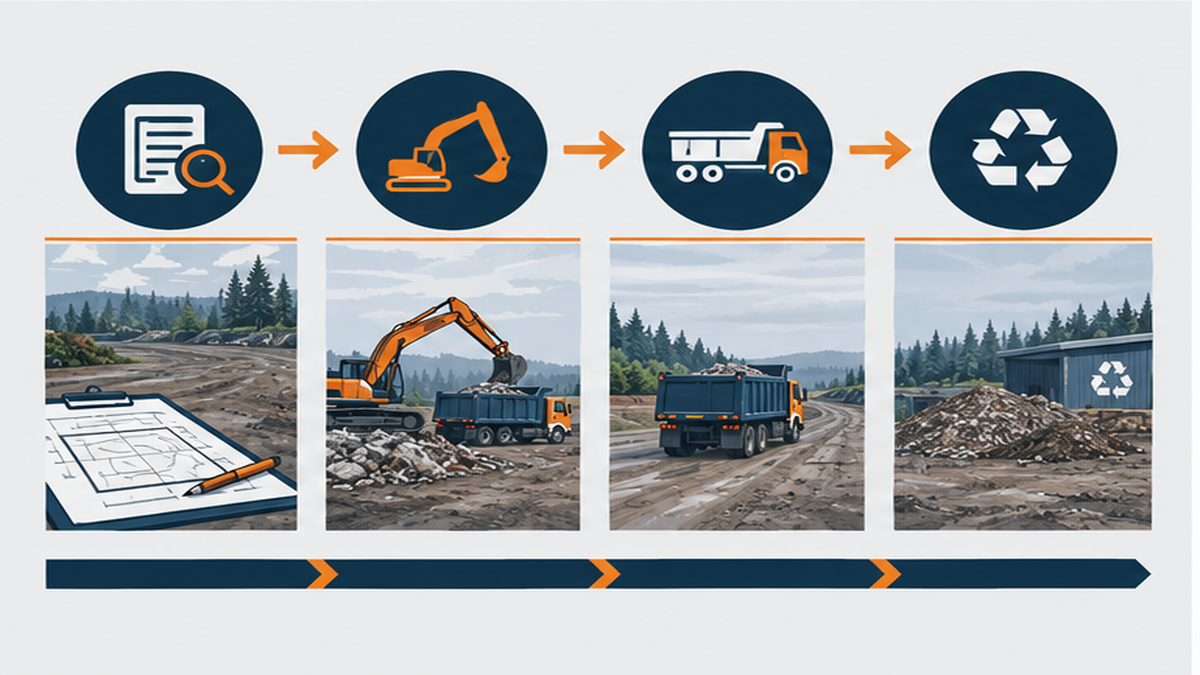
A professional quote from a heavy civil Construction Debris Removal Company should outline the entire scope of work. When we provide a detailed cost estimate, it typically includes the mobilization of heavy equipment to your site and the labor required for loading the material. It also covers the transportation of the waste to licensed disposal or recycling facilities, along with the associated tipping fees. For comprehensive site preparation, the quote will detail any site demolition required to break down existing structures or concrete before loading. You receive a clear, contracted timeline and a transparent fixed price before work begins, ensuring the site is fully prepped for the next phase of construction.
Conditions That Increase Removal Costs
Several site-specific conditions will push the cost of removal higher. Poor weather conditions that turn a site to mud can slow down heavy equipment, requiring additional time or specialized track machines to move materials safely. If we discover buried debris, old foundations, or unstable soils during the initial land clearing, the scope of the soil haul-off must expand. Restricted access is another major factor; if we cannot fit standard dump trucks near the debris pile, we have to double-handle the material with smaller excavators, which adds labor hours. Finally, if the debris contains mixed materials that must be separated on-site to meet disposal facility regulations, the sorting process will increase the overall labor requirement.
How to Control Site Clearance Costs
Developers and general contractors can control costs by managing how debris is staged on the site. Keeping different types of waste separated—such as isolating clean soil from concrete rubble and general Construction Debris—reduces sorting time and can lower disposal fees, as clean fill is often cheaper to dump. Staging the debris in an easily accessible location allows our operators to load trucks quickly, minimizing hourly equipment costs. Providing clear plan sets and any existing geotech reports upfront also helps us accurately assess the site conditions, preventing unexpected scope changes once the heavy machinery arrives.
The Risks of Accepting the Lowest Bid
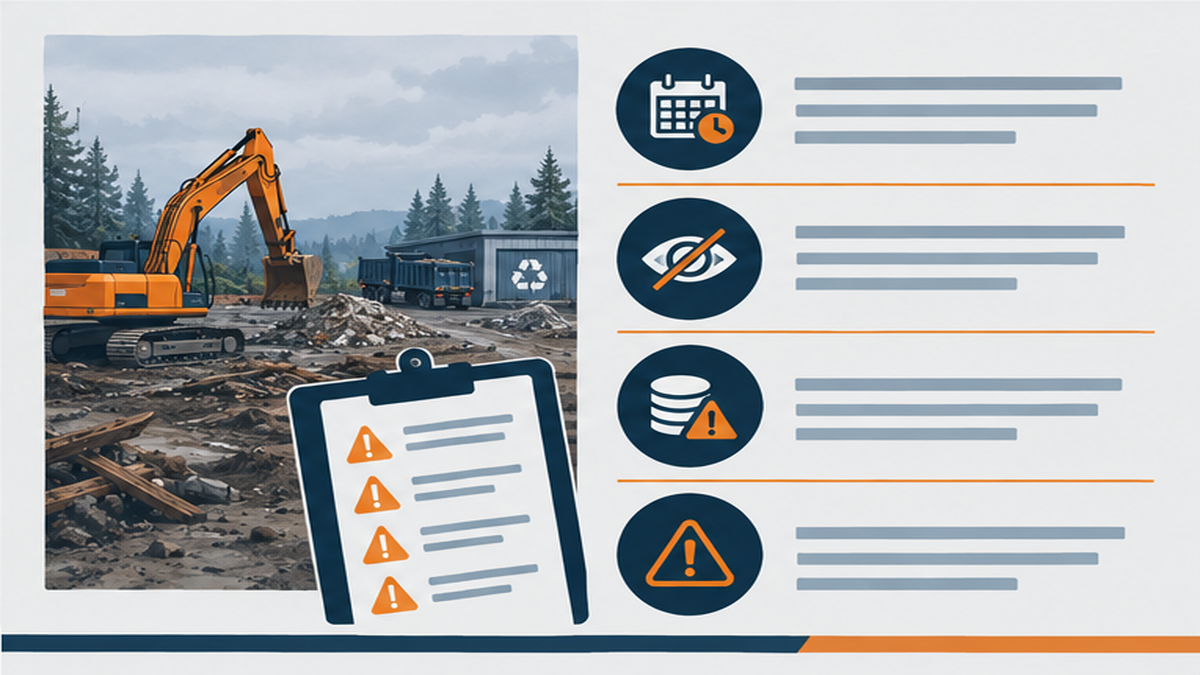
Accepting the lowest bid for site preparation often leads to schedule delays and hidden fees. Budget operators may omit the cost of tipping fees from their initial quote, handing you a massive disposal bill after the material is removed. They might also lack the proper heavy equipment, turning a two-day land clearing job into a week-long disruption that stalls your foundation and framing crews. Furthermore, inexperienced crews might not properly manage slope and water issues during excavation, leaving your site unstable. We provide a free on-site engineer assessment and detailed cost estimate so you know the exact scope and price before any dirt is moved.
When a Custom Quote is Required
Every commercial and large-scale residential project requires a custom quote. We do not offer blind pricing over the phone because the variables of soil condition, access, and material volume are too great. The process starts when you send us your drawings, plan sets, and geotech reports by email. We review the documents to understand the full scope of the earthworks, shoring, or utility installation required. Next, we conduct a site visit to assess access and logistics. Only after this thorough evaluation do we provide a transparent fixed price. If you are looking for Construction Debris Removal Near Me, having your site plans ready is the first step.
Common Questions About Debris Removal Costs
How to calculate debris removal costs?
How much to charge for construction debris removal?
How long does Demolition & Soil Removal take?
How do I get an estimate?
Ready to Clear Your Site?
Payment and Invoicing Terms
For commercial developers and general contractors, payment schedules are typically tied to project milestones and contracted phases. We outline all payment terms clearly in our initial fixed cost estimate. Because we handle high-ticket specialty work like soldier pile walls and extensive site demolition, we coordinate with your project management team to align invoicing with your draw schedule. We do not offer in-house consumer financing, as our focus is on heavy civil and commercial site preparation.
How Project Timelines Impact Your Quote
The speed at which you need a site cleared directly impacts the final quote. If a project requires accelerated land clearing to meet a tight foundation pour schedule, we may need to deploy additional heavy equipment and larger crews, which increases the labor and mobilization costs. Conversely, a flexible timeline allows us to optimize truck routing and equipment use. Delays caused by unstable soils or unexpected buried debris can also extend the timeline and alter the scope. By reviewing your geotech reports and conducting a thorough site assessment upfront, we build a realistic schedule that keeps your overall earthworks budget on track.