
How Much Does Site Excavation Cost?
Developers and general contractors facing tight schedules before a foundation pour need accurate earthworks numbers, not blind online guesses. Site excavation pricing depends entirely on disposal volume, heavy equipment access, and the soil conditions detailed in your geotech report. We do not publish flat rates because every lot in Washington and Oregon presents different subsurface realities. To get a firm number, you must provide a plan set and geotechnical data. From there, our team reviews the scope, assesses the logistics, and delivers a fixed written proposal before any dirt moves.
Why Two Similar Sites Quote Differently
Two adjacent lots in Federal Way can yield completely different earthworks bids. The final number fluctuates because subsurface conditions rarely match surface expectations. When a crew breaks ground, they might hit buried concrete rubble, unstable soils, or a high water table. If your site requires double-handling of dirt due to tight lot lines, the labor and machine hours increase significantly.
Blind online numbers mislead general contractors by assuming ideal conditions. A realistic proposal accounts for the actual weight at the disposal facility and the specific material type—whether clean soil or mixed demolition debris. Schedule pressure also plays a major role. If you need the site graded immediately, deploying extra crews will adjust the total. We review your plan set to spot these variables early.
Primary Variables That Drive Your Earthworks Budget
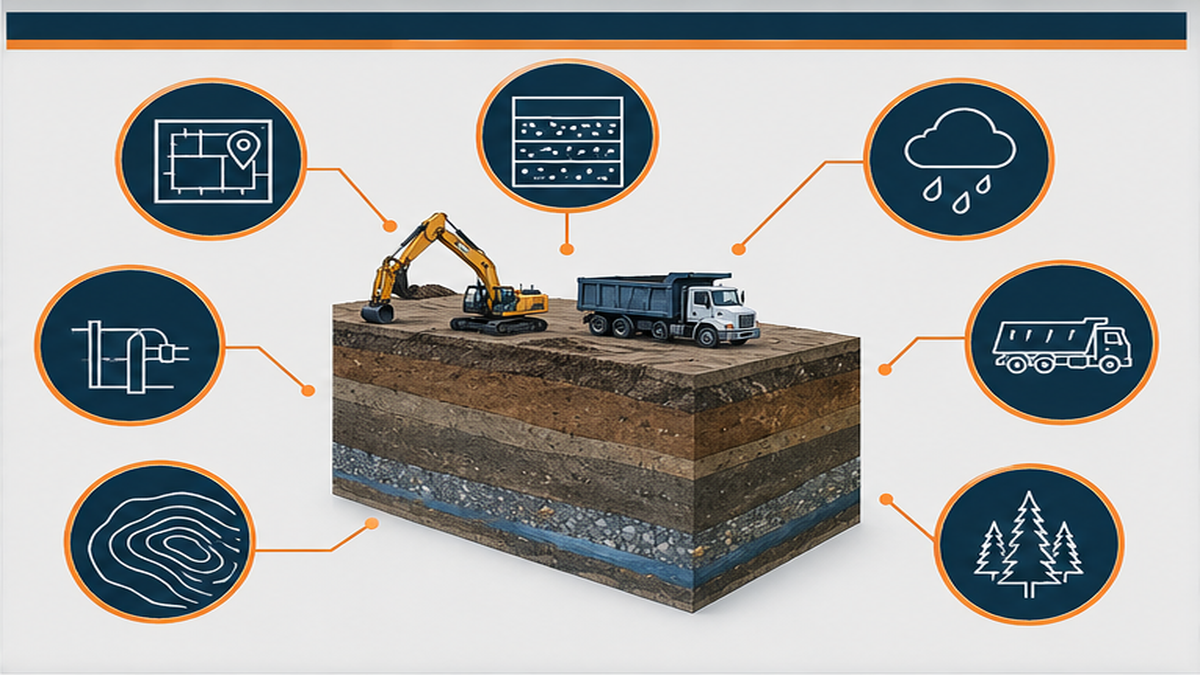
Your final earthworks proposal is driven by hard logistics and geotechnical realities. We break down the primary variables that dictate the bottom line.
| Cost Factor | How It Affects Your Quote |
|---|---|
| Material Type | Clean soil is straightforward to export. Mixed demolition debris, concrete rubble, or hazardous materials require specialized handling and higher disposal facility fees. |
| Volume and Weight | Disposal facilities charge by weight and volume. Deeper foundation cuts exponentially increase the tonnage of soil haul-off required. |
| Site Access | Tight residential lots or restricted commercial sites force crews to use smaller machines and double-handle materials, increasing total labor hours. |
| Preparation Readiness | If debris is already sorted and ready for loading, the timeline shrinks. Active demolition and sorting on site add significant labor. |
| Weather and Soil Stability | Winter weather or unstable soils discovered on site may require temporary shoring, slowing down the excavation pace and adding equipment needs. |
| Schedule Pressure | Accelerated timelines before a foundation pour demand extra operators and machines, which pushes the overall investment higher. |
Reviewing these factors alongside your engineering documents allows us to build a precise, fixed proposal.
What a Turnkey Site Package Covers
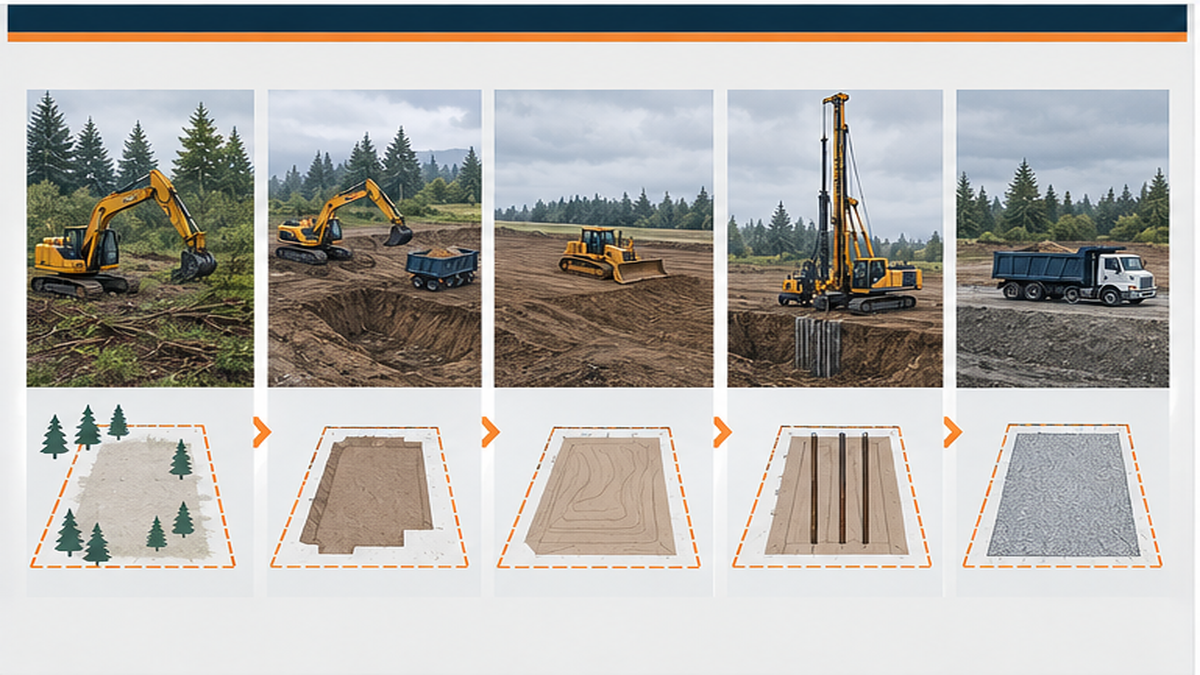
A professional turnkey site package covers everything required to prepare a raw lot for the foundation crew. When we submit a proposal for projects in Washington and Oregon, the scope typically includes initial site grading, foundation excavation, and comprehensive earthworks.
We handle the heavy lifting of demolition and soil removal, ensuring all debris is safely processed at the correct disposal facilities. A complete package often involves trenching for utilities and drainage systems, plus final road restoration. You are paying for a contracted timeline and transparent execution. By bundling excavation, grading, and utility trenching into one clear scope, general contractors avoid the friction of coordinating multiple earthworks trades on a single jobsite.
Conditions That Push the Bottom Line Higher
Unexpected subsurface conditions are the primary reason earthworks budgets expand. If your geotech report reveals unstable soils, standard digging must halt. You may need high-ticket specialty interventions like soldier pile walls, tiebacks, or drilled shaft excavation to secure the site.
Access restrictions also drive up the final number. If a site in Seattle or Bellevue has narrow alleyways, we cannot deploy standard heavy machinery. Crews must rely on smaller excavators, taking longer to move the same volume. Additionally, if the soil is contaminated, permitted disposal sites charge premium fees for hazardous haul-off. Finally, winter weather turns manageable dirt into heavy mud, increasing disposal weight and slowing down machine cycle times.
How to Keep Your Earthworks Investment Predictable
The most effective way to control your earthworks budget is to provide complete, stamped drawings and a thorough geotechnical report upfront. With exact data, we do not have to build worst-case-scenario contingencies into the proposal.
You can also manage expenses by separating materials before our crews arrive. Keeping clean soil isolated from concrete rubble lowers disposal facility fees. If your project involves an overgrown lot, handling the surface-level commercial land clearing efficiently ensures our excavators can immediately begin deep foundation cuts. Flexibility in your schedule also helps. If you do not require an accelerated timeline that demands multiple crews working simultaneously, the labor overhead remains standard.
The Hidden Liabilities of a Cheap Proposal
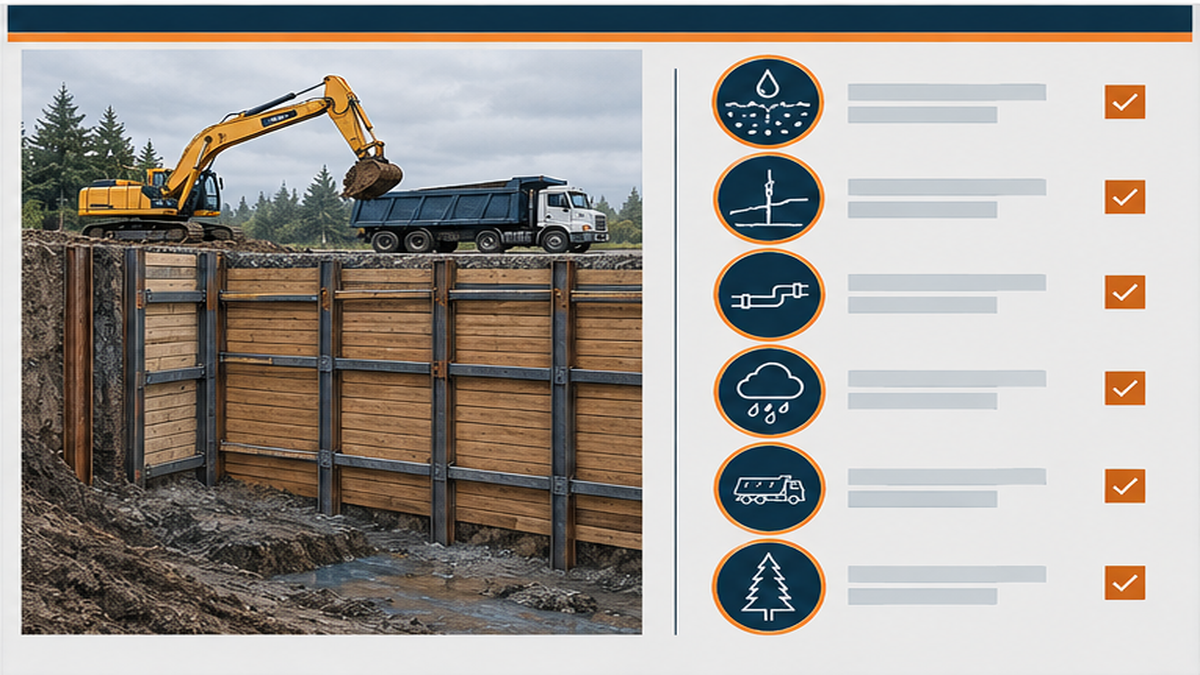
Accepting the lowest bid on heavy civil work often leads to cascading delays and hidden change orders. Cheap proposals frequently omit critical line items like disposal facility fees, soil haul-off trucking hours, or permits. When a contractor underbids the volume of dirt, you will be hit with surprise invoices once the actual weight is tallied at the dump.
Furthermore, inexperienced operators might ignore slope and water management. Failing to properly grade unstable soils can cause trench collapses, halting your foundation crews. A low-bid contractor may also lack the specialty equipment needed if they hit buried concrete. We provide a transparent, fixed proposal before work begins because developers cannot afford the liability of a stalled jobsite.
How Our Site Assessment Process Works
Every heavy civil project requires a custom, project-specific proposal. We do not offer ballpark figures over the phone because a blind guess is useless to a developer managing a strict budget. To get started, email your plan set and geotech report to our office.
Once we receive your documents, we review the scope, access constraints, and soil data. For retaining walls or hard-to-access jobs, we will schedule a site visit to assess logistics firsthand. We are the installer, not the structural engineer who stamps the design. If you do not have stamped drawings yet, start there—we can recommend a licensed Washington firm. After reviewing the engineered plans, we deliver a detailed, fixed written proposal. Learn more about this service and what to prepare.
Common Questions About Earthworks Pricing
How much does it cost to trench dig per metre?
Trench digging rates depend on soil stability, depth, and whether shoring is required, not a flat per-metre fee. Material type, such as hitting solid rock or buried foundations, drastically changes the machine hours needed. We review your specific site assessment to provide a firm total for the earthworks scope rather than a generic linear rate.
How do I calculate the excavation needed for a foundation?
Foundation excavation volume is calculated by multiplying the footprint area by the required depth, plus over-dig space for forms and workers. Your structural engineer will detail these exact dimensions in the plan set. We use those stamped drawings alongside the geotech report to determine the exact soil haul-off tonnage for your proposal.
How long does Excavation & Site Prep take?
Site preparation timelines range from a few days for basic grading to several weeks for deep foundation work with soldier piles. The schedule is driven by site access, weather conditions, and the volume of material being exported. We provide contracted deadlines in our written proposal so you can confidently schedule your concrete and framing trades.
How do I get an estimate?
Email your plan set and geotech report to our team for a comprehensive scope review. We will evaluate the engineering documents, check for access constraints, and schedule a site visit if the terrain is complex. Once we understand the exact subsurface realities, we deliver a fixed, transparent proposal before any work begins.
Ready to Review Your Plan Set?
Payment Schedules and Project Milestones
Heavy civil projects require structured payment schedules tied to concrete milestones. Because material disposal and heavy equipment mobilization incur significant upfront overhead, payment terms are clearly outlined in your initial written proposal.
Typically, a mobilization deposit is required to secure your spot on the schedule and route excavators to your site. Subsequent payments are triggered by verifiable progress, such as the completion of demolition or the final export of soil haul-off. We work closely with developers and general contractors to ensure billing aligns with your project's funding phases. By providing a fixed proposal before work begins, we eliminate surprise invoices, allowing your accounting team to allocate funds accurately.
How Schedule Pressure Impacts Your Bottom Line
Your project schedule directly impacts the final earthworks investment. When developers face tight schedules before a foundation pour, accelerating site preparation requires deploying multiple crews and larger machinery simultaneously. This increased mobilization and overtime labor naturally raises the overall total.
Conversely, allowing a flexible timeline enables our crews to sequence demolition, grading, and utility trenching with optimal efficiency. Weather also plays a critical role. Excavating during heavy winter rains turns dirt into heavy mud, which increases the weight at the disposal facility and slows down truck cycles. Providing your plan set and geotech report early allows us to forecast these variables, lock in a realistic schedule, and keep your foundation trades moving without costly delays.