
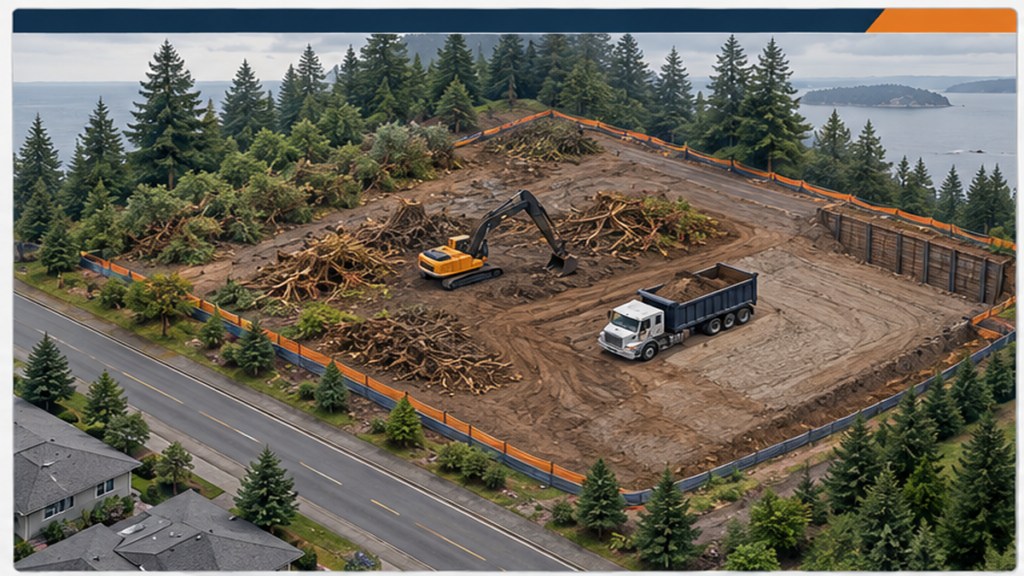
Site Preparation Costs Guide
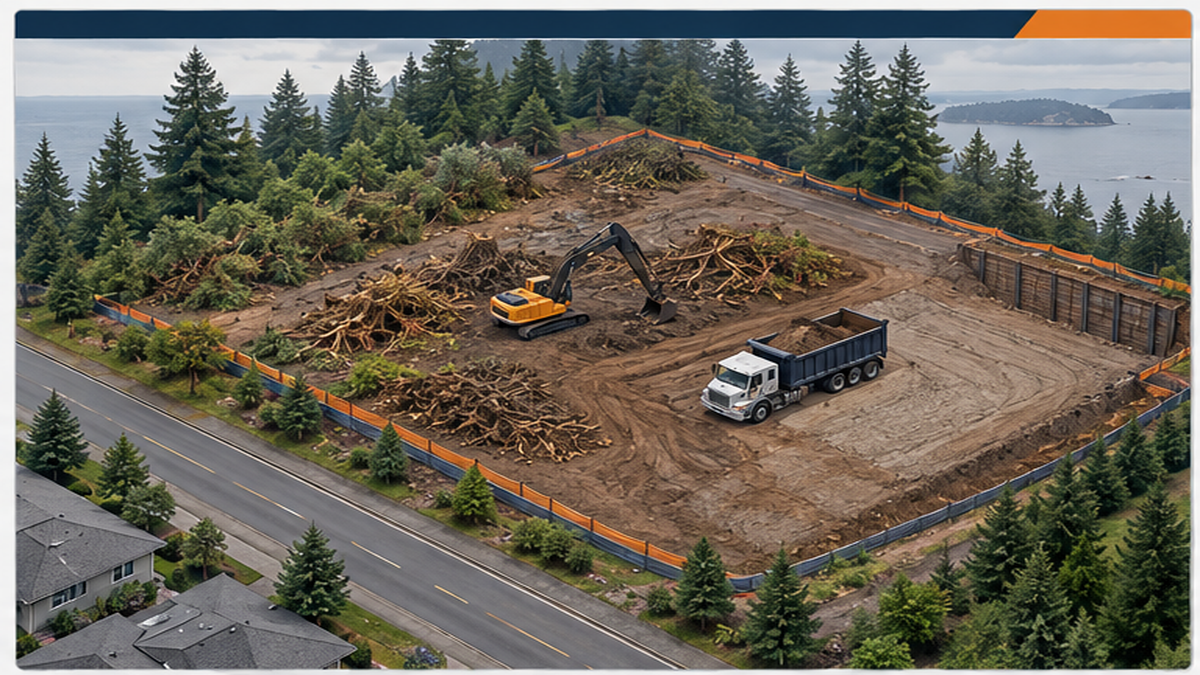
Site preparation costs depend entirely on the volume of soil haul-off, site access, and the specific earthworks required for your foundation. Because every lot in Washington and Oregon has unique soil conditions, there is no standard public price list for heavy civil dirt work. A reliable figure requires a site assessment and a review of your plan set and geotech report. Ruffhouse Construction LLC handles excavation, grading, demolition, and high-ticket shoring for developers and general contractors. We review your stamped drawings and site realities first, then provide a fixed written quote before any machines arrive.
Why Earthworks and Site Prep Quotes Vary
Two adjacent lots can have drastically different earthworks requirements. One site might feature clean soil and wide access for heavy machinery, while the next requires complex soldier pile walls and tight-clearance demolition. The final number shifts based on what we find in the ground and how easily we can move material out.
Buried foundations, unstable soils, and slope water management all require specific heavy equipment and coordination. If your project involves a deep foundation excavation or retaining walls, the structural design dictates the machinery and labor hours needed. We rely on your geotech report to understand the subsurface realities. Without that data, any blind online number is just a guess that leads to surprise change orders later. We operate as the installer, executing the details laid out by your design team to ensure the site is ready for the next phase of construction.
Main Cost Factors for Site Preparation
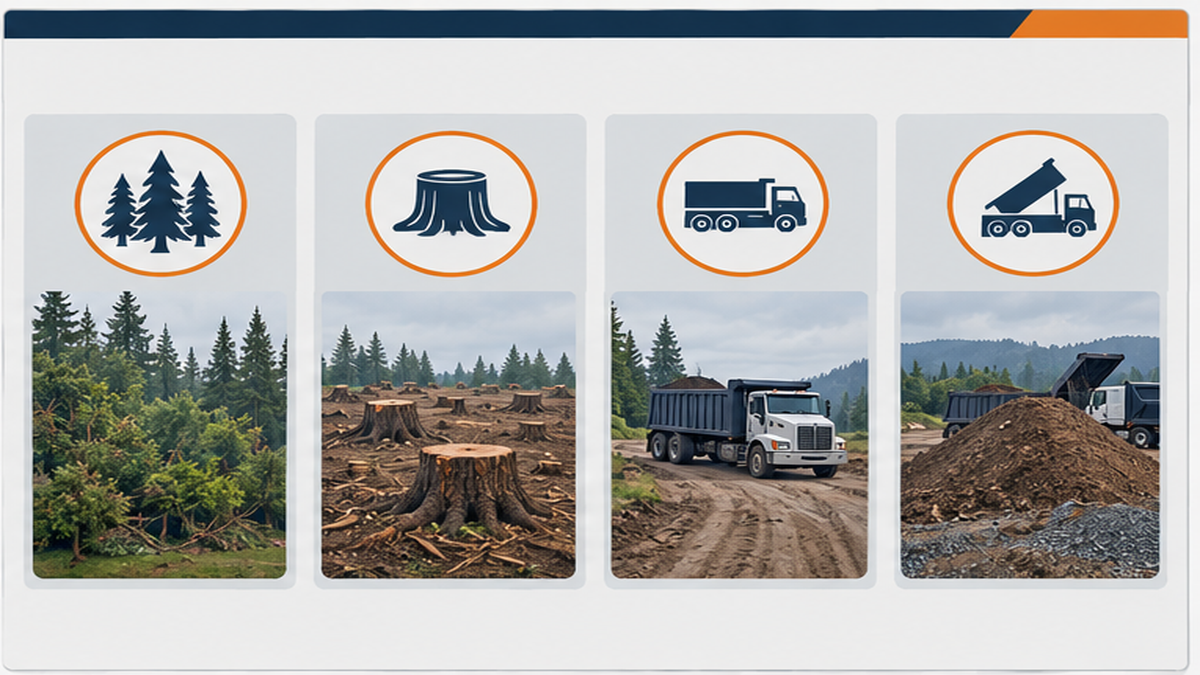
The variables below dictate the scale of your earthworks package and the logistics required to complete it safely.
| Cost Factor | How it affects your quote |
|---|---|
| Material type | Clean soil is straightforward to move. Mixed demolition debris or concrete rubble requires sorting and carries different disposal fees. |
| Volume and weight | The total tonnage of material leaving the site dictates trucking hours and facility dump fees. This is often the largest line item. |
| Site access | Tight lots that require smaller machines and double-handling of dirt take more time than open sites where large excavators operate freely. |
| Site readiness | If a lot requires active demolition and sorting before we can load trucks, labor hours increase. |
| Hazardous materials | Contaminated soil requires specialized handling and transport to permitted disposal sites. |
| Weather and soils | Unstable soils discovered during digging require immediate mitigation, especially during wet Pacific Northwest weather. |
| Schedule pressure | Accelerated timelines before a foundation pour require extra crews and machines on site simultaneously. |
If you need Commercial Land Clearing, the density of vegetation and root systems also plays a major role in the initial phase of the project.
What a Professional Site Package Includes
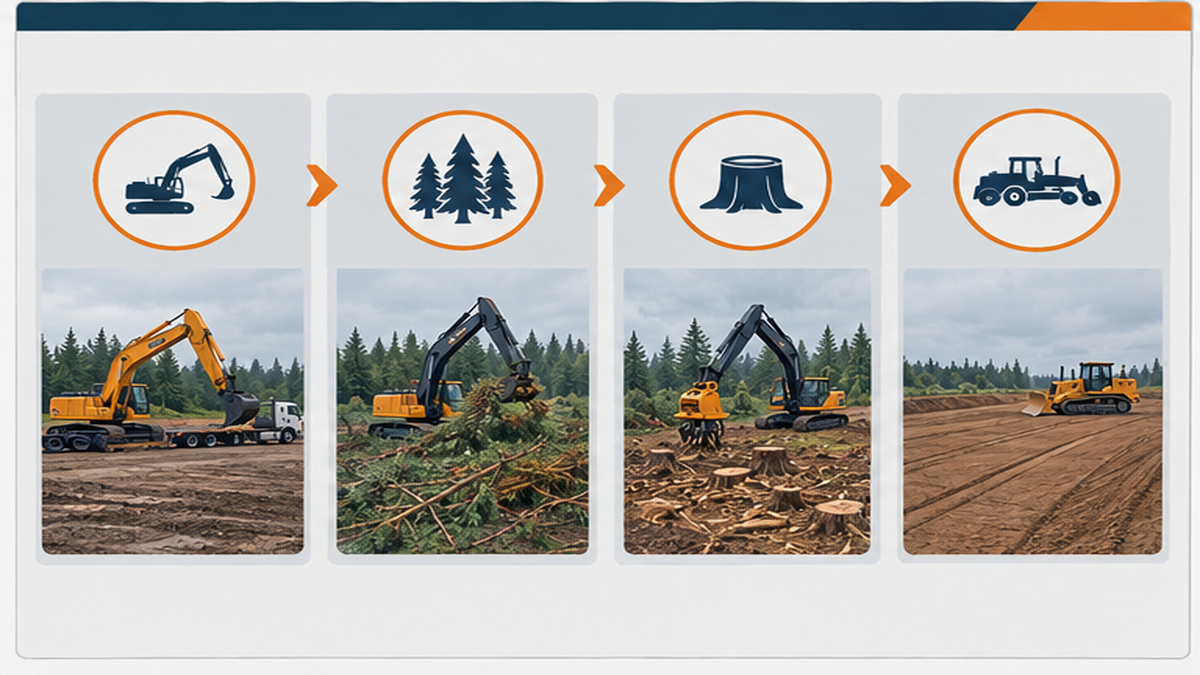
A comprehensive site package covers the progression from raw dirt to a build-ready pad. For a standard installation, this includes initial site grading, foundation excavation, and complete soil haul-off. If your project involves an expanded reconfiguration, the scope expands to include demolition of existing structures, utility trenching, and drainage system installation.
We also handle targeted repairs or refreshes, such as localized slope stabilization or retaining wall preparation. A professional bid itemizes the machinery required, the trucking capacity for soil removal, and the labor for grading the pad to the exact elevations specified in your plan set. We review the engineering requirements thoroughly so that every utility trench and cut matches the specifications before the foundation crew arrives.
What Can Increase Your Earthworks Budget
Hidden subsurface conditions are the primary driver of expanded scopes. Hitting undocumented buried foundations or massive rock formations requires heavier breakers and slows down the excavation pace. Unstable soils that fail to hold a cut may force a pivot to active shoring or soldier pile walls to protect adjacent properties.
Tight schedules also impact the financial commitment. If framing delays cascade into the dirt work phase and you need the site ready for a foundation pour immediately, we have to deploy additional operators and equipment. Finally, restricted access in dense neighborhoods means trucks cannot stage easily, forcing slower, piece-by-piece material removal. If you are looking for an Excavation Contractor Bellevue, local traffic and staging constraints are always factored into the logistics.
How to Control Site Preparation Logistics
The most effective way to control your heavy civil budget is to have complete, stamped drawings and a thorough geotech report before requesting a bid. When we know exactly what is in the ground and what the structural design requires, we can stage the right equipment from day one.
Clear access paths save significant trucking time. If you can coordinate with other trades to keep the footprint clear during the earthworks phase, our operators work much faster. Deciding the full scope up front—bundling demolition, grading, and utilities into one package—prevents the mobilization fees associated with bringing heavy machinery back to the site multiple times. Providing accurate engineering documents early allows us to deliver a transparent, fixed number before work begins.
The Risks of Accepting the Lowest Bid
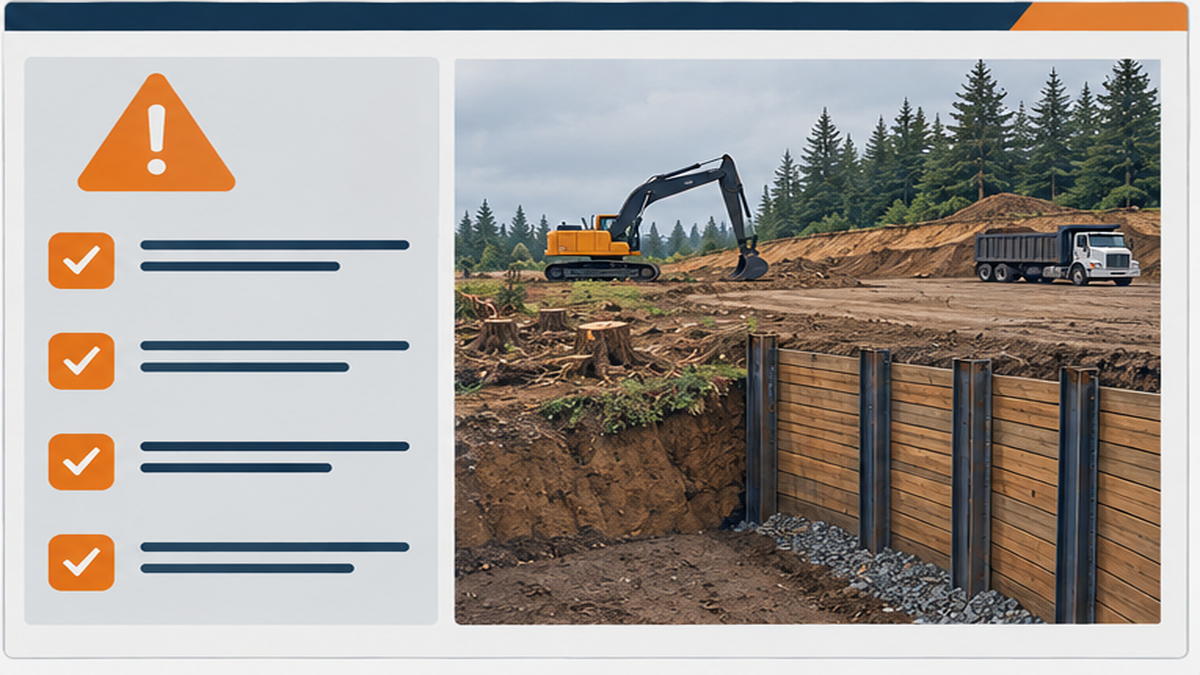
Accepting an unusually low bid for site preparation often leads to mid-project delays and budget blowouts. Cheap proposals frequently omit critical line items like trucking fees, disposal facility weight charges, or proper water management. If an operator ignores poor soil conditions to keep the initial number low, the site may fail inspection, forcing you to halt work and bring in a shoring contractor later.
A low bid might also mean the crew lacks the heavy machinery required to hit your foundation pour deadline, resulting in a cascading delay for every trade that follows. We provide a transparent, fixed quote based on your engineering documents so you know the actual financial commitment before the first bucket hits the dirt. Learn more about this service and why proper oversight prevents expensive mistakes.
When to Schedule a Site Assessment
Online calculators cannot account for the soil density or retaining wall requirements of your specific lot. You need a custom, on-site assessment. Before you reach out, gather your stamped plan set, your geotech report, and any approved permits. Check your property lines and note any access restrictions for heavy equipment.
When you are ready to Request an estimate, email us those documents so we can review the scope and soil realities. If the access is tight or the soil data is complex, we schedule a site visit to inspect the logistics firsthand. We are the installer, not the design engineer. If you do not have stamped drawings yet, start there—we can recommend a Washington-licensed firm. After reviewing the engineering, we deliver a fixed written estimate so your project can move forward.
Common Questions About Site Preparation
How much does it cost to build a 2000 sq ft house in 2025?
The earthworks portion for a 2000 square foot build depends heavily on site grading, foundation excavation depth, and soil haul-off volume. Rather than relying on generic square-foot formulas, we review your plan set and geotech report to determine the exact machinery and trucking required. This ensures your site assessment translates into a fixed, accurate budget for the dirt work phase.
What is included in site prep for construction?
A complete package typically covers demolition, site grading, foundation excavation, and soil haul-off. We handle the heavy civil execution required to turn a raw or occupied lot into a clean, build-ready pad. We review your stamped drawings to ensure every utility trench and elevation matches the engineering specifications before the foundation crew arrives.
How long does Excavation & Site Prep take?
The timeline is driven by the volume of earthworks, site access, and the complexity of the foundation excavation. A straightforward flat lot might take a few days, while a steep site requiring extensive soil haul-off and grading can take weeks. We provide contracted deadlines alongside your written estimate so you can schedule your concrete and framing trades confidently.
How do I get an estimate?
Start by emailing us your stamped plan set and geotech report for a comprehensive scope review. We analyze the engineering requirements and, if necessary, conduct a site assessment to check equipment access. Once we understand the soil and logistics, we provide a fixed written estimate before any work begins.
Schedule Your Scope Review
Payment Milestones for Heavy Civil Work
Heavy civil projects require significant upfront mobilization for machinery and trucking. Payment schedules are typically tied to clear project milestones, such as the completion of demolition, the end of mass excavation, and final grading approval. We outline these milestones clearly in your written estimate.
Because we operate as the installer executing your engineered plans, our billing aligns with the physical progress on your site. Discussing these terms during the scope review ensures your financing or construction loan disbursements match the operational realities of the dirt work. We focus on clear communication so your project funding aligns with the machinery on the ground.
How Timelines Impact Your Earthworks Budget
Pushing for an accelerated earthworks schedule directly impacts the logistics and the final budget. If you need the site graded and excavated faster to meet a strict foundation pour date, we must mobilize additional excavators and coordinate more dump trucks for soil haul-off. This increases the daily operational burn rate.
Conversely, allowing a standard, steady timeline lets us optimize trucking routes and machinery use, which keeps the mobilization and disposal fees controlled. When you share your target deadlines during the initial scope review, we can structure a plan that balances speed with efficiency, ensuring the site is ready without unnecessary logistical strain.