
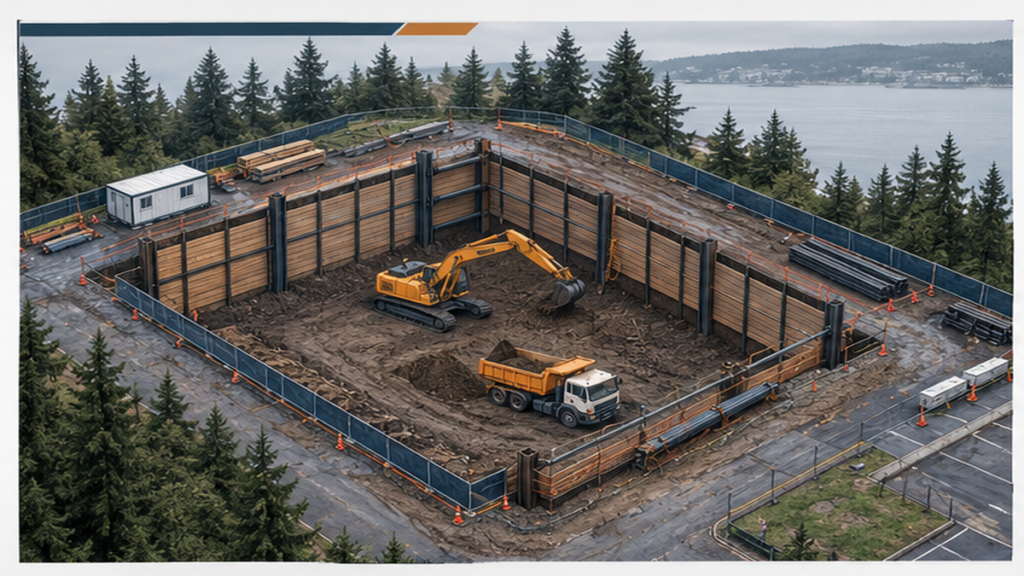
Deep Excavation Shoring System
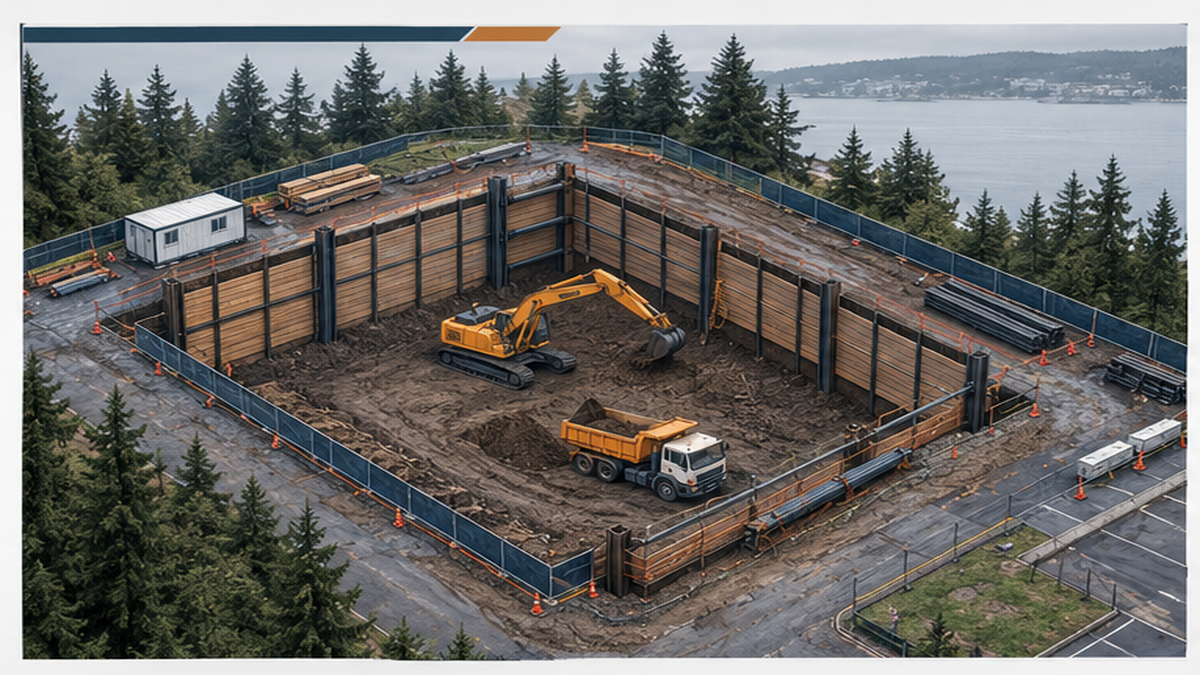
General contractors and developers facing unstable soils or tight property lines need a deep excavation shoring system to safely hold back earth before pouring a foundation. Ruffhouse Construction LLC installs soldier pile walls, tiebacks, and sheet pile walls for sites in Federal Way, WA, and across Washington and Oregon. A proper shoring system prevents slope failure and keeps your site compliant with local regulations. We are the heavy civil installer, not the design engineer. Once you have a stamped plan set and geotech report, we review the site access and soil realities to provide a fixed estimate before dirt work begins.
How Deep Excavation Shoring Works
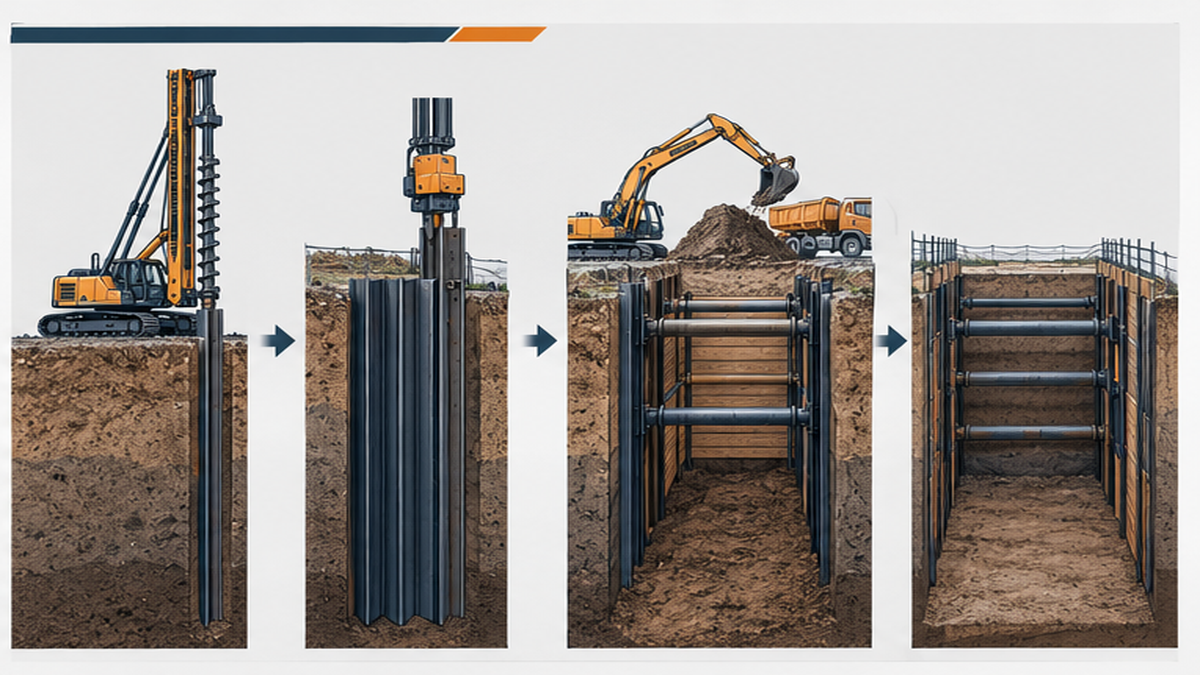
Deep excavation shoring systems rely on structural elements driven or drilled into the ground to retain soil during major earthworks. When your project requires digging below adjacent foundations or into steep grades, open-cut excavation is rarely an option. Instead, we install engineered barriers like soldier pile and lagging walls or a Sheet Pile Wall to secure the perimeter.
For soldier piles, we drill steel beams into the earth, encase the base in concrete, and slide timber lagging between the beams as the excavation deepens. This method handles tough soil conditions and heavy loads. If the excavation is exceptionally deep, we install tiebacks to provide additional lateral support. Heavy clay, loose fill, or high water tables dictate the specific shoring method. That is why we require a geotech report before bidding. Our crew handles the full earthworks scope, from the initial drilling and caging to the final soil haul-off.
Choosing the Right Shoring Method
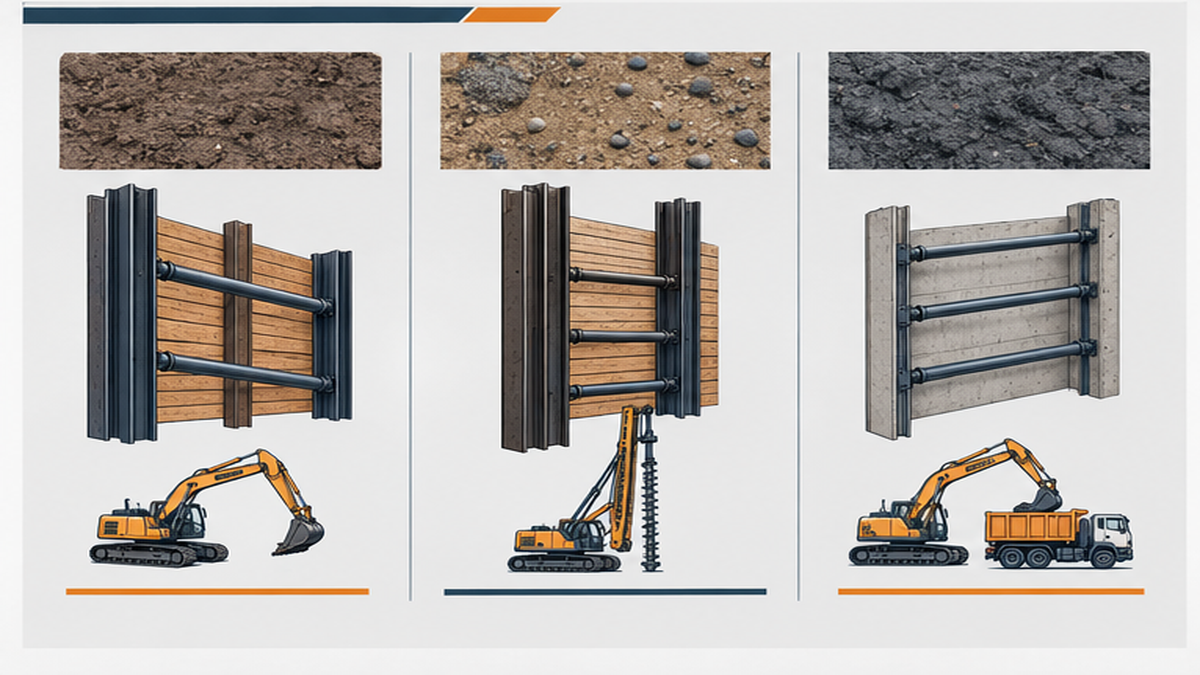
Choosing the right deep excavation shoring system comes down to site access, soil type, and the depth of the cut. Developers and property owners must weigh these factors alongside their structural engineer's recommendations.
First, consider the footprint. If your site has zero lot lines or sits hard against neighboring structures, a soldier pile wall often makes the most sense. It requires less horizontal clearance than benching the soil. Second, evaluate the soil report. Sheet pile walls work well in softer soils where interlocking steel panels can be driven efficiently. However, if the geotech report identifies dense rock, drilled soldier piles are the necessary alternative.
Third, look at the project timeline. Coordinating multiple earthworks trades can slow down the site. We streamline this by handling the complete package—drilling, shoring, excavation, and soil removal. Finally, if you are reviewing Backyard Retaining Wall Ideas for a sloped property, decide on the permanent vs. temporary nature of the wall. Your engineer will specify the load requirements, and we will execute the installation exactly to plan.
Common Shoring and Excavation Mistakes
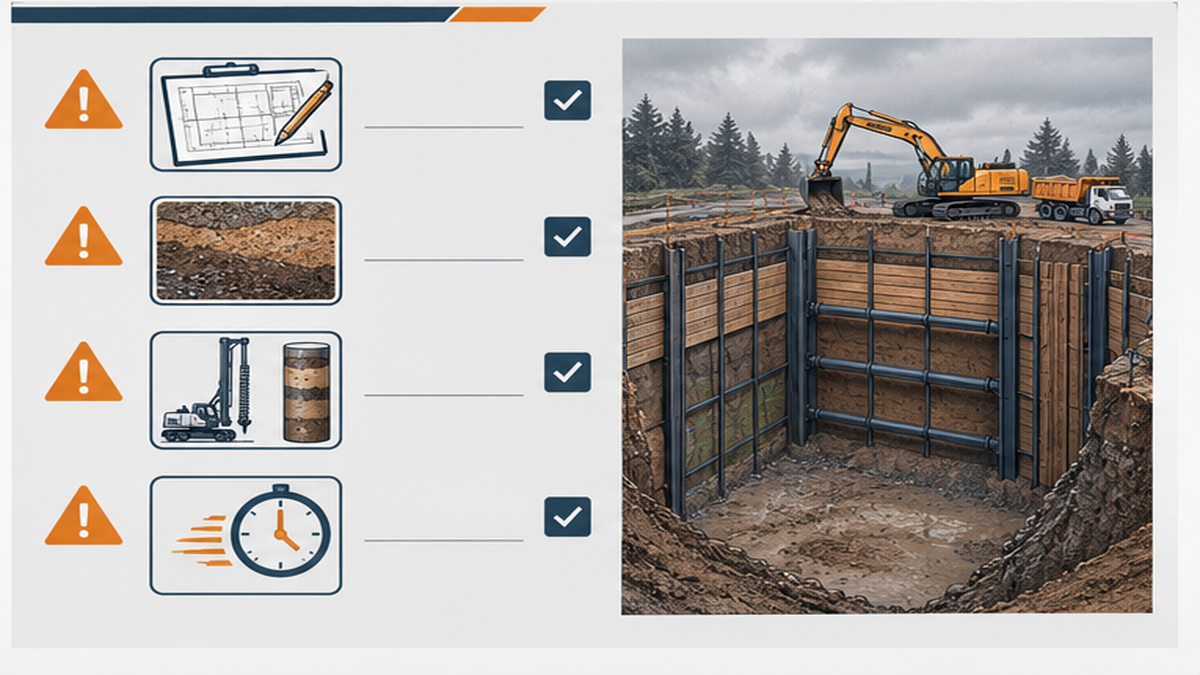
The most expensive mistakes in deep excavation stem from rushing the planning phase or ignoring soil realities. Bypassing the geotech report is the primary error. Attempting to guess How Much Does Site Excavation cost without understanding the subsurface conditions leads to massive change orders when crews hit unexpected groundwater or bedrock. Always secure a geotech report first.
Another frequent mistake is hiring an excavation contractor who lacks heavy shoring experience. Standard dirt work is vastly different from installing a deep excavation shoring system. If the contractor cannot handle drilling and caging, you will end up juggling multiple subcontractors. Property owners also err by asking for a firm price over the phone without providing a plan set. We cannot give a binding number based on a verbal description. A realistic estimate requires a review of the stamped drawings, site access constraints, and disposal logistics for the excavated material.
When to Call a Heavy Civil Contractor
You need a heavy civil contractor the moment your project plans call for digging deeper than standard foundation footings, especially near property lines. If your structural engineer specifies a soldier pile wall or tiebacks, it is time to bring in an installer with the right equipment and experience.
Call us when you have your stamped drawings and geotech report in hand. We are the installer, not the design engineer. If you do not have stamped drawings yet, start there—we can recommend a Washington-licensed engineering firm to get your project moving. You should also reach out if you are dealing with unstable soils, landslide repairs, or steep slope management. If you are planning a Backyard Retaining Wall that requires deep stabilization, an engineer needs to assess it, and a heavy civil crew needs to build the fix. Send the plan set by email, and we will provide a detailed cost estimate for the entire earthworks package.
Related Services and Guides
Schedule Your Site Assessment
Common Questions About Shoring and Stabilization
How is Shoring & Stabilization priced in my area?
Shoring & Stabilization pricing in Washington and Oregon is determined by material type, site access, excavation volume, and the specific retaining method required. Installing a soldier pile wall or commercial retaining walls involves heavy equipment, and costs fluctuate based on how easily machinery can maneuver on your lot. We conduct a thorough scope review of your geotech report and plan set to calculate these variables and deliver a fixed estimate.
What is the difference between a shoring box and a trench box?
A shoring box actively supports the trench walls to prevent soil collapse, while a trench box primarily serves as a passive shield to protect workers if a collapse occurs. Shoring systems, including soldier pile and lagging setups, are engineered to hold back massive earth loads during deep excavation. Trench boxes are typically dragged along the cut during utility work to provide a safe workspace, rather than permanently stabilizing the surrounding ground.
How long does Shoring & Stabilization take?
A deep excavation shoring project typically takes several weeks, driven by the site preparation, drilling layout, concrete curing times, and overall project size. Installing a soldier pile wall requires precise drilling, placing the steel beams, pouring the concrete encasement, and allowing it to cure before excavation and lagging can proceed. We outline a clear, contracted timeline during our initial site assessment so your subsequent foundation work stays on schedule.
How do I get an estimate?
You can get an estimate by emailing us your stamped structural drawings and the site's geotech report for a comprehensive scope review. Once we receive your documents, we evaluate the soil conditions, site access, and required materials for your commercial retaining walls or shoring system. If the project involves complex logistics, we will schedule an on-site engineer assessment to finalize the details before providing a transparent, fixed cost estimate.
Site Monitoring and Maintenance
Once a deep excavation shoring system or commercial retaining wall is installed, ongoing monitoring ensures long-term stability. While temporary shoring is eventually removed, permanent structures require basic oversight. Keep the area above the wall clear of heavy, unplanned loads—such as stockpiled materials or heavy machinery—that were not accounted for in the original engineering design.
Ensure that surface water is directed away from the wall to prevent hydrostatic pressure buildup in the soil. If your system includes active tiebacks, your structural engineer may recommend periodic load testing. Always check for visible signs of soil erosion or lagging displacement after heavy Pacific Northwest rainstorms. If you notice significant shifting, contact an engineer for a site assessment.