
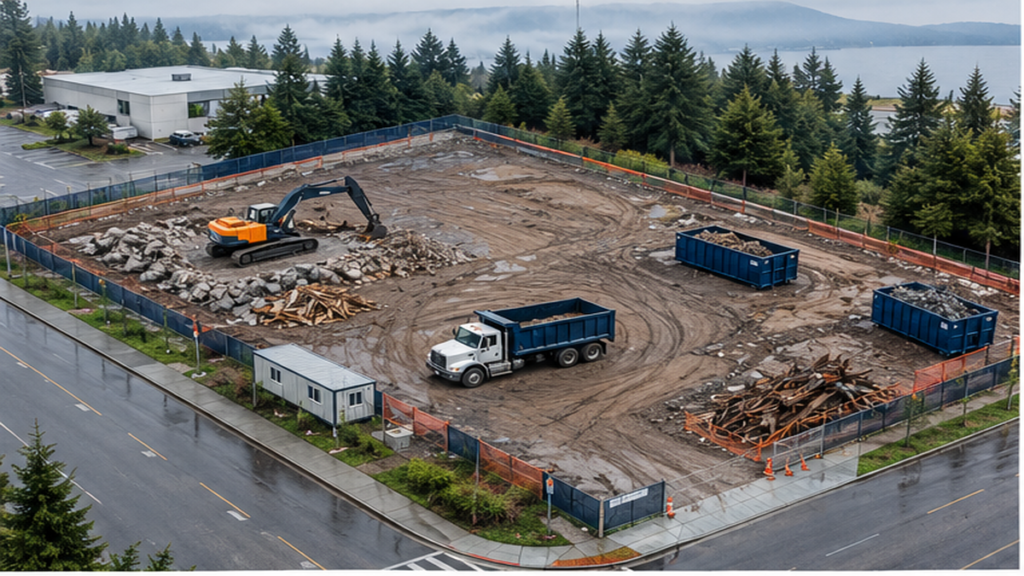
Managing Construction Debris on Your Job Site
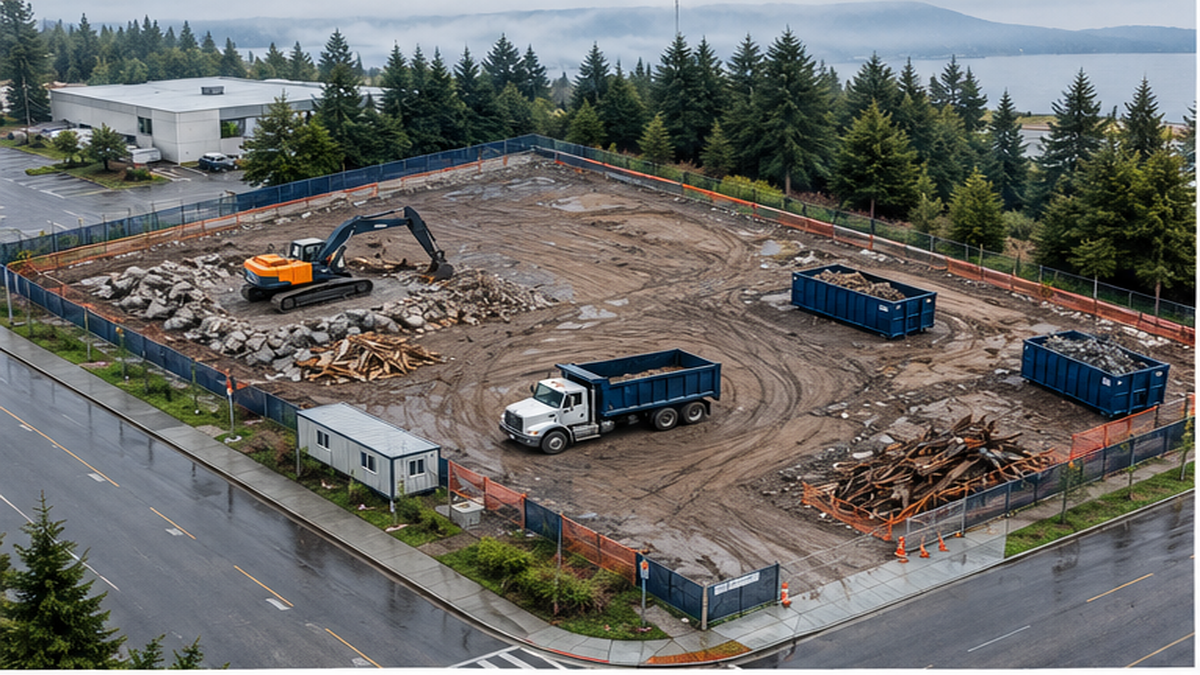
Managing construction debris on a Washington or Oregon job site requires a clear plan for demolition, sorting, and heavy soil haul-off before the foundation pour. Ruffhouse Construction LLC handles full earthworks and site preparation for developers and general contractors in Federal Way and the surrounding region. Construction waste includes clean soil, mixed demolition debris, and concrete rubble that must be removed to keep your project on schedule. We take care of the site demolition and load-out so your framing and concrete crews can get to work. Send us your plan set and geotech report, and we will review the access realities to give you a fixed estimate for debris removal.
How Heavy Debris Removal Works
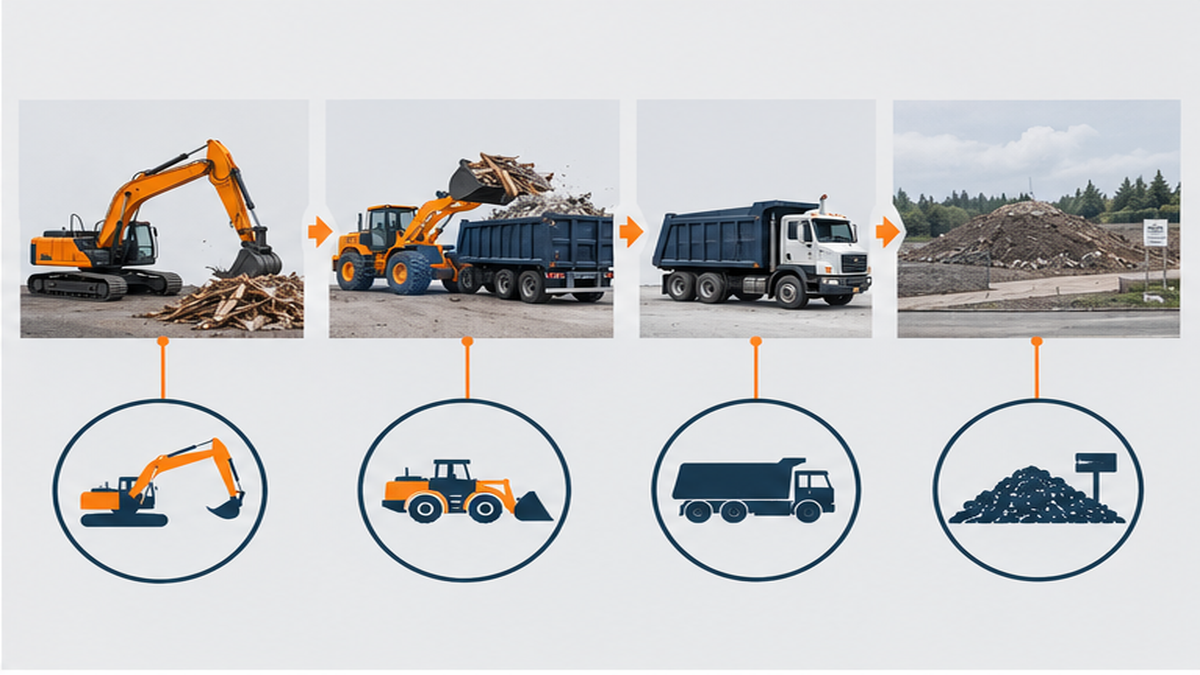
Clearing a site involves more than just bringing in a dumpster. Heavy construction debris removal requires heavy machinery, proper staging, and permitted disposal sites. When we handle your site demolition and soil haul-off, we look at the material type—whether it is clean soil, mixed demolition debris, or concrete rubble. Each material dictates how we load and where we haul it. Site access is another major factor. If your lot in King County or Pierce County is tight, we have to plan for double-handling materials or using specific equipment sizes to safely move the waste. We also assess how ready the debris is for loading versus whether active demolition and sorting must happen first. Unstable soils or buried foundations discovered during the dig can change the scope, which is why a thorough site assessment is critical. We coordinate the heavy lifting so you do not have to worry about multiple earthworks trades stepping on each other. Once the site is cleared and the soil is hauled off, your site is ready for the next phase of construction, such as installing Utilities & Drainage systems.
Key Planning Decisions for Developers and GCs
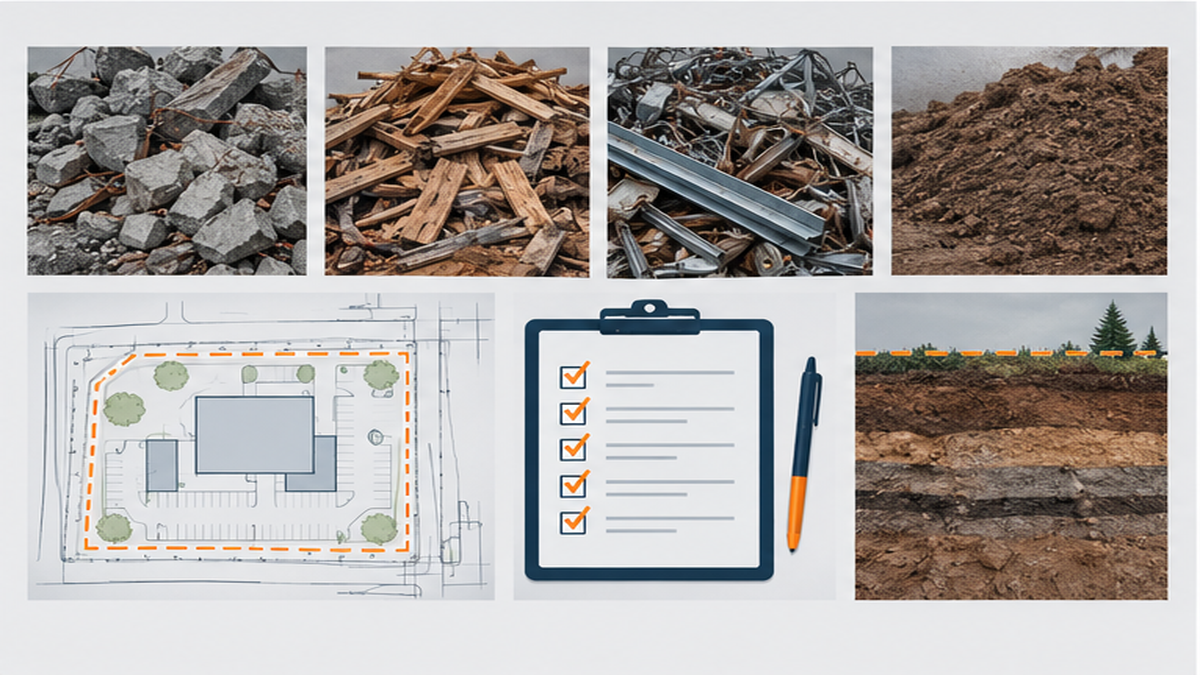
General contractors and developers must make several key decisions before scheduling construction debris removal. First, determine the scope of your site demolition. Are you clearing an entire lot, or just removing a specific structure and its foundation? Next, consider your schedule pressure. If you have a tight deadline before a foundation pour, we may need to deploy extra crews or larger machines to expedite the soil haul-off. You also need to account for the volume and weight of the material at the disposal facility, as this directly impacts the logistics of the haul. Hazardous or contaminated materials require specialized handling and specific permitted disposal sites, which must be identified early in the planning phase. Finally, decide on the sequence of trades. Coordinating demolition, soil removal, and utility installation through a single heavy civil installer like Ruffhouse Construction LLC prevents scheduling conflicts. If you are comparing options, look at whether the contractor can handle the full earthworks package. For a closer look at how we manage these logistics, see our Construction Debris Removal Company page. Understanding these variables helps ensure your project stays on track and within the expected parameters.
Common Errors in Site Demolition and Haul-Off
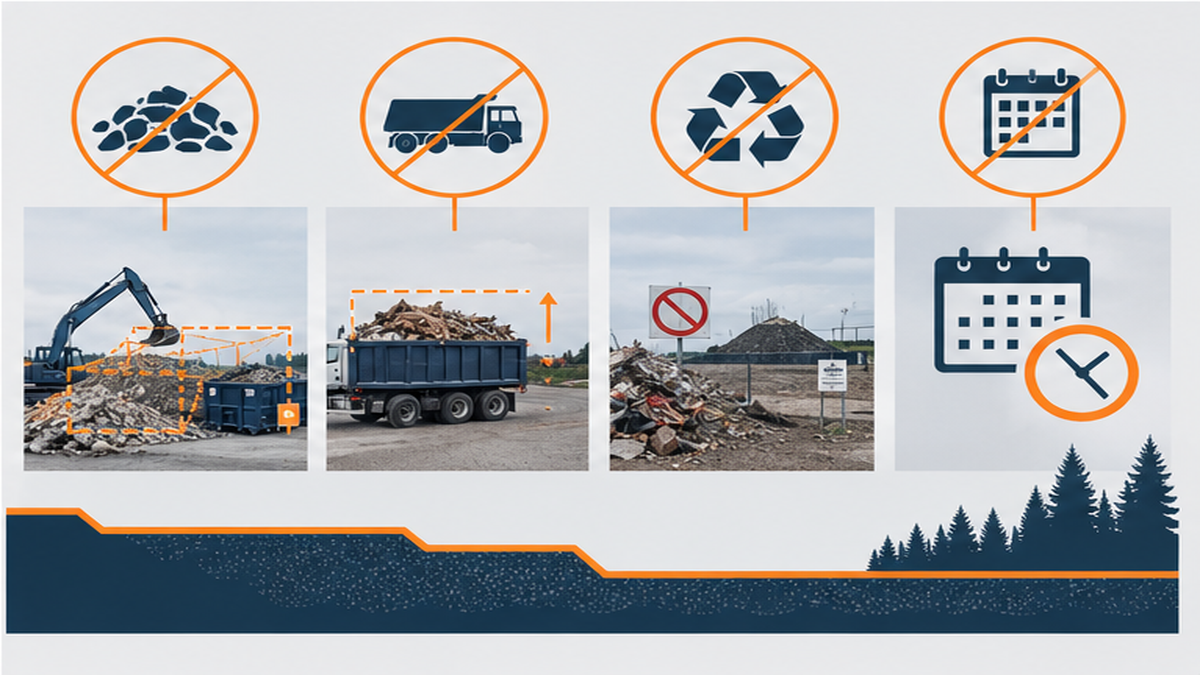
A frequent mistake on commercial and residential builds is underestimating the volume of soil haul-off and demolition debris. Dirt expands when excavated, and failing to account for that swell factor leads to budget overruns and schedule delays. Another error is ignoring site access constraints. If a contractor assumes standard heavy equipment can fit on a narrow Seattle or Bellevue lot, you will face delays when machines have to be swapped or materials double-handled. Developers also run into trouble when they assume a firm quote can be provided without a geotech report or stamped plan set. Blind online numbers mislead general contractors because they cannot account for weather impacts, buried foundations, or unstable soils discovered on site. To avoid these issues, always secure a site assessment and a detailed written estimate based on your actual engineering documents. Do not rely on rough guesses for heavy civil work. Finally, failing to separate clean soil from mixed demolition debris can result in higher disposal fees. Proper material or option selection during the planning phase keeps the site efficient and compliant with local regulations. For more details on budgeting, review our Construction Debris Removal Cost Guide.
When to Bring in a Heavy Civil Contractor
You need a professional earthworks contractor when your project involves heavy site demolition, large-scale soil haul-off, or complex site access issues that standard residential equipment cannot handle. If you are a developer or general contractor facing tight schedules before a foundation pour, it is time to bring in a dedicated heavy civil team. Call us when you have your plan set and geotech report ready for review. We are the installer, not the design engineer, so having those documents allows us to give you a realistic, fixed estimate before work begins. You should also reach out if your site involves challenging conditions like unstable soils, steep slopes, or the need for high-ticket shoring and soldier pile walls alongside the debris removal. Coordinating multiple earthworks trades often leads to delays; hiring a single contractor for excavation, grading, and utilities streamlines the process. If you are managing a site in Washington or Oregon and need a turnkey site package, send us your drawings. We will review the scope and schedule a site visit if access or soil unknowns require a closer look.
Related Earthworks and Demolition Resources
Ready to Clear Your Site?
Frequently Asked Questions About Construction Debris
How is Demolition & Soil Removal priced in my area?
What are some examples of construction waste materials?
How long does Demolition & Soil Removal take?
How do I get an estimate?
Job Site Organization and Safety
Maintaining a safe and efficient job site during heavy earthworks requires daily attention to logistics and equipment staging. Keep access routes clear for dump trucks and excavators to prevent bottlenecks during soil haul-off. Regularly inspect temporary fencing and erosion control measures to ensure compliance with municipal regulations, especially when dealing with large volumes of construction debris. If you are staging mixed demolition debris on site before load-out, separate clean soil from concrete rubble and general waste to streamline the disposal process and minimize facility fees. Ensure that all heavy machinery, such as those detailed in our Debris Removal Equipment guide, is parked on stable ground at the end of the shift. Proper site preparation and daily organization not only keep your crews safe but also prevent costly schedule delays before the foundation pour. For smaller scale clearing, you might review our Bobcat Soil Removal capabilities. Always coordinate closely with your earthworks contractor to adjust the staging plan as the site demolition progresses.