
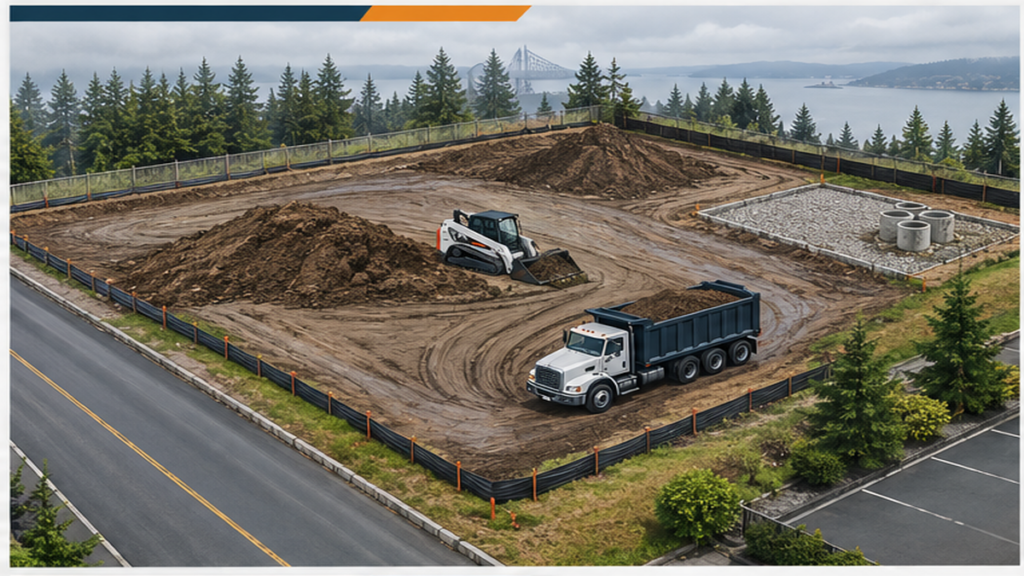
Bobcat Soil Removal: Site Preparation and Haul-Off
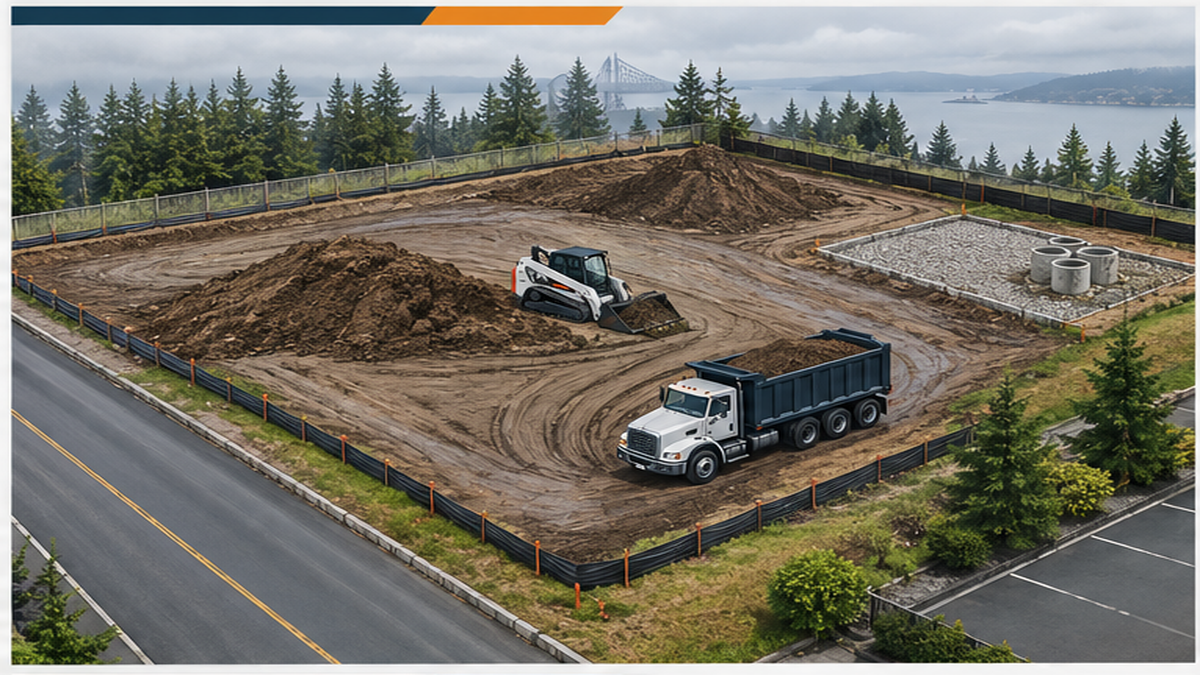
Bobcat soil removal involves using compact excavation equipment to clear, load, and haul away dirt, concrete rubble, and site debris from construction sites. Ruffhouse Construction LLC is a heavy civil earthworks contractor based in Federal Way, WA, serving developers, general contractors, and private landowners across Washington and Oregon. When you need site demolition or soil haul-off before a foundation pour, we handle the excavation and grading package. We do not publish flat online rates because costs depend heavily on material volume, site access, and disposal fees. Send us your plan set and geotech report, and we will review the scope to provide a fixed written estimate before work begins.
How Soil Haul-Off Works on Tight Lots
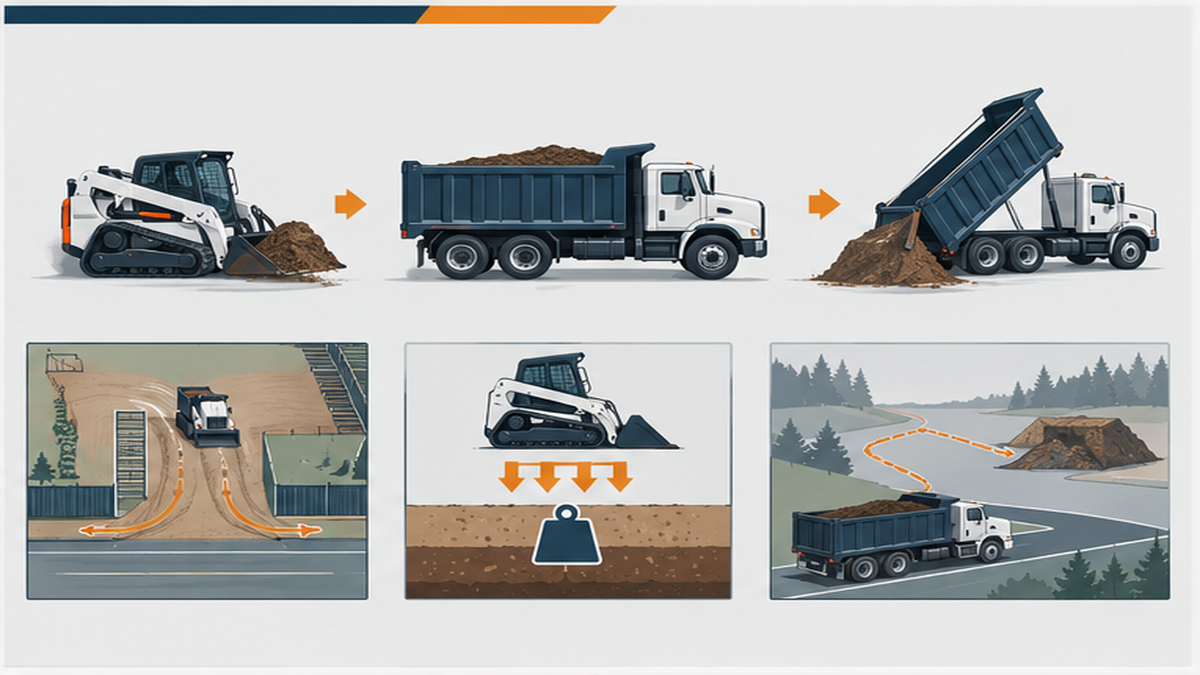
Removing soil with a Bobcat or similar compact track loader requires planning for access, material weight, and disposal logistics. On tight lots in Seattle or Bellevue, heavy civil equipment might not fit, making compact loaders essential for moving dirt from the excavation zone to the dump trucks. Using a compact track loader allows operators to navigate around existing structures, utilities, and tight property lines. When we handle your earthworks package, we manage the logistics chain—from excavating the dirt to loading the dump trucks and securing the proper disposal permits.
| Cost Factor | Impact on Soil Removal |
|---|---|
| Material Type | Clean soil costs less to dump than mixed demolition debris or concrete rubble. |
| Volume and Weight | Total tonnage at the disposal facility directly drives the final haul-off fees. |
| Site Access | Tight lots require double-handling dirt, increasing machine time and labor. |
| Hazardous Material | Contaminated soils require permitted disposal sites and specialized handling. |
We review these factors during our initial site assessment. If you are building a new retaining wall or require deep foundation drilling, the soil displaced by soldier piles and shoring must be managed. We coordinate the soil haul-off alongside our primary excavation work to keep your project on schedule.
Planning Your Earthworks and Demolition Schedule
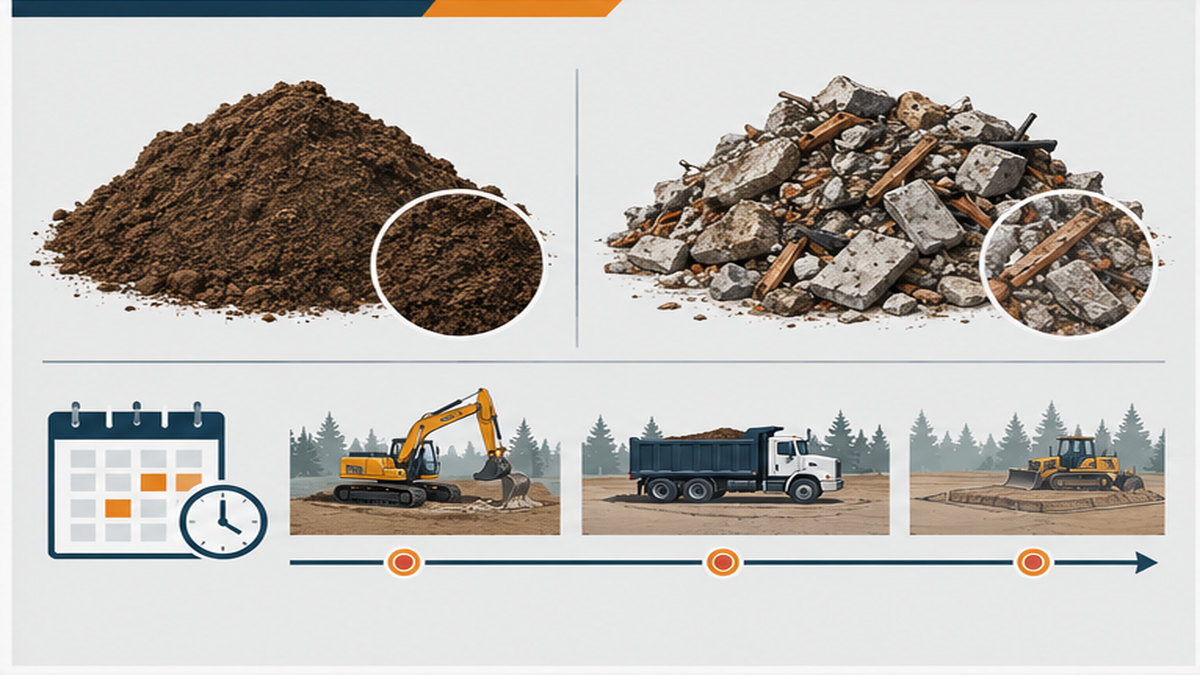
Developers and general contractors face several decisions before scheduling site demolition and soil removal. First, determine if the soil is clean or mixed with construction debris. If you need a Construction Debris Removal Company, the disposal process changes. Mixed loads often incur higher tipping fees at Washington disposal facilities. Second, evaluate the site access. A Bobcat can navigate narrow residential driveways in Kirkland or Issaquah, but loading large dump trucks requires adequate street clearance and traffic control.
Third, consider the timeline. Excavation delays cascade into foundation and framing delays. If unstable soils are discovered on site, or if weather impacts the schedule pressure before a foundation pour, you may need extra crews or machines. Finally, if your project involves Demolition & Soil Removal alongside structural shoring, such as tiebacks or a soldier pile wall, the sequencing of drilling and soil removal must be tightly coordinated. Send us your drawings so we can review access and soil realities.
Mistakes to Avoid Before Requesting an Estimate
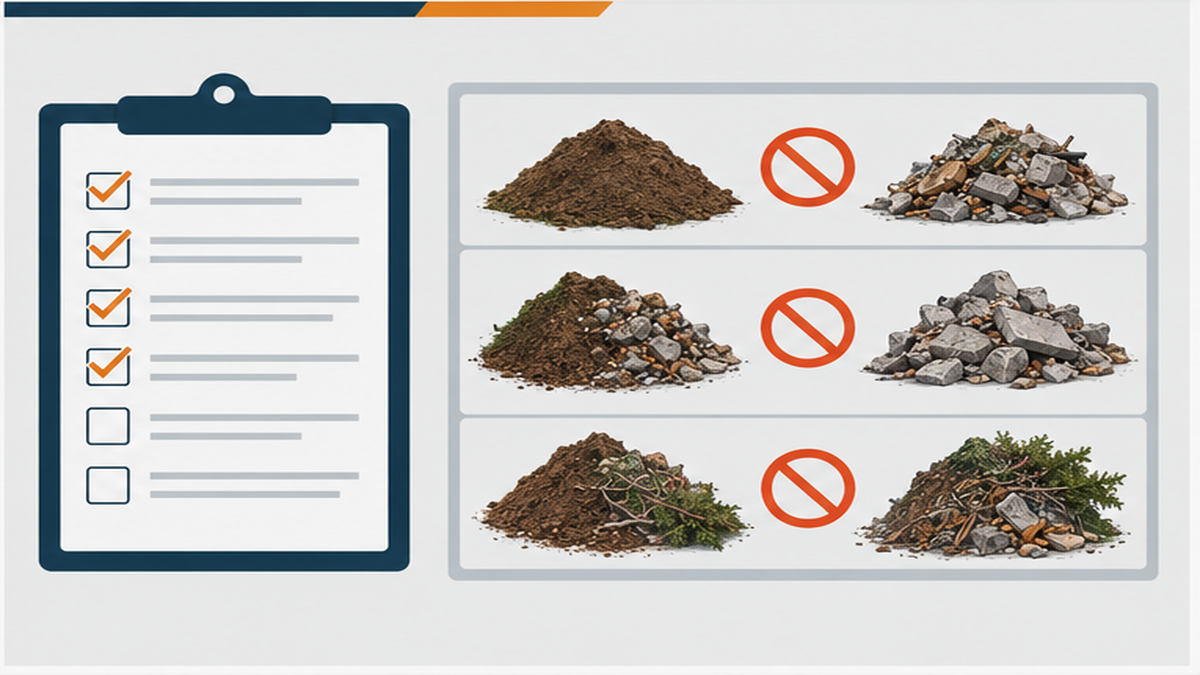
A frequent mistake on earthworks projects is assuming all dirt costs the same to haul away. Failing to separate clean soil from concrete rubble or landscape waste leads to unexpected disposal fees. Another error is ignoring the geotech report. We are the installer, not the design engineer. If you request a firm quote for soil removal and retaining wall excavation without stamped drawings or geotech data, we cannot provide an accurate number. Hidden soil conditions, such as buried foundations or high water tables, will completely change the equipment requirements and timeline.
Contractors also make the mistake of underestimating the space needed for staging. A Bobcat needs room to pivot and load trucks safely. If the staging area is too small, the operator has to double-handle the material, which adds hours to the job. Always secure your plan set and geotech report first, then contact us for a site visit to discuss the real logistics of your lot.
When to Hire a Heavy Civil Contractor
You should contact a professional earthworks contractor when your project requires heavy civil site preparation, deep excavation, or large-scale soil haul-off. If you are a developer dealing with unstable soils, slope and water management, or tight schedules before a foundation pour, you need a contractor who can handle the entire package. Moving a few yards of topsoil might be a small task, but excavating for commercial retaining walls, soldier piles, or deep utilities requires heavy equipment and strict compliance with local regulations.
Call us when you have a plan set and need a reliable installer to execute the dirt work. We work with municipalities, industrial facilities, and private landowners across King County and beyond. We review the scope, assess the site access, and provide a fixed estimate before work starts. If you do not have stamped drawings yet, we can recommend a Washington-licensed structural engineer to get your project moving.
Related Earthworks and Site Prep Services
Ready to Discuss Your Site Preparation?
Common Questions About Soil Removal
How much does it cost to have soil removed?
How much is a Bobcat scoop of dirt?
What time of day do bobcats come out?
How do I get an estimate?
Managing the Site After Soil Removal
After the initial soil removal and site demolition are complete, maintaining a stable site is critical before the foundation pour. Ensure that temporary drainage systems are functioning to prevent water from pooling in the excavated areas. Unstable soils exposed to heavy rain can lead to mud, delays, and the need for additional grading. Keep the staging areas clear of new Construction Debris so that equipment can maneuver safely.
If your project involves deep excavation or Shoring & Stabilization, monitor the temporary slopes and call your geotech if you notice any shifting. Proper site management prevents rework and keeps the subsequent trades on schedule. We recommend covering exposed dirt piles with tarps if they must remain on site during wet Washington weather. Using the right Debris Removal Equipment promptly keeps the site safe and compliant with local regulations.